
CA San Lorenzo – CA Independiente: Independiente Clinical in Victory Over San Lorenzo (1-2)
Independiente’s ability to break down San Lorenzo’s defensive line gave them the edge to ride on from early on in the game. An early goal gave Independiente momentum, but they were able to withstand San Lorenzo’s late pressure in the game to seal the win.
Tactical analysis and match report by Ebuka Ogoegbunam.
Gustavo Álvarez of San Lorenzo has made his team very hard to beat after recent results, with his team unbeaten in their last ten games in all competitions. Independiente looked to return to winning ways after their last game’s defeat to Dep. Riestra.
In San Lorenzo’s 3-5-2 setup, José Devecchi started in goal. Ezequiel Herrera, Jhohan Romaña and Lautaro Montenegro formed the back three. Nicolás Tripichio, who was the captain, and Mathías De Ritis occupied the right wing back and left wing back spots, respectively. Facundo Gulli, Matías Reali, and Manuel Insaurralde played in as the midfield three. Alexis Cuello and Rodrigo Auzmendi led the line in attack.
For the visitors, Rodrigo Rey started as the goalie with a back four of Santiago Arias, Sebastián Valdez, Kevin Lomónaco, and Milton Valenzuela. Iván Marcone and Mateo Pérez Curci started together in the midfield, and ahead of them was Santiago Montiel in the number ten position. Matías Abaldo, Maximiliano Gutiérrez, and Gabriel Ávalos were the front three in front of the goal.
Destabilizing the Defensive Line
San Lorenzo defended with a 5-3-2 shape without the ball against Independiente’s 4-2-3-1 shape with the ball. Independiente’s fullbacks were given the freedom to attack and drive towards the opposition backline. San Lorenzo’s fullbacks pushed up to press Independiente’s fullbacks. This meant the San Lorenzo center backs were responsible for the Independiente wingers in narrow positions.
San Lorenzo’s center backs were very aggressive in the game, tracking their markers tightly. Independiente’s forwards were constantly looking for space and swapping positions with each other. During the press, the ball side fullback jumped to the far side fullback. Insaurralde, who was the defensive midfielder, tracked the opposition runs in behind during this same sequence.
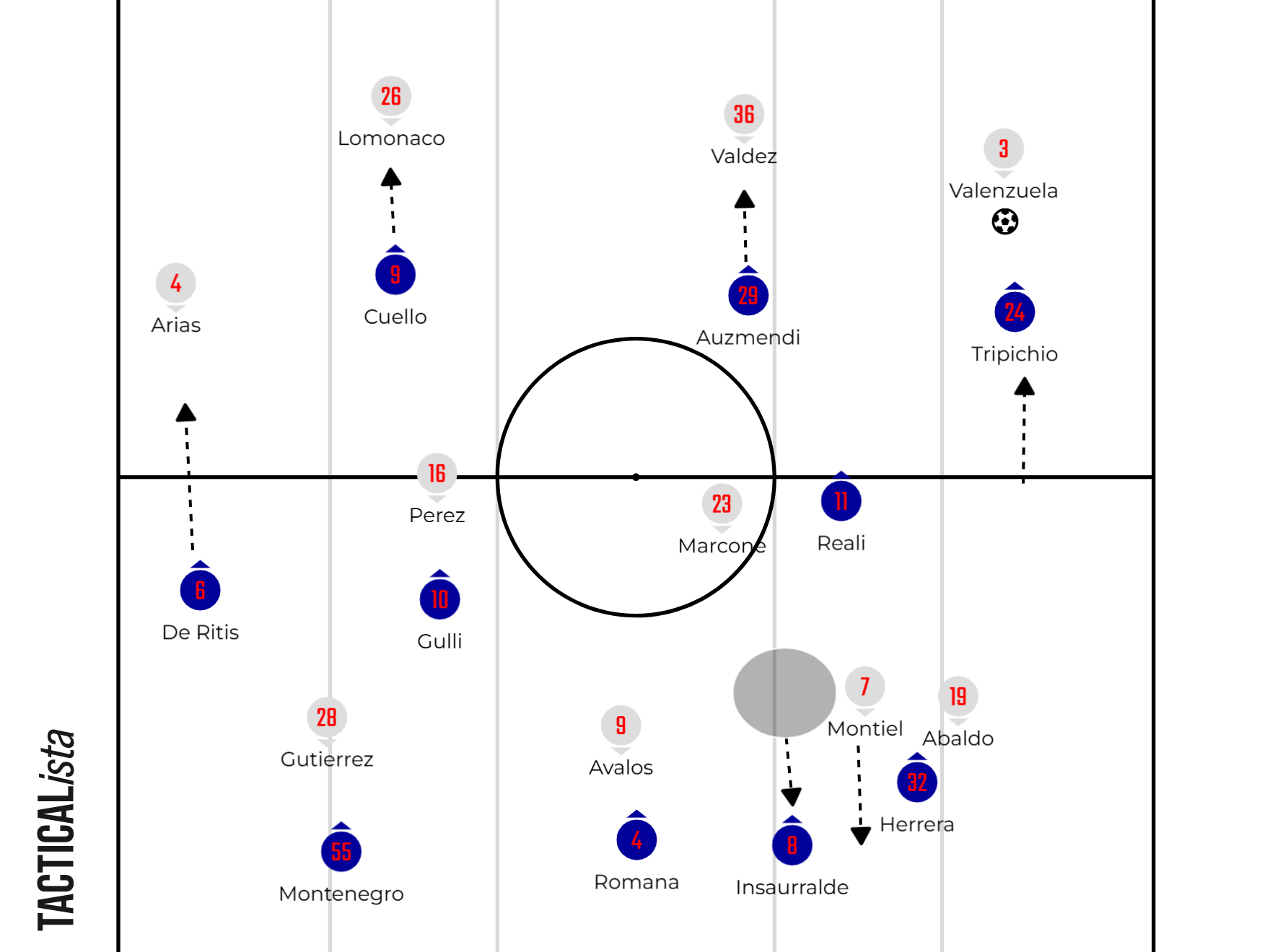
San Lorenzo’s fullbacks jumped during the press with Insaurralde tracking runners who made runs in behind.
These forwards often dropped deep to receive the ball and, in doing so, dragged San Lorenzo’s wide defenders out of position. When in possession, the Independiente fullbacks pushed up while the wingers tucked into the pockets. Independiente attacked wide areas, aiming to penetrate the central pockets where they had numbers.
Independiente consistently looked to attack these central areas and used movements to manipulate the defensive line. They created early openings but failed to apply the final finish when they got into these positions. Since attacking through the fullbacks made the San Lorenzo wingbacks jump, Independiente looked to attack through their fullbacks in multiple positions.
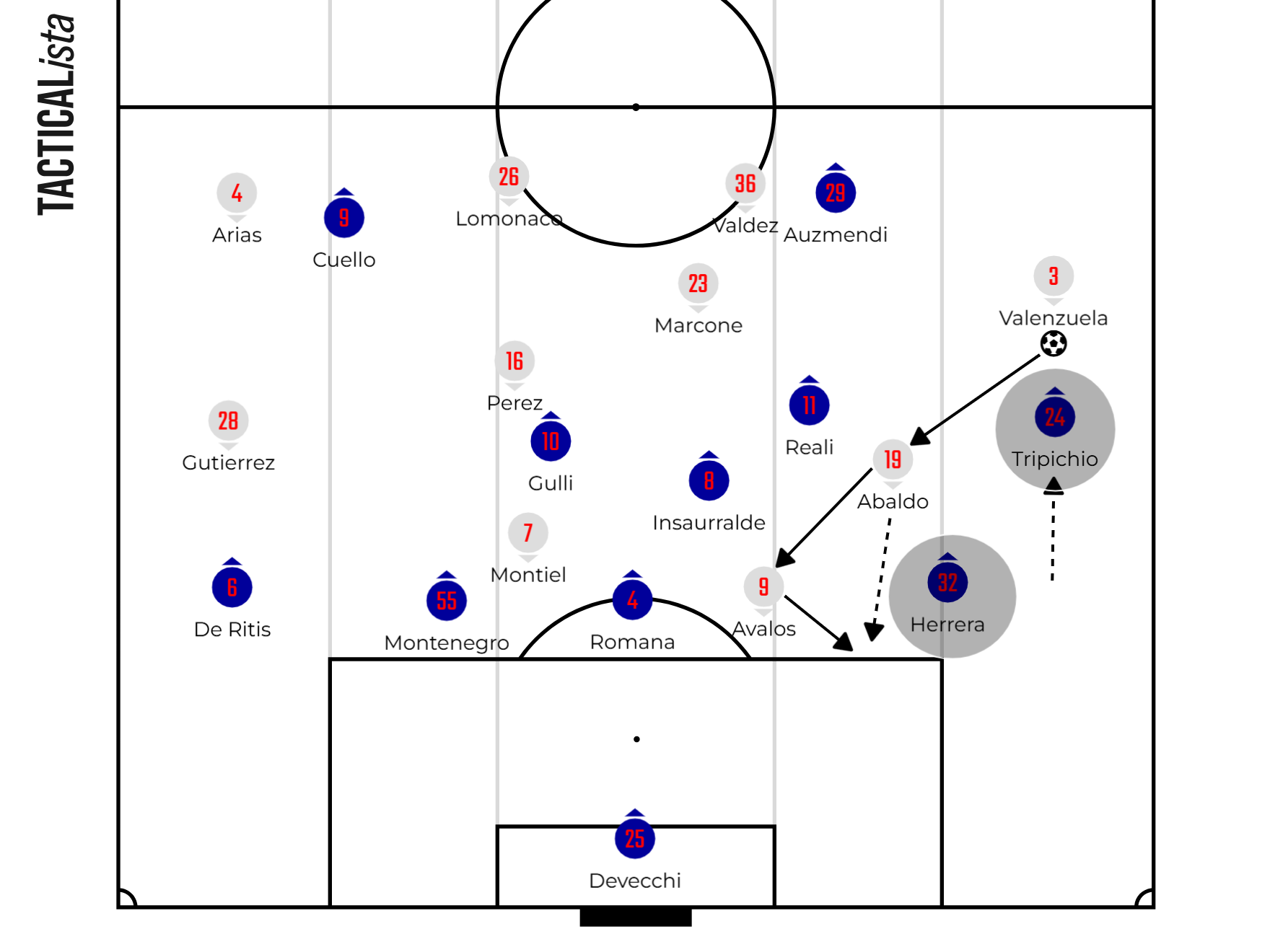
Valenzuela Abaldo dropping deep to create space for Ávalos. Their link-up generates space for them to get in behind the defence.
In Independiente’s first goal, Independiente took advantage of the space they created for themselves. With San Lorenzo’s fullback, De Ritis, jumping to Arias, Ávalos, and Gutiérrez dropped into deeper areas to drag the center backs out of position. These gave Independiente space to exploit and get in behind the backline.
Ávalos flicked the ball into the space behind Gutiérrez and Montenegro. Gutiérrez was able to get to the ball before Montenegro and squared it to Abaldo who was able to score.
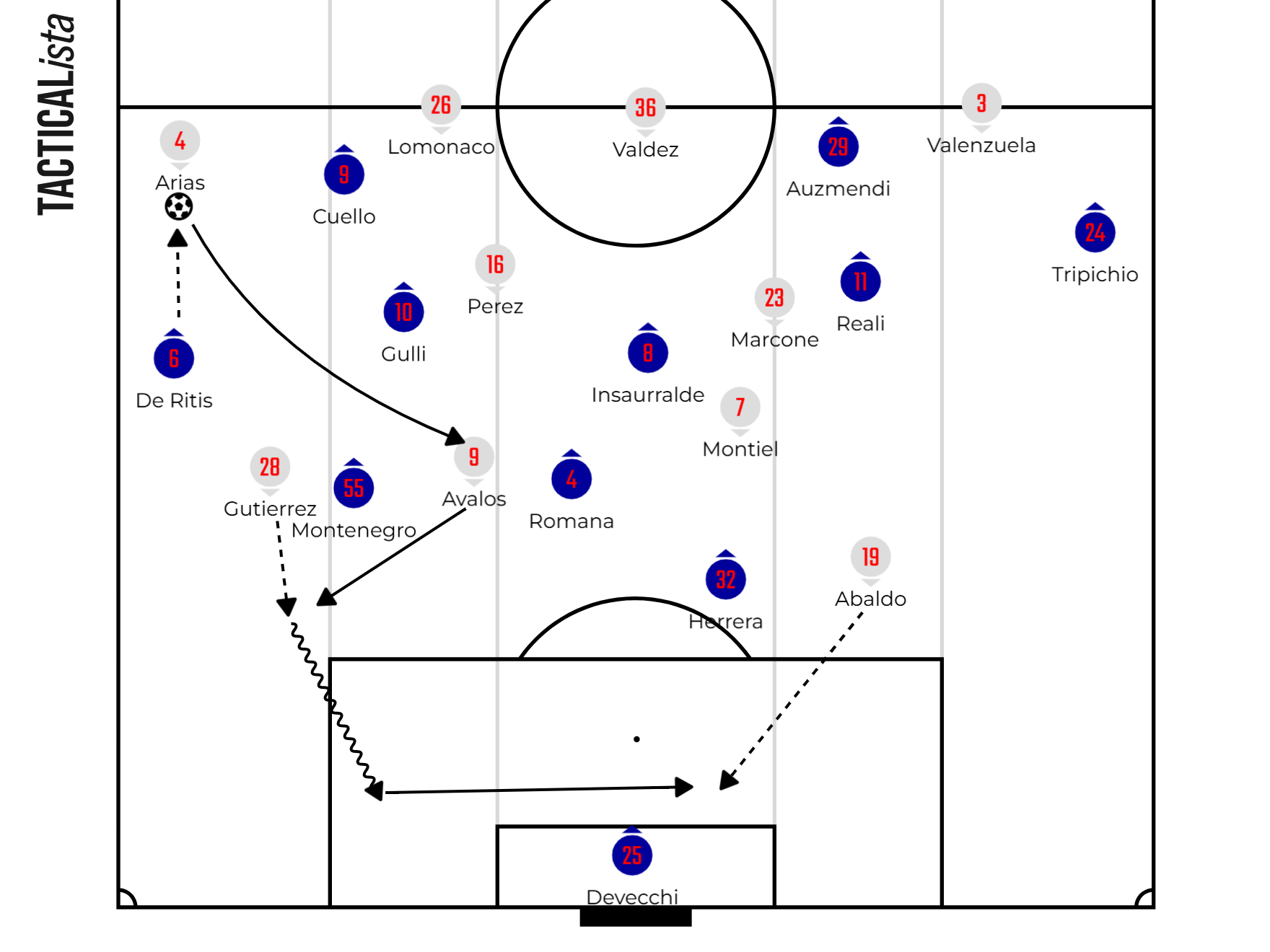
Independiente’s forwards dropping to attract the San Lorenzo defenders to concede space. Independiente had space to attack and score.
Independiente got their reward early in the game after looking to unbalance the opposition back-line. However, this same occurrence happened in their second goal; dropping deep to attract the defenders and attack the space behind. This time, the buildup happened on the other wing.
Ávalos and Abaldo drop creating space in behind. Ávalos plays in Abaldo in space where he has time to pick out his teammate, Gutiérrez, to score the second goal for the visitors.
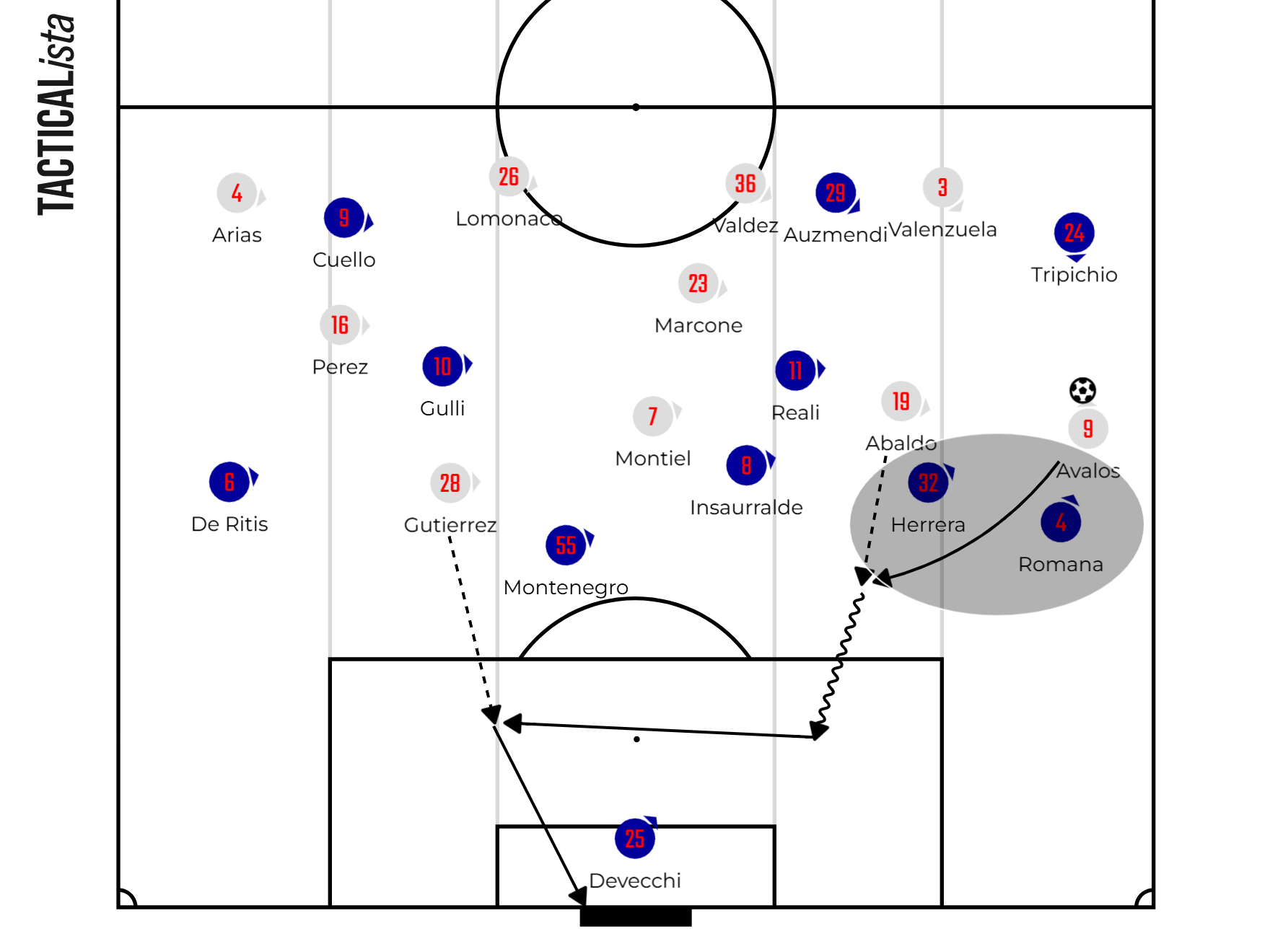
Romana and Herrera were drawn out by their marker’s position. Independiente takes advantage of the space behind and scores their second goal of the game.
San Lorenzo’s fight back
San Lorenzo were brave with their 3-2-5 setup with the ball. Cuello dropped into attacking midfield, joining Auzmendi in the central pockets, while the wingbacks held the width. Independiente pressed in a 4-2-3-1 shape with certain pressing triggers. Montiel and Ávalos, who led the press, covered the double pivots, Insaurralde and Gulli, and made their central areas compact.
This gave enough space and time for San Lorenzo’s defenders on the ball. These defenders looked to drive the ball and bait the press. When San Lorenzo moved the ball to their wide center backs, this was an opportunity for the Independiente forwards to put pressure. Independiente pressed with their fullbacks pressing San Lorenzo’s wingbacks, while the wingers pressed their wide center backs.
Independiente’s zonal approach in the press meant that the far side fullback had to tuck into the defensive line when the ball side fullback pushed up to put pressure. This helped the defensive line to be more stable in terms of numbers.
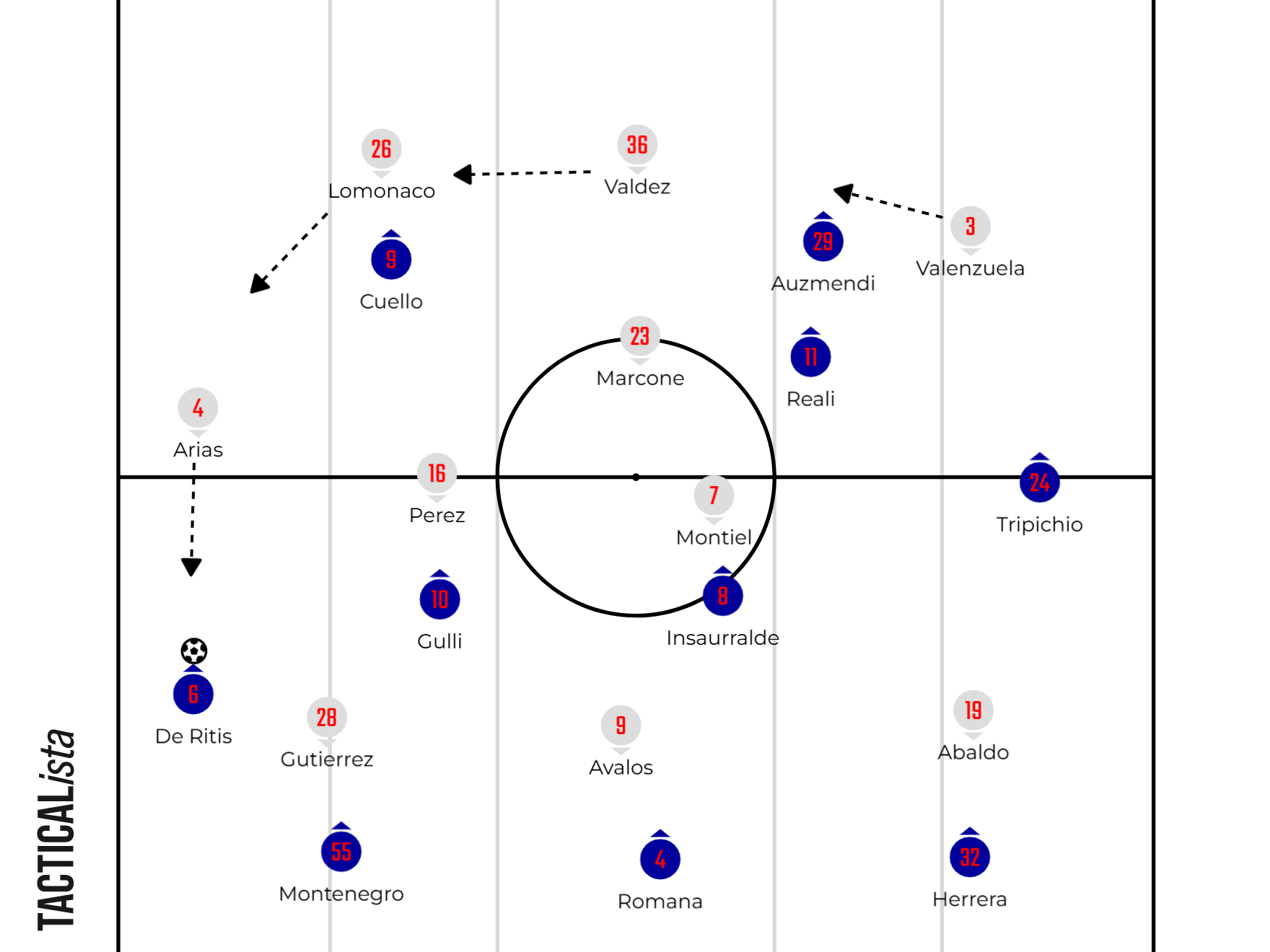
Arias puts pressure on the ball side wing back while Valenzuela tucked into the defensive line.
San Lorenzo had moments where they could find their far-sided wingbacks in this scenario. They progressed slowly through multiple sequences to find Tripichio, but in that moment, both fullbacks were already in set positions. The wingbacks were important in San Lorenzo’s attack. They drove towards their man to put crosses into the box. The attackers didn’t get to the end of these crosses, and this was a main focal point for San Lorenzo throughout the game.
They pushed for a goal later in the game and left themselves susceptible to counterattacks on the other end of the pitch. Abaldo and Ávalos had half-chances to put the game to bed while being 2-0 up, but failed to be clinical in these moments.
San Lorenzo later found the back of the net from a corner. After winning the second ball, Herrera was able to put the ball in the back of the net following a save from Rey. This gave the home fans hope with enough time to get an equalizer. The visitors did well to withstand pressure late in the game, with San Lorenzo’s wingbacks putting in crosses and driving attacks that posed a threat to the opposition.
Independiente’s resistance defensively in the last moments helped them secure the three points.
Takeaways
Independiente’s 2–1 victory was shaped by a few decisive tactical and game-state moments rather than sustained dominance throughout. The first major turning point came early, when Independiente successfully executed their plan of destabilizing San Lorenzo’s back line. By having their forwards drop deep and interchange positions, they consistently dragged defenders out of shape. This movement directly led to the opening goal, where space behind the defensive line was exploited efficiently. Scoring early not only validated their approach but also forced San Lorenzo into a more proactive stance.
The second key moment followed a similar pattern and effectively defined the game. Independiente doubled their lead by once again manipulating San Lorenzo’s defensive structure, drawing center-backs out and attacking the vacated space. At 2–0, the game tilted heavily in Independiente’s favor, allowing them to shift focus toward controlling transitions and defending with structure rather than chasing the match.
However, the dynamic shifted again in the latter stages. San Lorenzo’s persistence and territorial pressure became more pronounced, especially through their wingbacks. Their breakthrough goal from a set-piece was another crucial turning point. It injected momentum and belief, transforming the final phase into a high-pressure scenario for Independiente.
The closing stages were defined by Independiente’s defensive resilience. Despite conceding control and facing waves of crosses and sustained pressure, they maintained composure and structure. Their ability to withstand this late surge, combined with San Lorenzo’s inefficiency in converting wide deliveries, ultimately preserved the result.
In essence, the match hinged on Independiente’s early clinical exploitation of defensive gaps and their late defensive discipline, while San Lorenzo’s key moment came too late to alter the outcome.
Match plots will be added as soon as possible.


Comments