
River Plate – Vélez Sarsfield: Vélez’s Comeback Spoils River Plate’s Party (2-2)
River Plate’s first half performance set them up for a brilliant start. Their control in build up enabled them to generate momentum especially in the final third, leaving Vélez with much more to do. In the second half, Vélez attacked with more urgency having more control in the second half to get back in the game.
Tactical analysis and match report by Ebuka Ogoegbunam.
River Plate recorded their first win in the Clausura in the previous game against Argentinos Jrs. After ending their four game losing streak, they had more confidence to perform in front of their fans once again. One problem was evident for River Plate, and this was the lack of fire power in attack. Scoring two goals in their last five games needed more convincing, especially with the two goals coming in the 2-0 win in their last game.
However, River Plate had a chance to build momentum for the season against a Vélez side who are unbeaten in the Clausura so far this season. After winning their opening three games of the season, they’ve seen a recent drop in results, following two consecutive draws.
With River Plate looking for back to back wins, Vélez hoped to keep their unbeaten streak as well as getting back to winning ways. Key figures for both sides as Manuel Lanzini, Rodrigo Aliendro, Elias Gómez, Thiago Almada, Francisco Ortega and Tobías Andrada all face their former clubs in this affair.
For the home side, Santiago Beltrán started in goal with a backline of Giovanni González, Nicolás Otamendi, Lucas Martínez Quarta and Francisco Ortega. Tobías Andrada and Aníbal Moreno were the defensive midfielders with Ángel Correa as the attacking midfielder. Thiago Almada, Joaquín Freitas and Lucas Beltrán were the front three for River Plate.
Vélez Sarsfield continued with Tomás Marchiori in goal. The defensive line of Joaquín García, Lisandro Magallán, Thiago Silvero and Elías Gómez acted as the backline. Rodrigo Aliendro and Lucas Robertone were the midfield pairing while Manuel Lanzini played in the attacking role ahead of them. Simón Escobar, Thiago Aguirre and Matías Pellegrini.
Almada as the solution
River plate’s 4-2-3-1 setup encouraged control with players dropping to overload the opponent in the midfield. The wingers operated inside, the fullbacks moved wide and kept the width. Correa and Almada dropped deep from advanced central positions to receive the ball. One of the midfielders often dropped to the first line to form a back three. This allowed the wingbacks to push up and attack the wide areas.
In build up, River faced pressure from Vélez, who pressed with a 4-1-3-2 zonal approach. Aguirre and Lanzini led the press, the wingers closed down narrow lanes before putting pressure on the fullbacks, while one of the midfielders pushed up to put pressure on the ball side defensive midfielder
This put pressure on the River Plate’s center backs and at the same time forced them wide in order to lock them onto one side of the pitch.
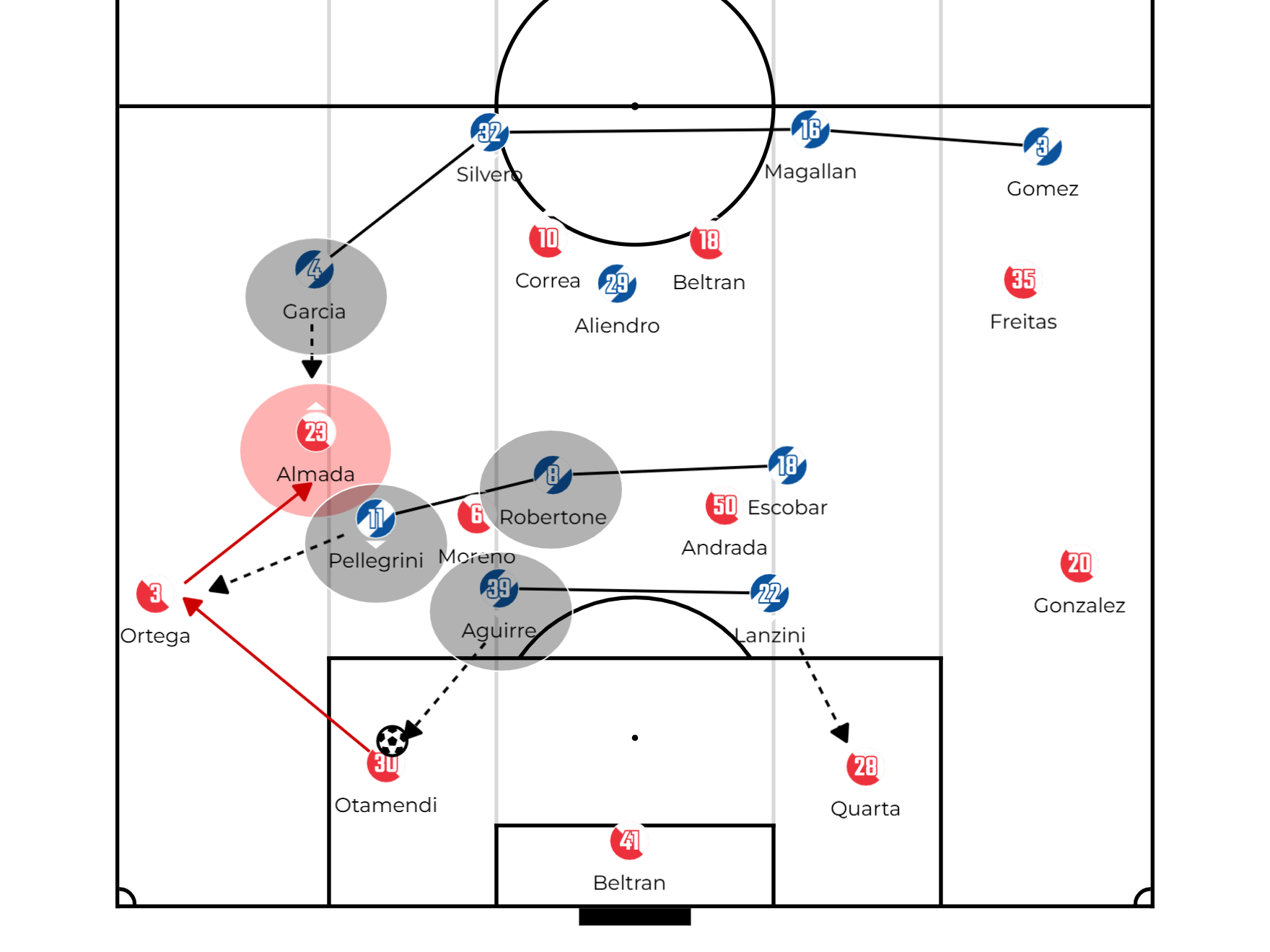
Vélez’s 4-1-3-2 zonal press. River Plate used Almada to help the team progress by playing through the pressure.
Vélez’s aim was to force River Plate long (from goalkicks). The team shifted side to side when applying pressure to ensure the wide areas ball side had no space for progression. When River tried playing through wide areas, they used switches to the other flank and second balls to start attacks for River Plate
Almada dropped deep and attracted the Vélez right back. This brought about more pressure but River used this to their advantage. Vélez found it hard to put enough pressure on River Plate players close to the touchline, which made it easy for River to progress to the far side of the pitch.
River’s ability to constantly beat Vélez’s press gave them space to attack with urgency. The momentum early on shifted to River. When they were able to bypass Vélez’s press, they relied on quick entries into final third using their narrow runs from Freitas and Beltrán. Vélez defended the narrow runs with their defenders sticking to their tasks of blocking shots.
River lay the first punch
When settled in possession, River struggled to create enough threat when they were tasked to break down the Vélez defence. Vélez set up in a 4-4-2 mid-block. They were aggressive between the lines and won the ball back on many occasions through their pressures. River’s major attacking zone was from narrow areas, where they could run directly at the back line. This meant the fullbacks failed to cause much threat in attack.
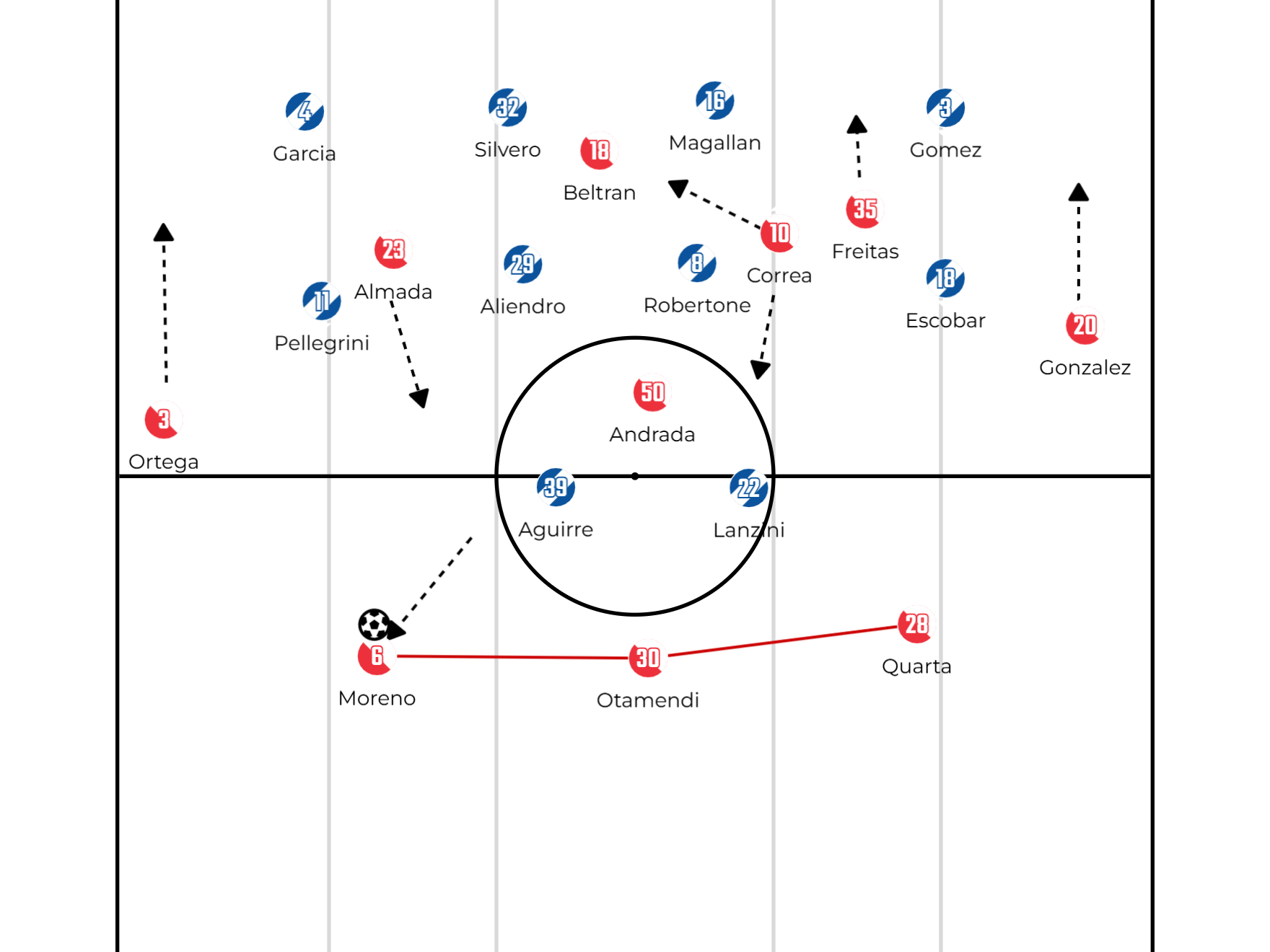
River Plate’s shape in possession. Almada dropping deep, Correa always moving to exploit the space while Freitas attacks the half spaces. Moreno drops into the first line of build up.
Vélez on the ball had similar ideas to their opponent. 4-2-3-1 shape, the both fullbacks high and wide, wingers operated in narrow and in proximity to each other. The difference in intent from the fullbacks of both teams was clear. Gómez and García of Vélez were much more of a threat than their respective opposition fullbacks, Ortega and González. They made more attacking runs which led to multiple crosses in the box.
The Vélez frontline were very fluid with their movements. They stayed in proximity with each other while always looking to combine and attack the River Plate backline. Vélez were direct when they had the ball but at times when they lost the ball in settled possession, the fullbacks’ positioning in attacking areas left so much space for River to take advantage of.
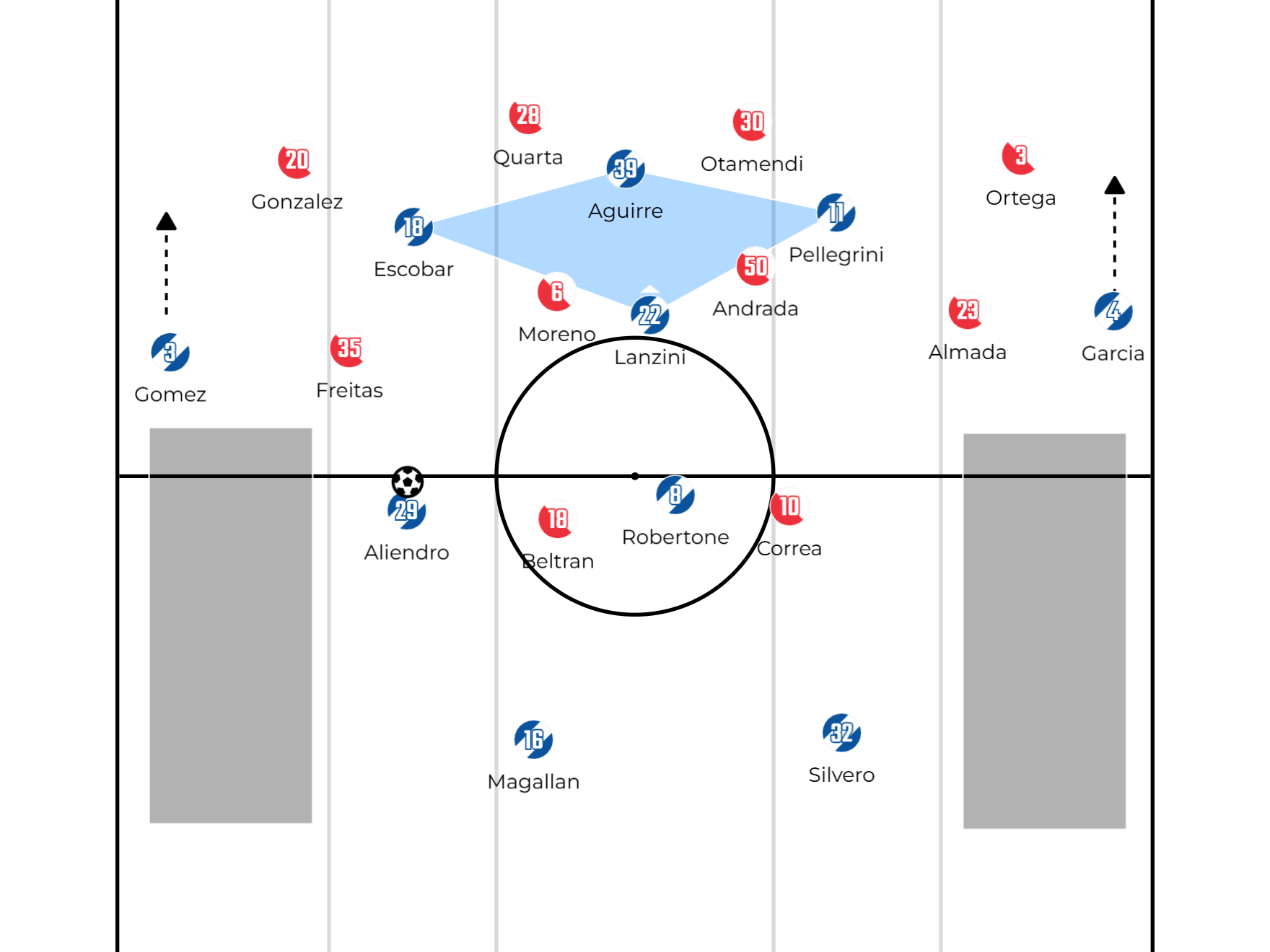
Vélez attacking setup. Wingers narrow with fullbacks holding the width. However, the spaces they conceded in wide areas because of their positioning was evident.
In a tightly contested affair, River Plate opened up the scoring following a clearance who found its way to Correa’s attacking position. Correa was able to take the chance, with some sort of confusion from the Vélez defenders whether his run was onside or not. This goal got River to another nice start to a game.
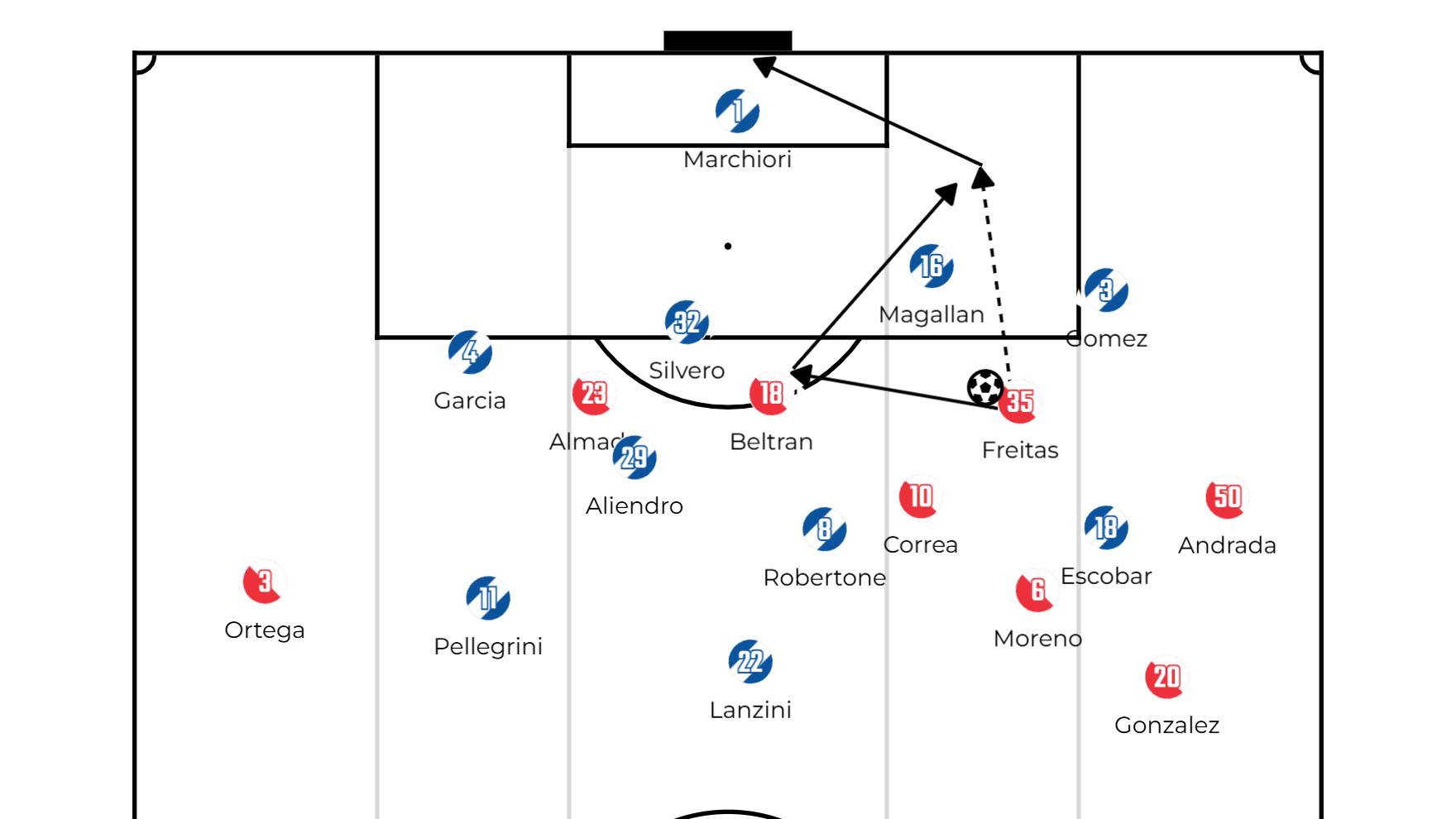
Not too long left in the first half, River doubled their lead. River Plate’s central attack between the lines enabled Beltrán to link up with Freitas, who was able to get off a deflected shot past the keeper.
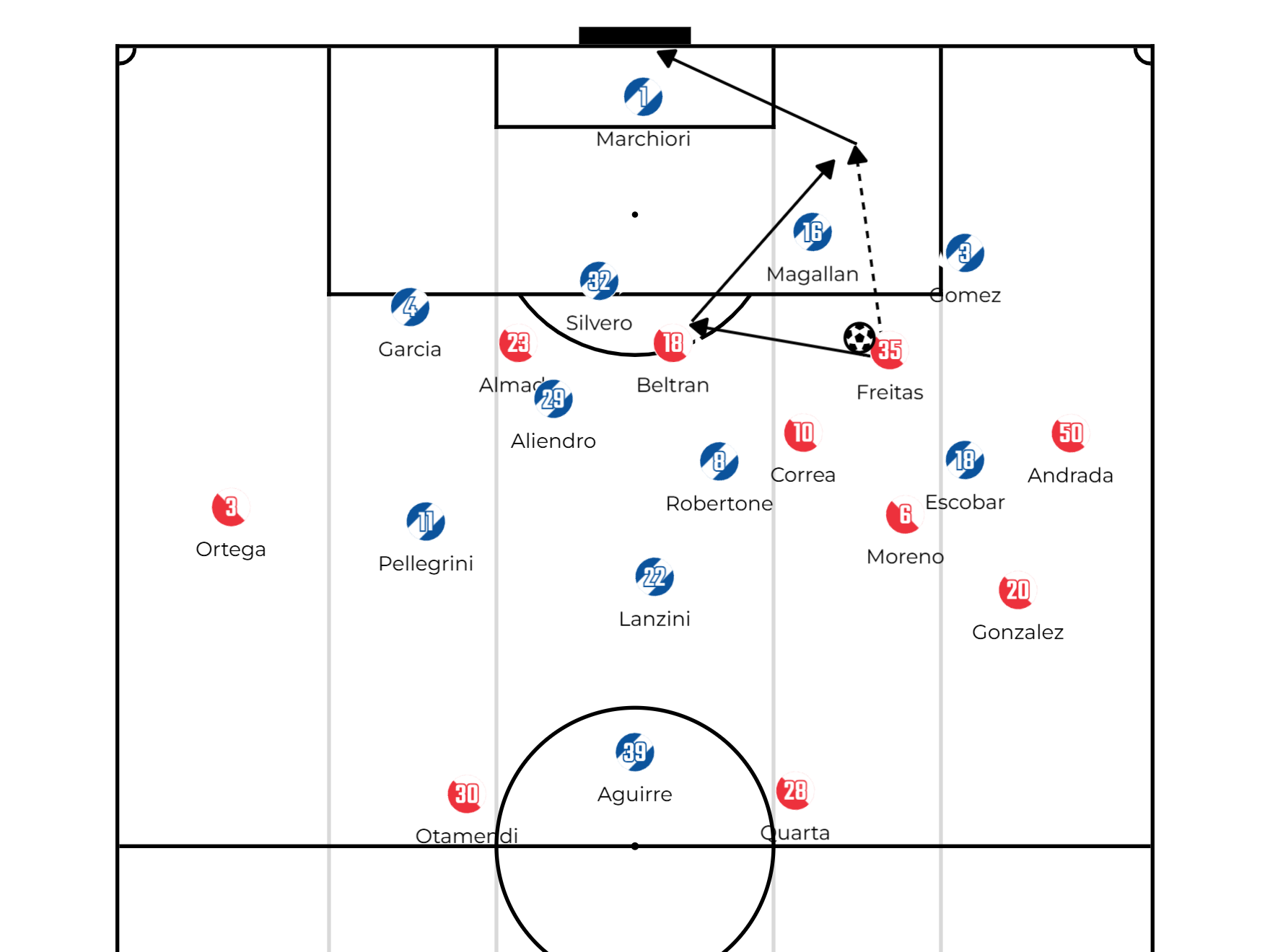
River Plate’s second goal. Beltrán combines with Freitas in his half-space positioning to get a shot off.
Vélez fight back
In the second half, Vélez had more momentum in attack compared to the first half. On the flip side, this meant more transition opportunities for River Plate.
Vélez stayed in the game when momentum was on their side. River Plate failed to make effective use of the spaces they had in transition and Vélez weren’t dead yet. Vélez gained more control with the introduction of Diego Valdés with his teammates looking to find him in the final third.
They got a goal back after a back pass by Almada to the path of Valdés, which was blocked before Pellegrini put the rebound in the back of the net. After the third goal of the game, the game became more intense for both sides. Both teams kept conceding transitions against each other, although River Plate were more reserved defensively.
Vélez eventually got an equalizer through Lanzini who scored against his former club. His goal showed the reliance of the wide fullbacks late on in the game. Gómez’s cross found Lanzini whose header was placed beyond the goalie’s reach. Vélez came back to draw the game after huge second half.
Takeaways
River Plate’s 2-2 draw with Vélez Sarsfield was a game of two contrasting halves, with River’s dominant first-half display undone by Vélez’s improved response after the break. River’s ability to play through Vélez’s press, particularly through Almada’s deeper positioning, gave them control and helped establish a two-goal advantage.
However, their inability to exploit the spaces available in transition proved costly as Vélez gradually gained momentum. The introduction of Diego Valdés added greater threat in the final third, while Vélez’s aggressive use of their fullbacks continued to create opportunities. Lanzini’s late equaliser completed the comeback and preserved Vélez’s unbeaten run.
For River, the result highlights both their attacking potential and their inability to sustain control across 90 minutes. The draw also means their search for consistency continues, while Vélez can take confidence from their resilience and second-half response after falling two goals behind.
Match plots will be added as soon as possible.

Comments