Arsenal – Manchester City: Guardiola Outwits Arteta At Wembley (0-2)
Pep Guardiola was able to find the right approach on both sides of the ball here, and Mikel Arteta was not able to find the right response. Without the ball, City’s zonal press used cover shadows to prevent Arsenal progression, and with the ball, their right-sided play with the likes of Bernardo Silva, Cherki, and Semenyo was able to break through the Arsenal defense.
Tactical analysis and match report by Josh Manley.
We decided to make this article free to read. If you want to support our work, consider taking a subscription.
Arsenal went into the first final of the season with a quadruple still on the cards, although this would be the first trophy that Mikel Arteta’s side had won since 2020. Pep Guardiola meanwhile is more than familiar with success in this competition, as his Manchester City team won it four times on the bounce from 2018 to 2021.
Arsenal lined up in a 4-2-3-1 formation here with a back four of Ben White, William Saliba, Gabriel Magalhães, and Piero Hincapié. Martín Zubimendi and Declan Rice partnered in central midfield, while Bukayo Saka and Leandro Trossard started wide. Kai Havertz then supported Viktor Gyökeres up front.
City also started in a 4-2-3-1 shape as Matheus Nunes, Abdukodir Khusanov, Nathan Aké, and Nico O’Reilly made up the back four. Rodri and Bernardo Silva were in central midfield, with Rayan Cherki at number ten. Antoine Semenyo and Jérémy Doku then flanked striker Erling Haaland.
City’s high block
One of the most notable aspects of this game was Guardiola’s pressing approach. He has often favoured a diamond press this season with two strikers and Bernardo Silva pushing out of central midfield to become the number ten. This time though, he took a different approach.
City’s shape against Arsenal’s buildup from the back was essentially a 4-2-4 formation with Cherki alongside Haaland up front and the wingers staying high. The strategic idea was more of a high block than a high press though – the role of the forwards was not necessarily to put the Arsenal backline under intense pressure, but to frustrate progress by simply blocking the forward passing options.
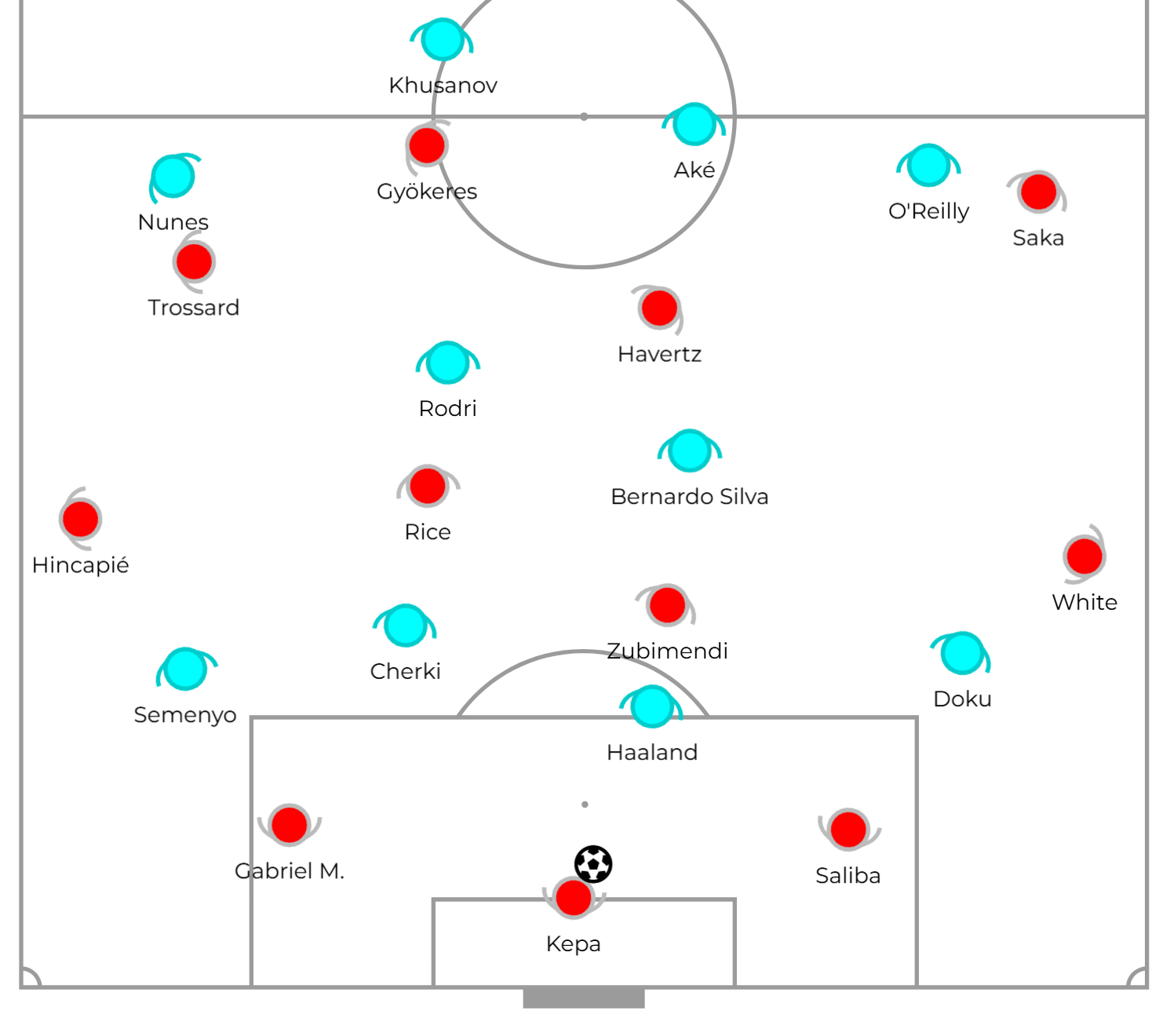
City’s zonal/option-oriented approach against Arsenal’s buildup.
Cherki and Haaland would use their cover shadows to prevent progression into Zubimendi and Rice, while the wingers did the same for Arsenal’s fullbacks. The chipped pass into White and Hincapié was an option for Arsenal in this circumstance, but the City fullbacks were always ready to jump, making it into a 50/50 battle that carried risk for Arsenal in their own half.
Arsenal suffered from a lack of movement in these situations, both of the ball and of players. The speed of circulation was quite slow, making it easier for the City players to block progression without having to change their angles. There was also a lack of rotation or players dropping into create overloads and options for the ball carrier, which would also help change the tempo.
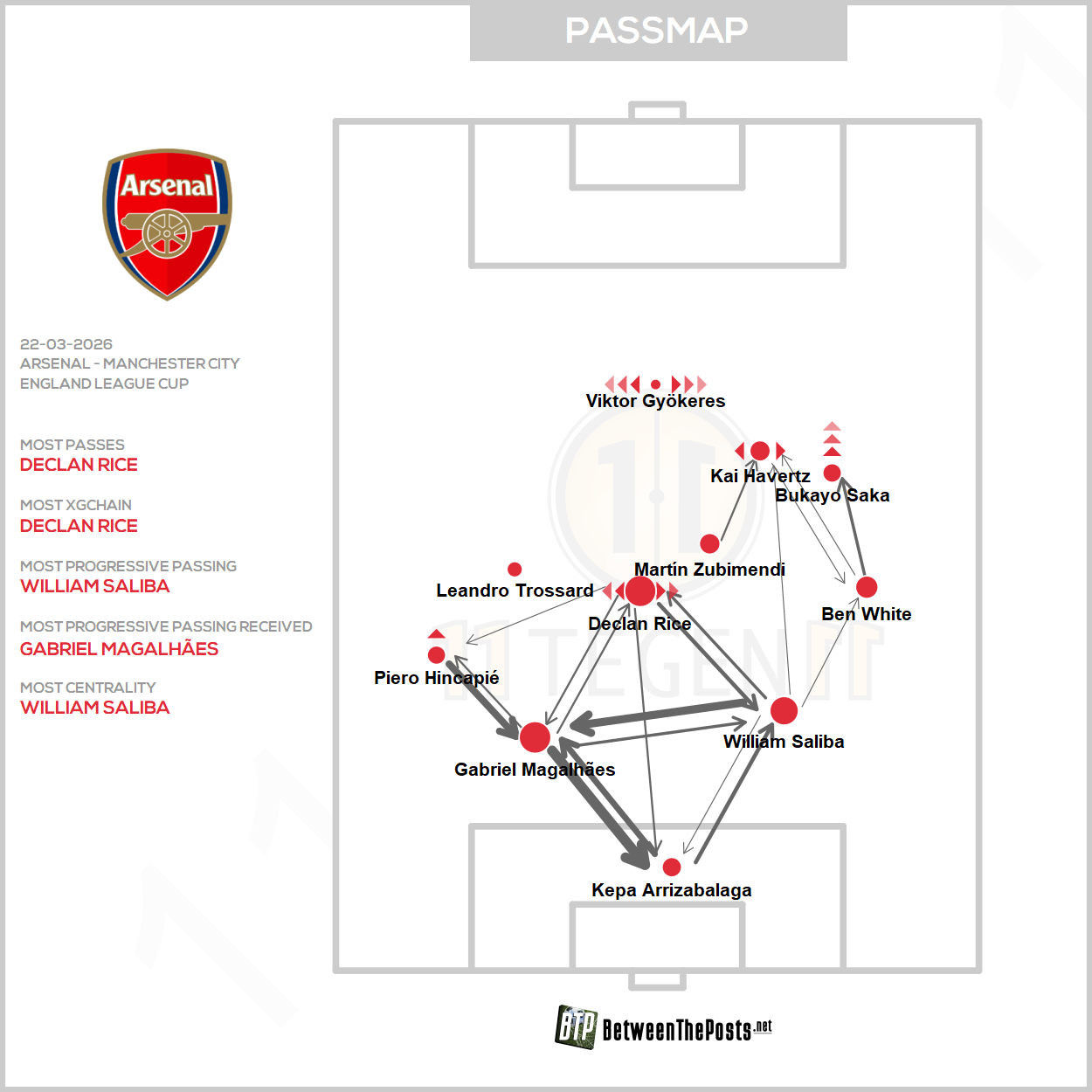
Arsenal struggled to connect through the thirds in this game.
More often than not, Arsenal’s attempted solution was to go long. The ball would be sent towards Havertz or Gyökeres and Arsenal’s front players would attempt to win the second ball in order to attack in City’s half. Too often though, this simply led to City getting an easy regain – hence Guardiola’s side were able to secure around sixty percent of the possession throughout the game.
Threatening on the right
When they had the ball, City shifted into a 3-2-5 shape. Nunes stayed in the back three initially although did supply runs from deep once Arsenal were pinned back. O’Reilly meanwhile took up an advanced role in the left halfspace when City had the ball.
Rodri was usually the deepest midfielder, with Bernardo Silva having licence to roam slightly further ahead, although he often spent time in the second line too, drifting across the pitch horizontally to provide connections.
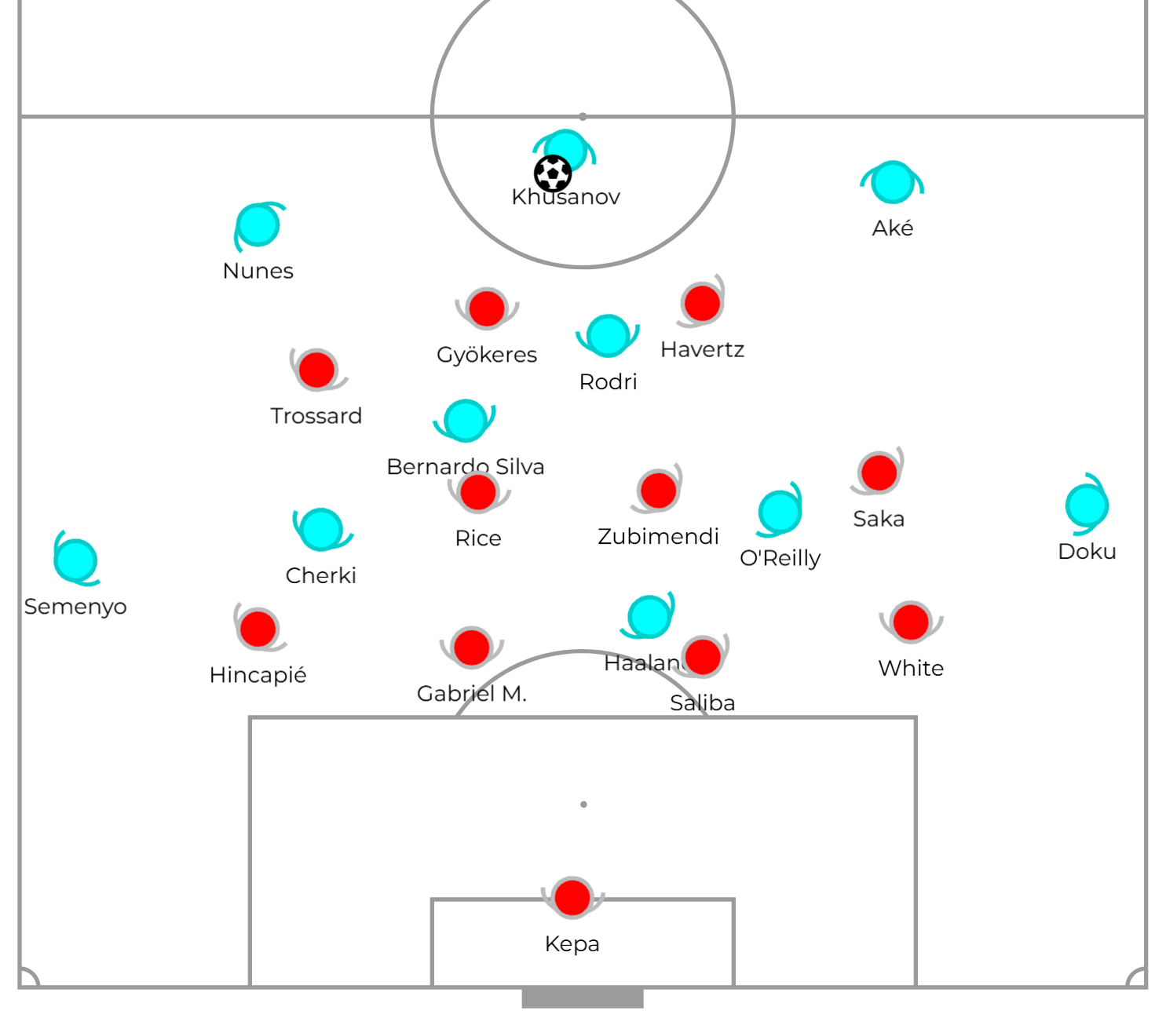
City’s possession shape.
Cherki meanwhile started from the right halfspace but also had licence to roam, often interacting with Bernardo Silva in small spaces. Semenyo and Doku were then the width providers, and City tried to create one-versus-one situations for them.
The biggest threat from City was down the right side. In the first half, Semenyo was able to get the better of Hincapié on a couple of occasions, while Doku on the other side did not get too much change out of White.
Arsenal were relatively easy to push back though. They started from a mid-block 4-4-2 shape and tried to jump into a high press where possible, but City were generally press-resistant enough to retain the ball well in Arsenal’s half with the technical skill of their midfield.
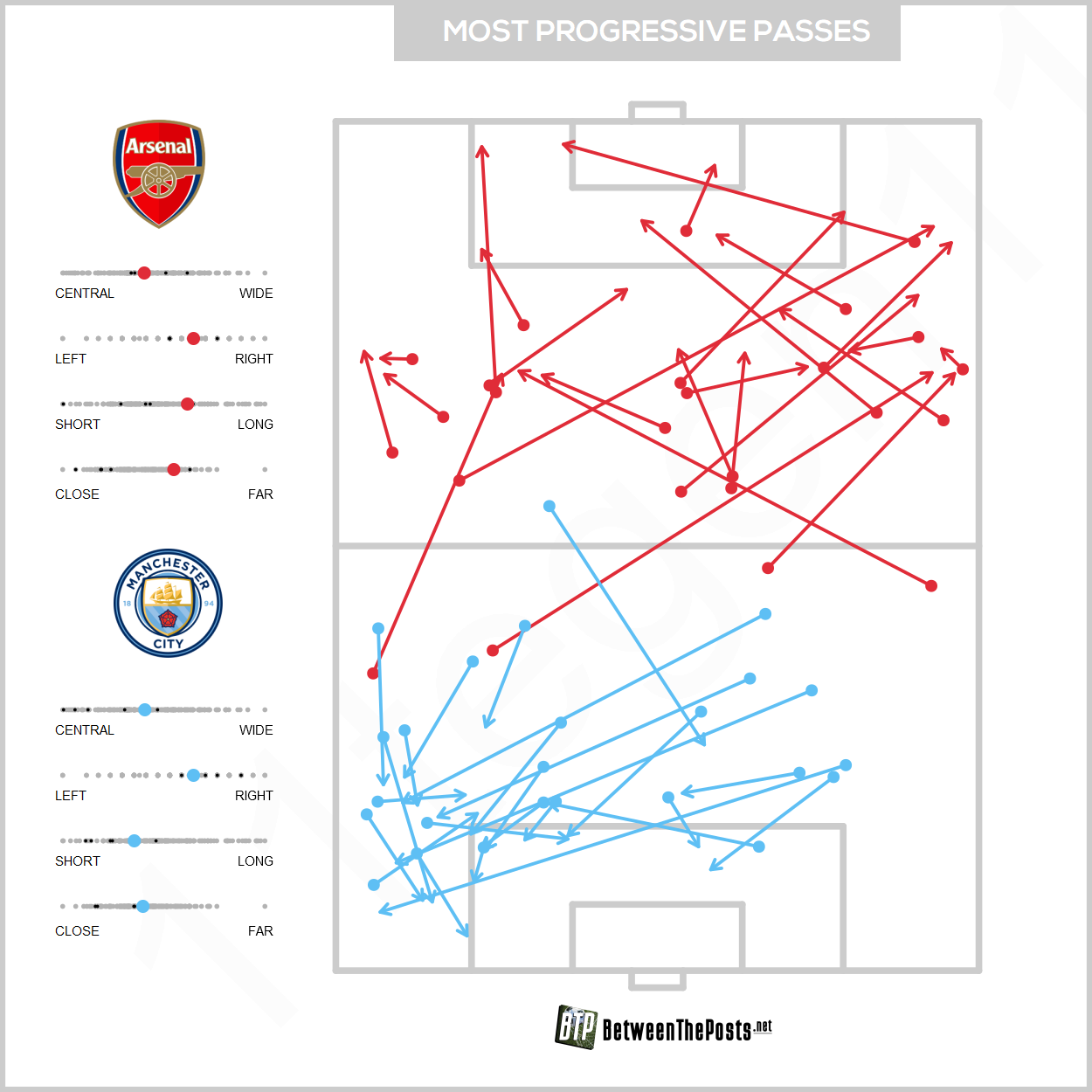
City’s attacks often went down the right.
There was a slight adjustment for City going into the second half, as Cherki drifted wide more often, sometimes creating a double wing occupation on the right with Semenyo. Bernardo Silva was also drifting over to this area to try and create overloads.
As the hour mark rolled around, Arsenal were coming under serious pressure as they could not play through City’s press, and their defending was becoming more passive. Eventually, City broke through on the right side through a switch of play out to Bernardo Silva and a ball across the face of goal from the underlapping Cherki, which was fumbled by Kepa Arrizabalaga, allowing O’Reilly to nod home from close range.
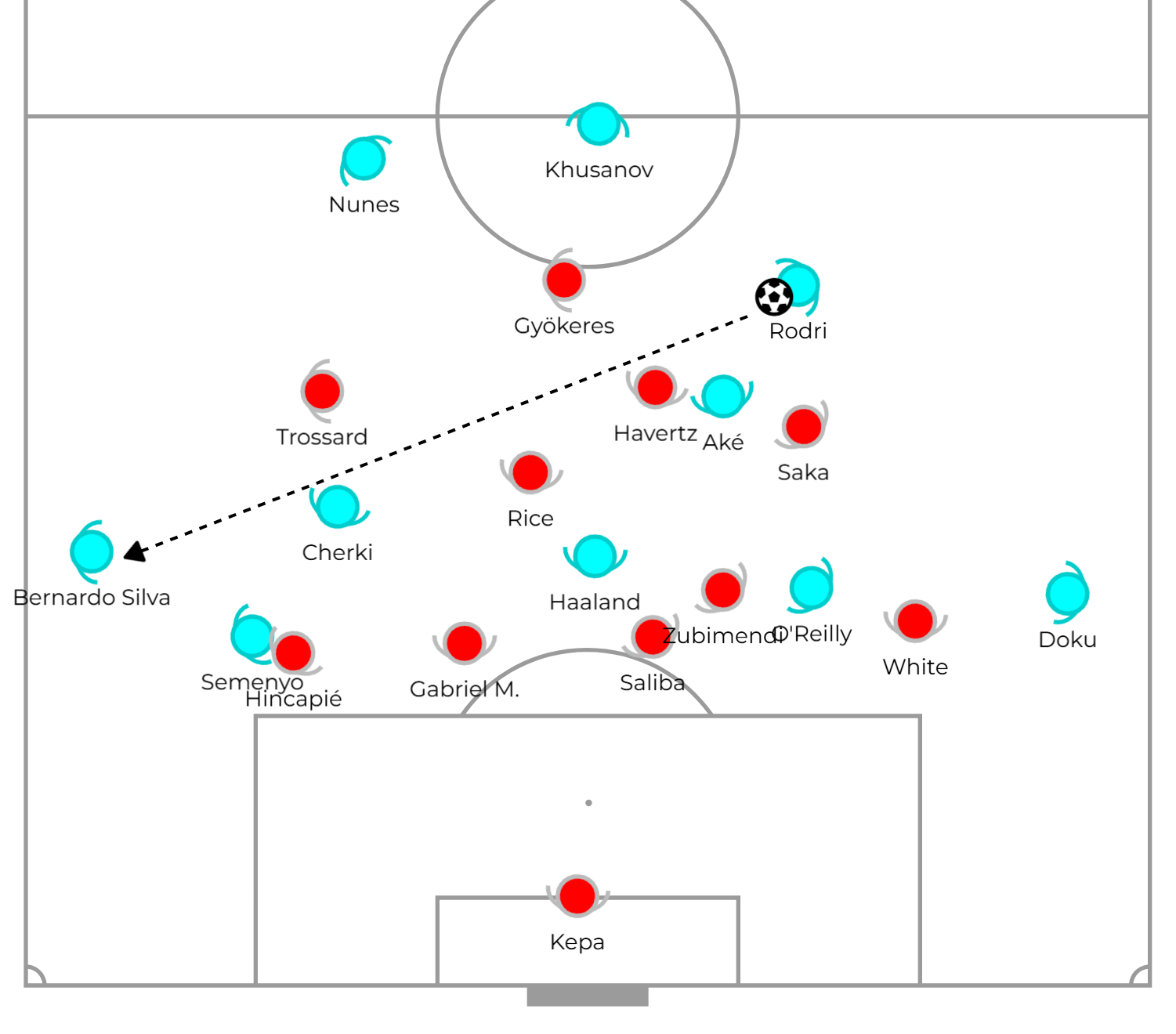
The buildup to City’s first goal with a switch of play and an overload on the right.
Just a few minutes later, things went from bad to worse for Arsenal as another move down the right side resulted in Nunes’ floated cross being met again by the head of O’Reilly, making it 2-0 to City with twenty-five minutes remaining.
Arsenal’s absent fightback
Arteta reacted to O’Reilly’s quickfire double by bringing on Riccardo Calafiori and Noni Madueke in place of Hincapié and Havertz. This change also saw Saka moving into the number ten role as Madueke played on the right.
City’s press was able to drop off slightly to try and protect their lead, and they found themselves more often in a mid or low block. When Arsenal had established possession higher up the pitch, Calafiori would advance in the left halfspace to support the attack, and White also often inverted as Madueke held the width.
Arsenal’s lack of attacking ideas continued into this phase of the game though. Their best chances came through a set piece towards Calafiori and a cross towards Gabriel. Most of their possession play was relatively easy for City to deal with though.
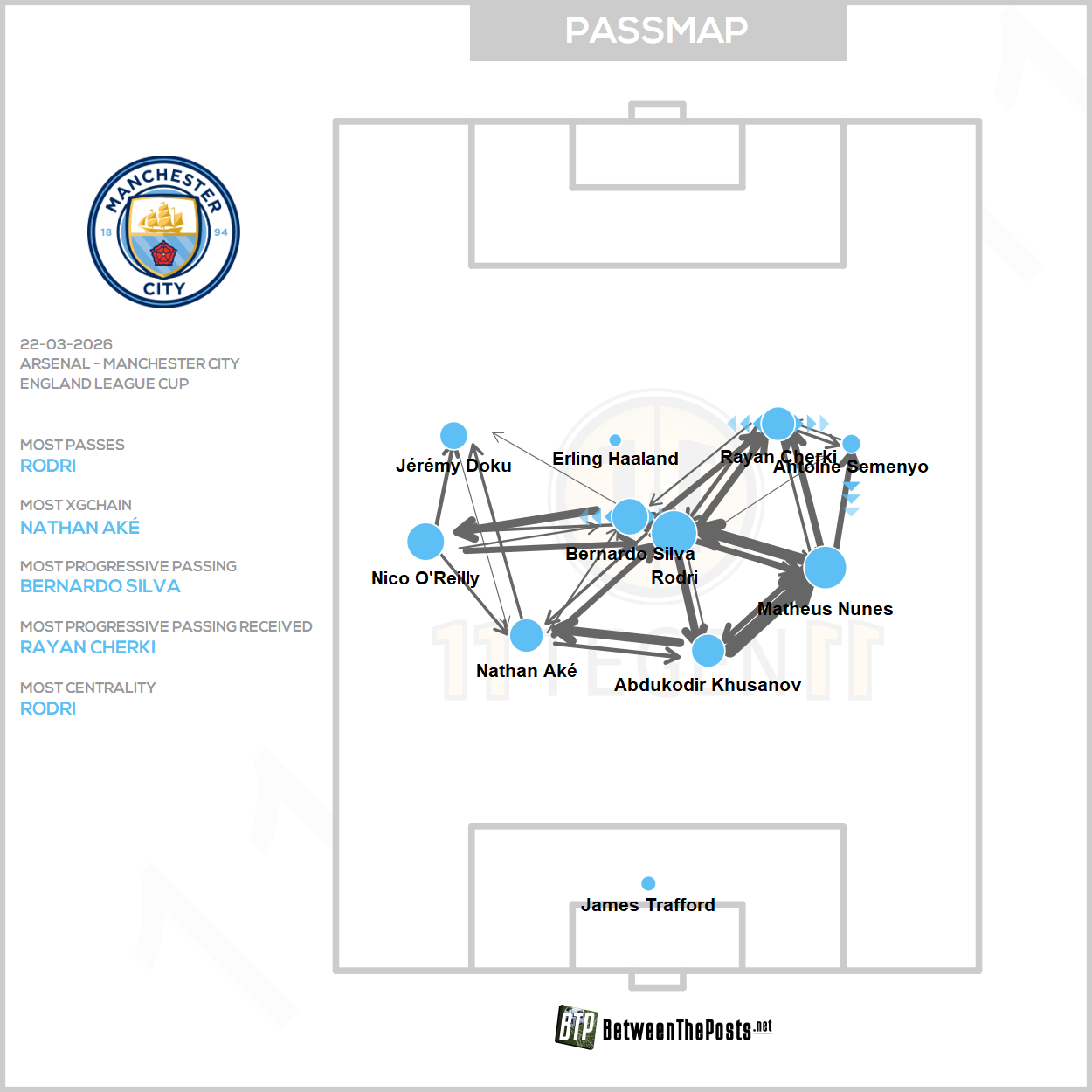
The importance of Rodri, Bernardo Silva, and Cherki shows in City’s passmap.
City continued to manage the game well in their own possession phases. The press resistance and ball-carrying ability of players like Bernardo Silva and Cherki was once again useful in driving Arsenal back so that even while 2-0 down, there were still phases where Arsenal had to defend in a mid or low block rather than being able to establish a high press. Nunes and Rodri also played a role in this respect, completing the right-sided axis that had served City well throughout the game.
Arteta’s final roll of the dice saw Gabriel Martinelli and Gabriel Jesus replace Trossard and White, meaning Rice moved to right back and Saka to central midfield. City saw the game out quite comfortably though, with Pep not making a change until Phil Foden’s last-minute cameo in place of Cherki.
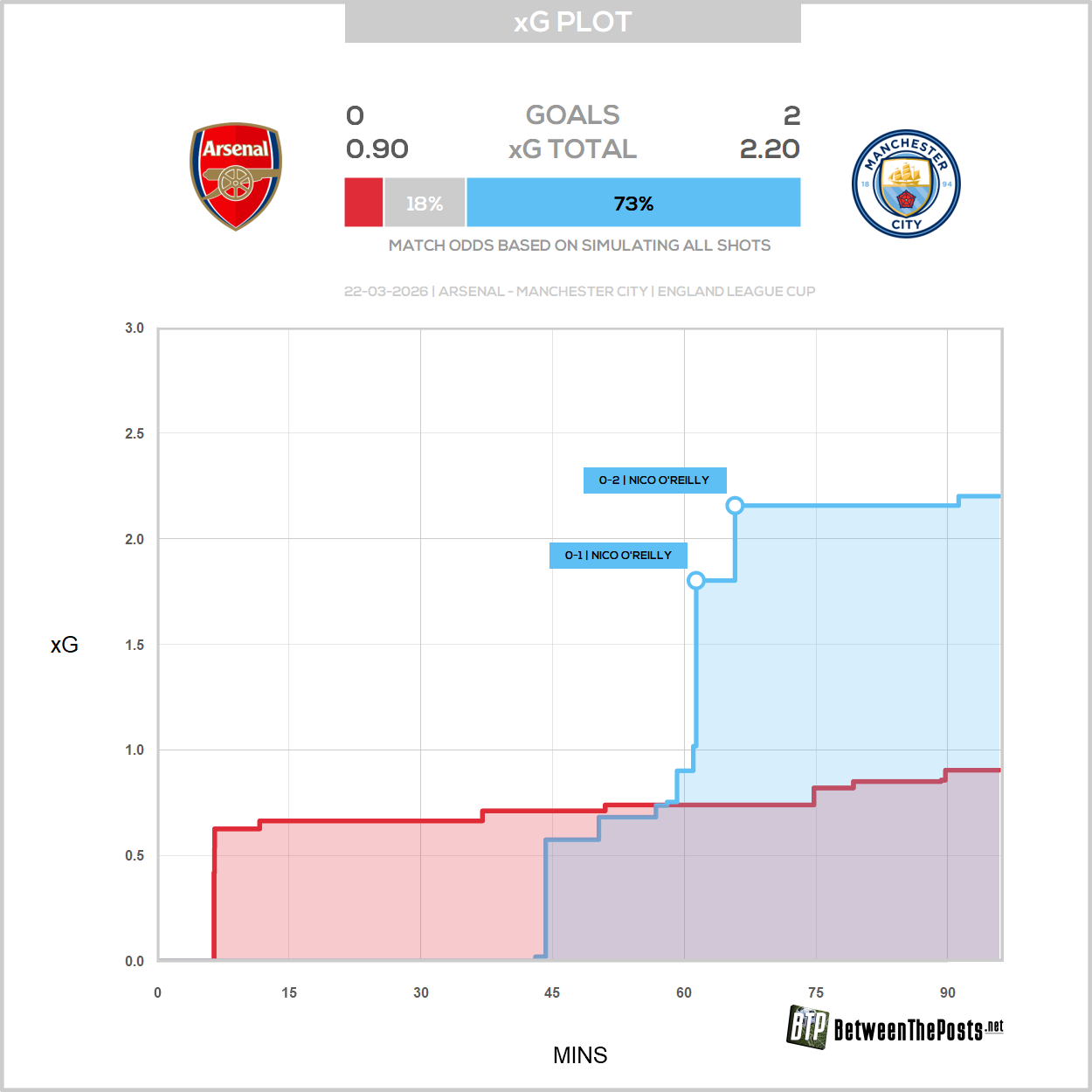
Takeaways
Arsenal will be disappointed with their display here. The inability to find a solution against City’s zonal press was concerning – there was a genuine lack of tempo and movement when building from the back. Without the ball, they were pushed into a passive stance by City’s press-resistance and their attacking structure.
City gave a very accomplished display here and were in control for much of the game, although in the first half they did not create too much. Guardiola and his coaching team found the correct pressing approach for the situation, retaining their zonal structure rather than being overly aggressive, which stumped Arsenal who were unable to open gaps. City’s possession play was strong, with the right-sided axis being a particular strong point, and it was unsurprising that both goals were created from there.
Use the arrows to scroll through all available match plots. Click to enlarge.
Check the match plots page for plots of other matches.