
River Plate – Rosario Central: Di María’s Rosario Gets the Job done, away against River Plate (0-1)
Rosario had a game plan and stuck with it throughout the game. They caused their opponents problems in transition, with their clinical passing and quickness in attack. River Plate’s setup gave room for more space in transition, which suited Rosario Central. River’s possession and control, especially in the second half, wasn’t enough to get the ball in the back of the net.
Tactical analysis and match report by Ebuka Ogoegbunam.
River Plate opened their Clausura account with two losses in their first two games. In both games, they failed to score while conceding in each occasion. With key names like Sebastian Driussi and Marcos Acuna missing out, River Plate lacked some firepower in attack.
Rosario on the other hand, also failed to grab any win in their opening two games with a loss and a draw in that order. They had a chance to get a result but in a very tough atmosphere of 85,000 fans.
Eduardo Coudet’s starting XI included Santiago Beltrán in goal with a backline of Gonzalo Montiel, Nicolás Otamendi, Lucas Martínez Quarta and Lautaro Rivero. Aníbal Moreno and Fausto Vera played alongside each other in the midfield with Lautaro Pereyra higher up in the attacking midfield. Facundo Colidio, Joaquín Freitas and Rafael Santos Borré.
Jorge Almirón selected Conan Ledesma in goal with back four of Emanuel Coronel, Ignacio Ovando, Gastón Ávila and Agustín Sández. Franco Ibarra and Vicente Pizarro made up the double pivot. Ángel Di María played in the attacking midfield behind as front three of Jáminton Campaz, Giovanni Cantizano and Enzo Copetti.
River’s attacking setup
River set up in a 3-2-5 shape with the ball. Montiel pushed high up to occupy the wide areas and attacking positions between the lines. This was dependent on the position of Freitas. When he occupied the position of the attacking ten on the right hand side, Freitas held the width on the right hand side and vice versa. Rivero often tucked into the backline forming the back three. Moreno and Vera were the double pivots with the latter, pushing up higher than required in some moments.
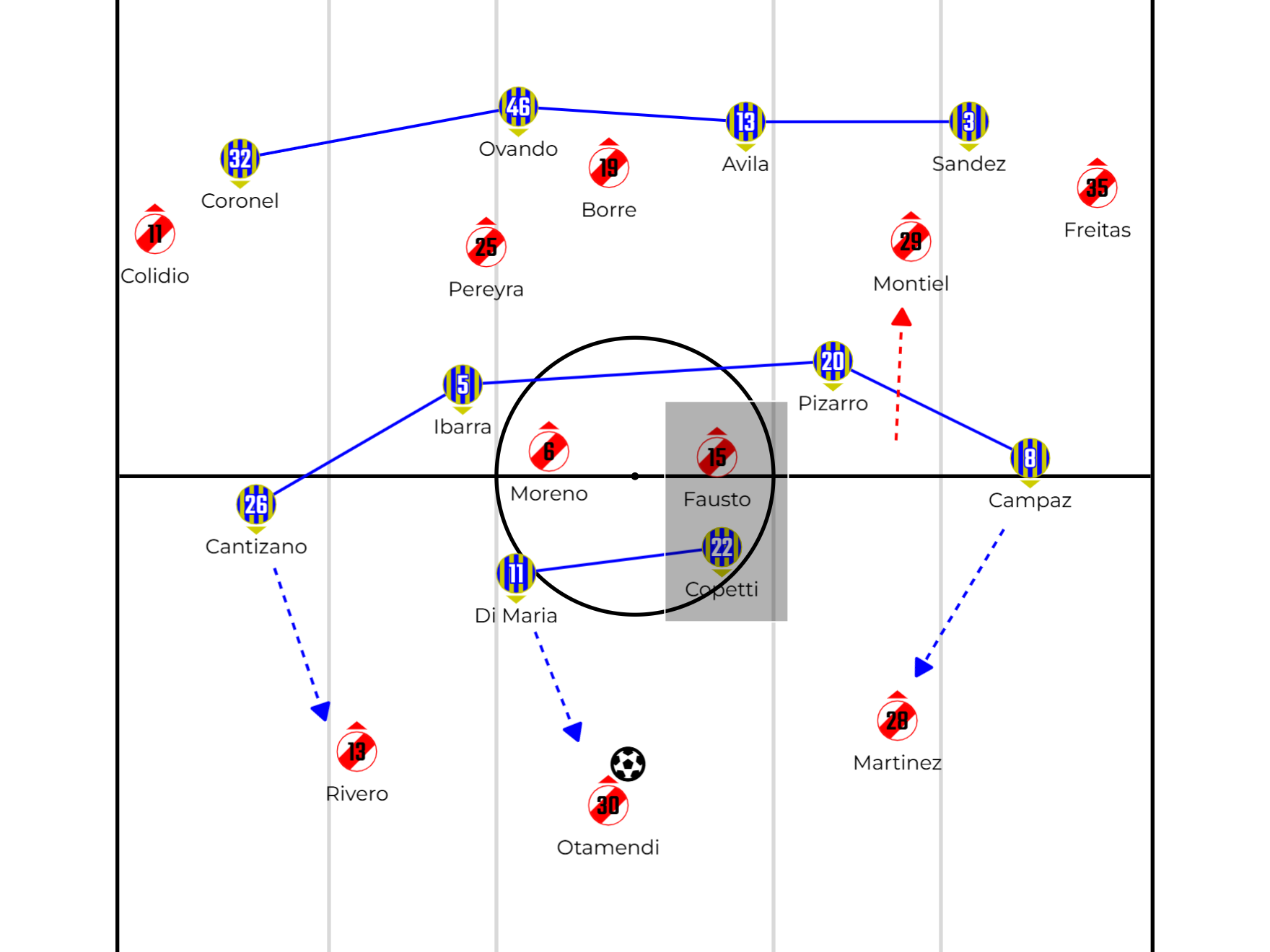
River’s right hand side having more numbers on the hand side. Colidio stayed narrow.
Colidio stayed in wide positions but often drifted inside to maintain a narrow position. He and Pereyra stayed in between the lines. With Rivero sitting with the backline and Colidio staying narrow, River lacked width on the left hand side. How River wanted to attack was clear, majorly through the center and the right hand side. This made more sense because of the numerical advantage they had on the right hand side of the pitch, especially in wide areas.
Rosario Central set up in a 4-4-2 shape without the ball. Di María and Copetti led the press in the first line. They both covered the central passing lanes before one of them put pressure on the River Plate center backs. The wingers had to be cautious when they put pressure, especially on Rosario’s left hand side. This was because of the positioning of Montiel.
If Campaz put pressure on the right center back, that opened a free lane to Montiel or Freitas on the right hand side. Rosario’s front press didn’t always put pressure and this allowed River plate to have more possession. However, they were aggressive defensively and prevented River from playing easily.
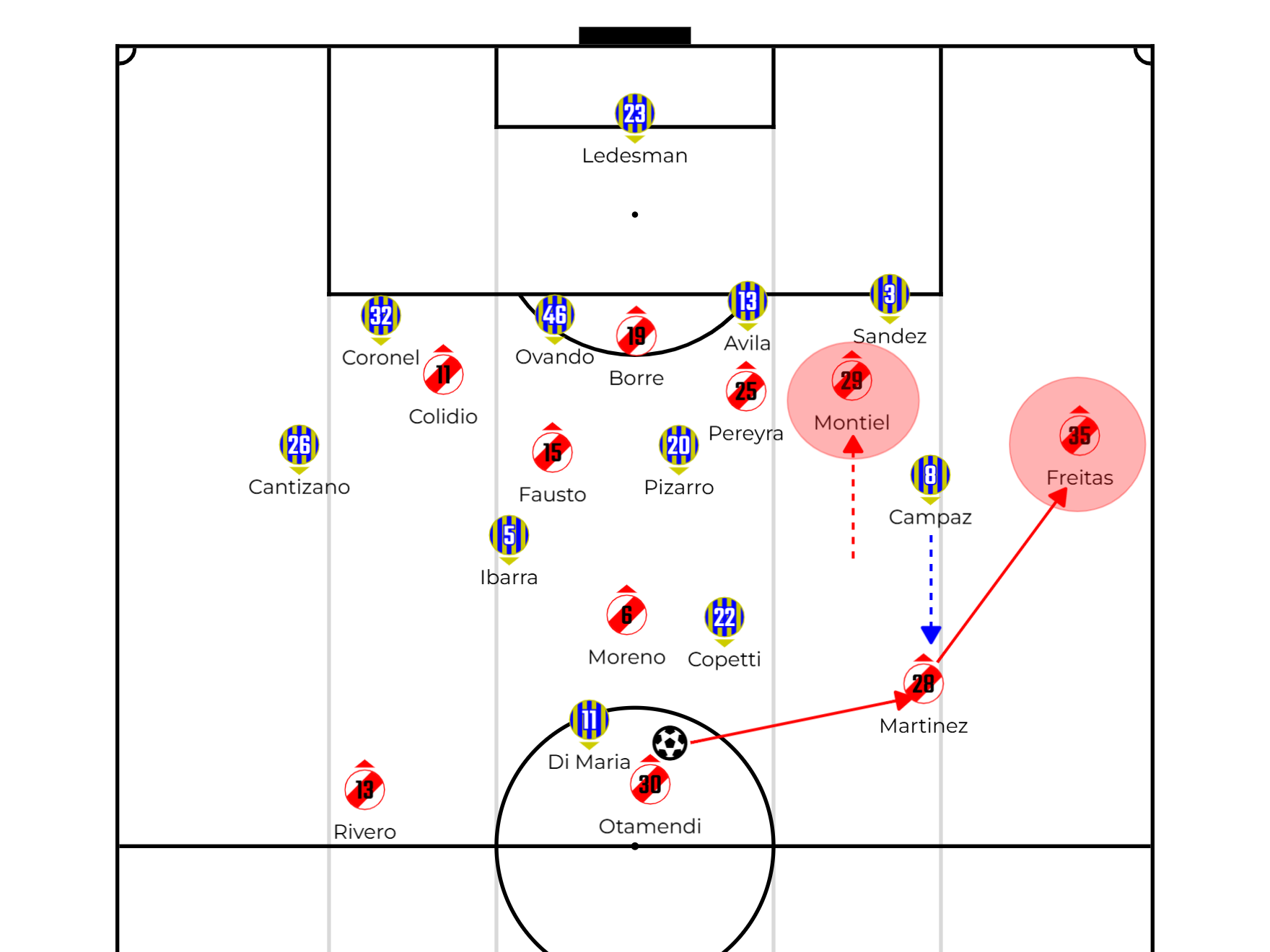
Rosario Central’s 4-4-2 press against River’s 3-2 build up base. Montiel pushed up into the half space.
From goalkicks, Rosario didn’t give River much space to play through. Rosario pressed in a 4-1-3-2 shape. Di María and Copetti as the front two while the wingers and a midfielder made the three in the second line of the press.
Pizarro, who was often the midfielder high in the press, was asked to screen and put pressure on the player nearest player ball-side. This allowed him to handle the 2v1 overload in his zone.
Ibarra stayed low to cover the central area while keeping tabs on Pereyra’s movement. This forced River to go long and compete for duels giving the game a more duel-based spectacle.
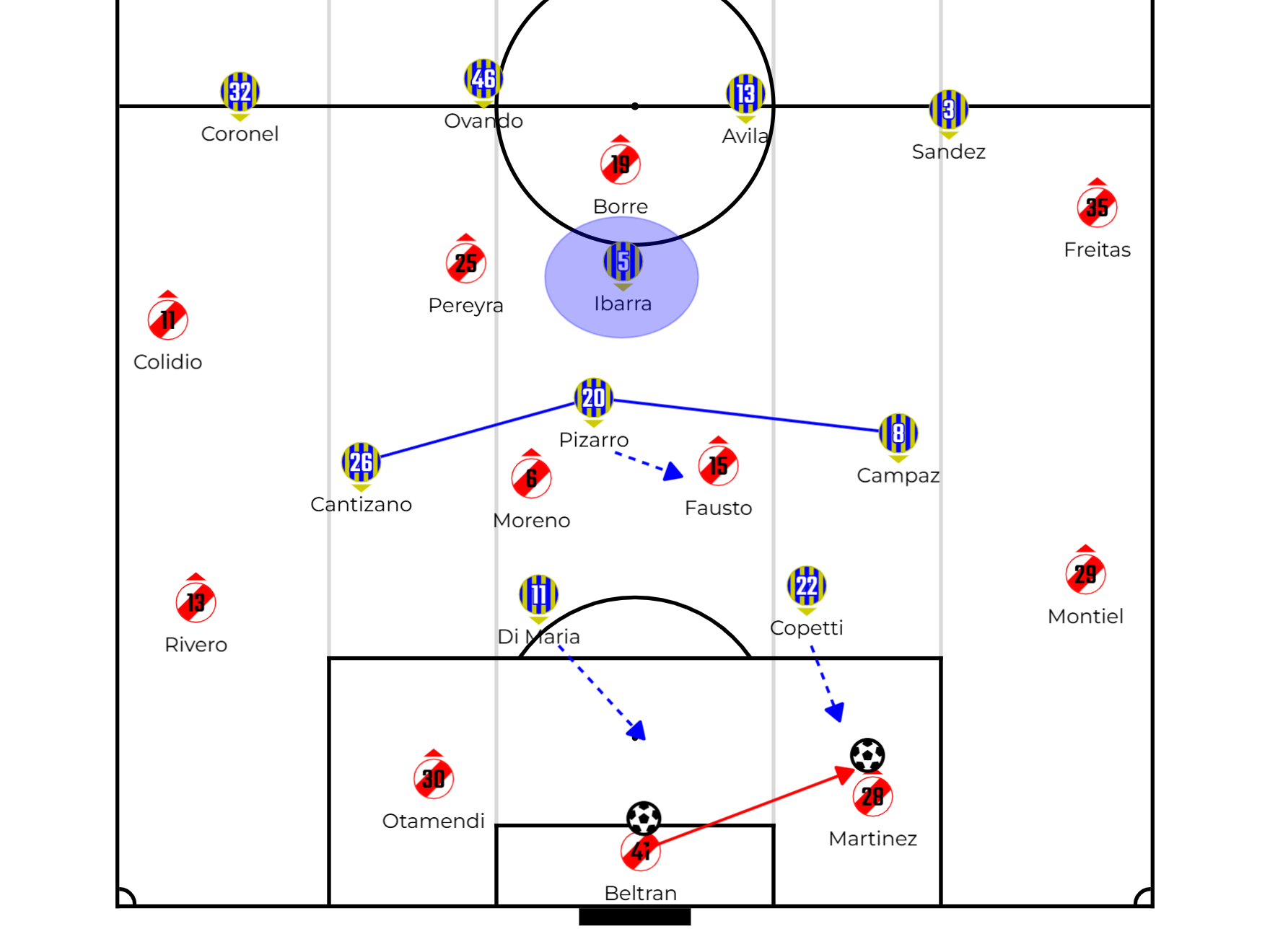
Rosario’s 4-1-3-2 high press from goalkick. Both wingers occupy narrow positions before pressing wide. Pizarro screens ballside to handle overload.
Rosario’s first strike
Both teams started the game off in a very direct manner. One could sense the urgency from both teams. Montiel’s positioning helped River to have numbers in attack but during turnovers, River plate’s right hand side looked porous in transitions. This sequence allowed Campaz to be a threat when running at the River defence.
Rosario’s passing and intensity in transition helped them get to the final third quite often. Campaz, Di María, Copetti and Cantizano all combined together to catch the River Plate defence off guard.
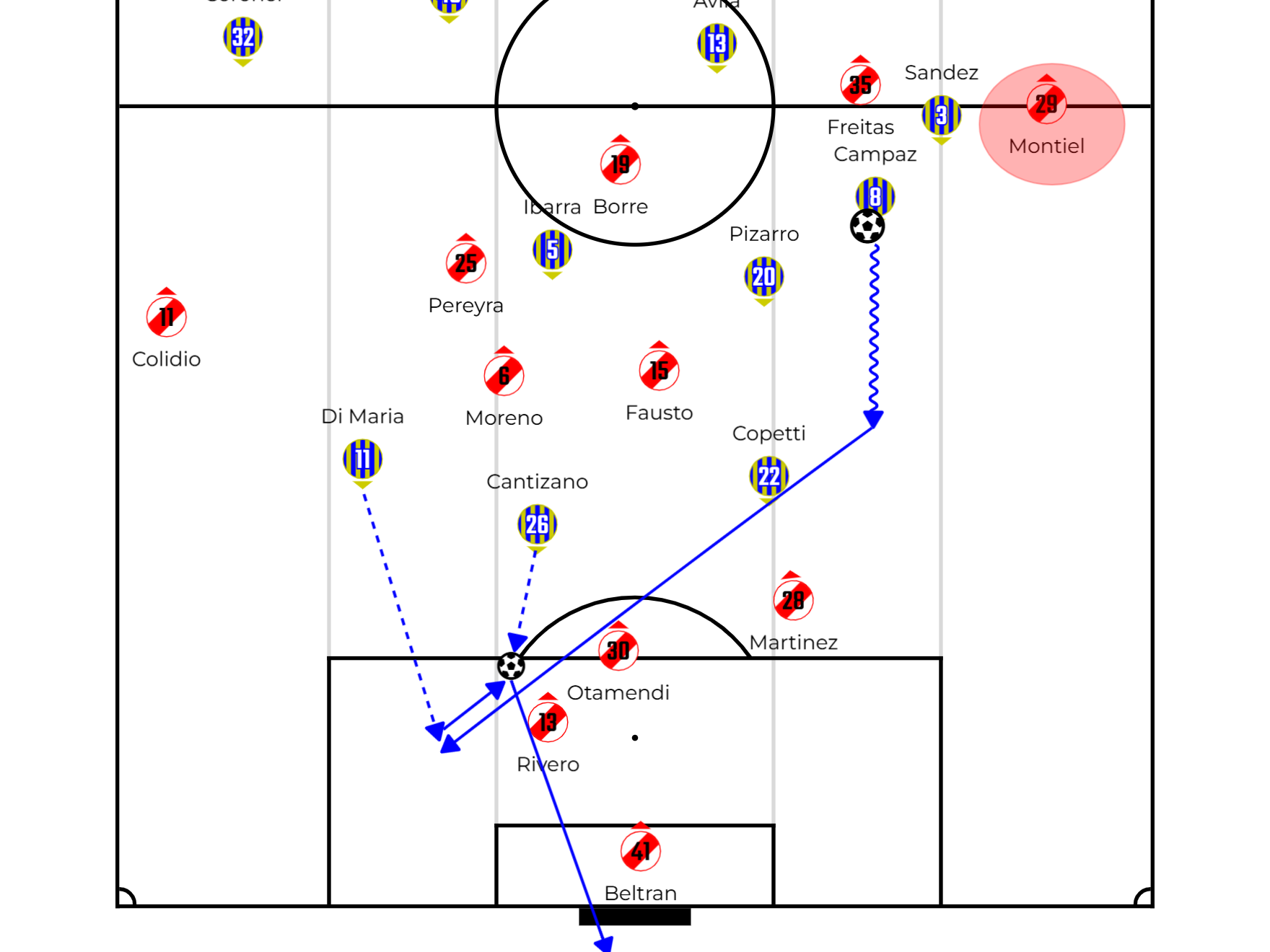
Rosario took advantage of Montiel’s positioning in attack and caused River problems in transition.
Rosario’s opening goal came from their intent to be direct and attack in behind. Pizarro’s through pass found Campaz, who made a direct run in behind Montiel. Campaz’s cross was flashed across goal towards Cantizano who attacked the box. Otamendi intended to block the cross from reaching its target but ended up directing the ball past his own goalie.
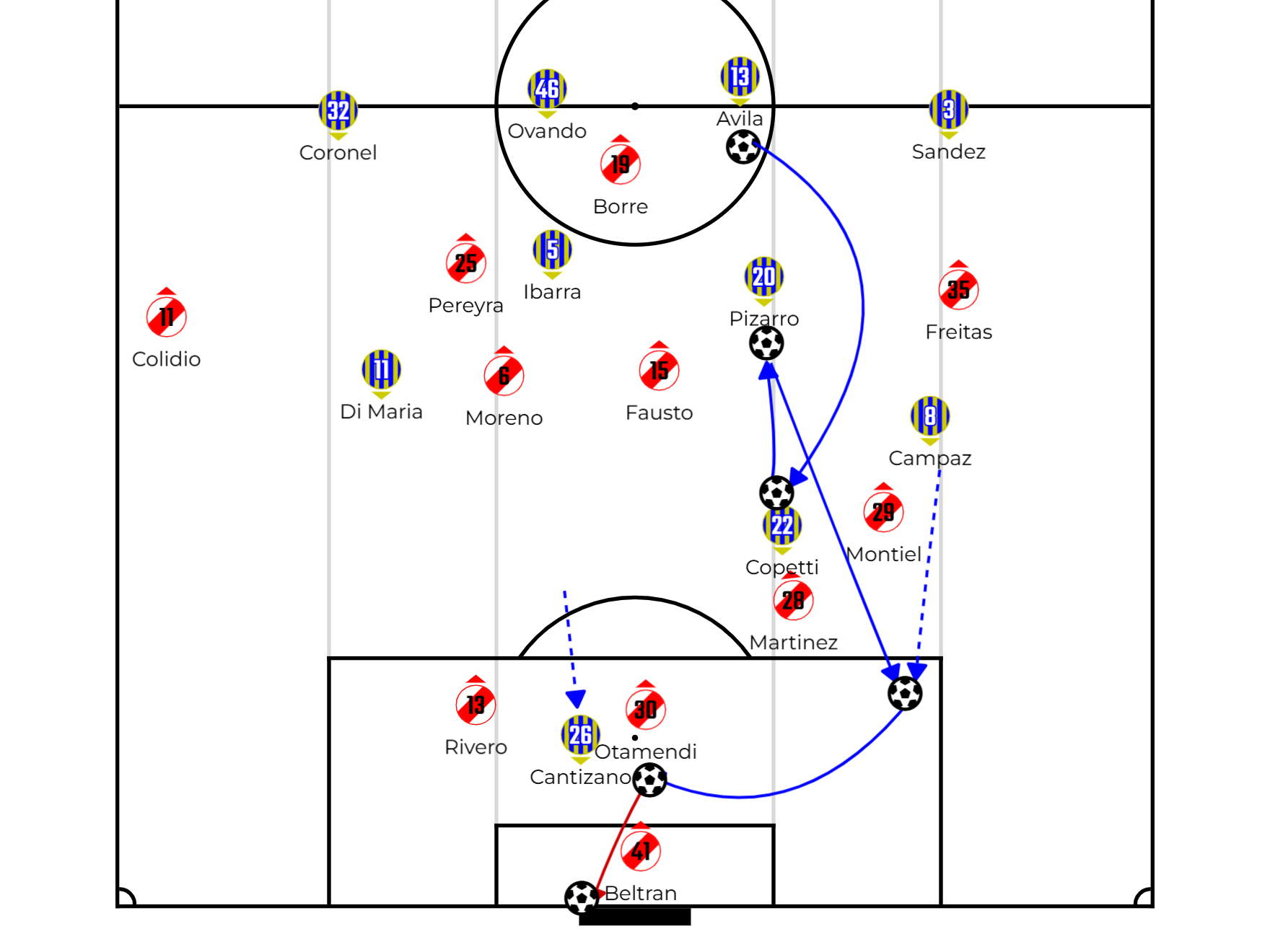
Rosario’s goal. Campaz’s run in behind, Pizarro’s direct pass in behind, Cantizano attacking the box.
This opened the game up for Rosario, knowing River would attack in more numbers than before and this happened. In the second half, River’s desperation worsened as the game went by. Attacking changes by Coudet gave his team more attacking players on the pitch.
The introduction of Lucas Beltrán and Tomás Galván gave the team more life. Galván occupied the wide areas on the left hand side, giving less reliance to attack on the right. River got into the final third using crosses to cause chaos in the box for Rosario. These crosses generated more opportunities in the second half, but Rosario’s quick defending in moments was key.
River Plate’s missed opportunities during these moments gave the fans some sort of belief, but at the other end, Rosario were constantly attacking the acres of space River conceded defensively.
River were poor in front of goal as they failed to put their chances away. This eventually cost them as they failed to score in the game. River Plate’s struggles in front of goal continue.
Takeaways
River Plate controlled possession for much of the contest, particularly after falling behind, but their dominance rarely translated into clear-cut opportunities. Their 3-2-5 attacking structure created numerical superiority on the right side, yet the lack of width on the left made their attacks predictable and easier for Rosario to defend. While Eduardo Coudet’s second-half substitutions added greater balance and energy, allowing River to attack more effectively from both flanks, their inability to convert chances once again proved costly.
Rosario’s defensive organisation also played a significant role in the result. Their flexible pressing structure prevented River from comfortably building from the back, forcing longer passes and increasing the number of aerial duels. Even when River increased the pressure late in the game, Rosario remained composed, defended their penalty area effectively, and continued to threaten on the counterattack whenever River committed numbers forward.
For River Plate, the defeat highlights an increasingly concerning trend. Two consecutive Clausura defeats without scoring underline their current struggles in the final third, particularly in the absence of key attacking players. Meanwhile, Rosario Central demonstrated the value of tactical discipline, defensive organisation, and efficiency in transition.
Despite spending less time on the ball, they produced the moments that mattered most, showing that a well-executed defensive game plan and clinical attacking transitions can outweigh territorial dominance and possession.
Rosario get their first win in the Clausura while River plate continue to search for their first win.
Match plots will be added as soon as possible.


Comments