
Canada – Bosnia & Herzegovina: Thrilling Group B Opener Ends In An Entertaining Draw (1-1)
Despite playing on home turf, Canada trailed almost midway into the first half after Bosnia & Herzegovina took the lead. Jovo Lukić’s header converted a cleverly worked corner routine, providing the visitors with a bit of headroom to sit back and protect the lead, which seemed to be the game plan from the start. After a shift in tempo and intent from Canada after half-time, they grew into the game.
Tactical analysis and match report by Fahd Ahmed.
We decided to make this article free to read. If you want to support our work, consider taking a subscription.
Group A provided an intriguing start to the World Cup, with Mexico and South Korea picking up victories in the opening games. That group, like a few others in this tournament, seems to be fairly tight, with there not being a clear standout winner who will most probably qualify for the knockout stages. Group B is in a similar position, with not much separating Canada, Bosnia & Herzegovina (BH), and Switzerland, whilst Qatar will almost certainly finish bottom.
Going into the game, Canada were the favourites since they were playing on home turf. Furthermore, they had better individual quality in the team. That being said, BH brought their collective strengths, as they proved to be a defensively robust and physical side during the World Cup qualifiers. BH famously managed to knock out Italy, which was a testament to what they could produce. Therefore, the fixture between Canada and BH was an interesting affair, as it would reveal the individual and tactical levels of both sides.
Double width and back post crosses to probe a 4-4-2 low block
Canada dominated possession in the first half as they controlled the ball and pinned BH deep, who were willing to do so. This was evident, with BH dropping into a 4-4-2 low block whilst defending passively and rarely stepping out to actively engage. This allowed the Canadians to settle into their positions, with Ismael Koné splitting the centre-backs and full-backs offering double width by supporting the wingers.
With BH in a compact block, central spaces were congested. Consequently, Canada had to often rely on back-post crosses as they overloaded the same area. However, BH had an advantage in these situations due to their superior physicality. Therefore, the visitors were in a favourable position to deal with them, but it is still worth adding that Canada would just need a slice of luck to fall their way to capitalize.
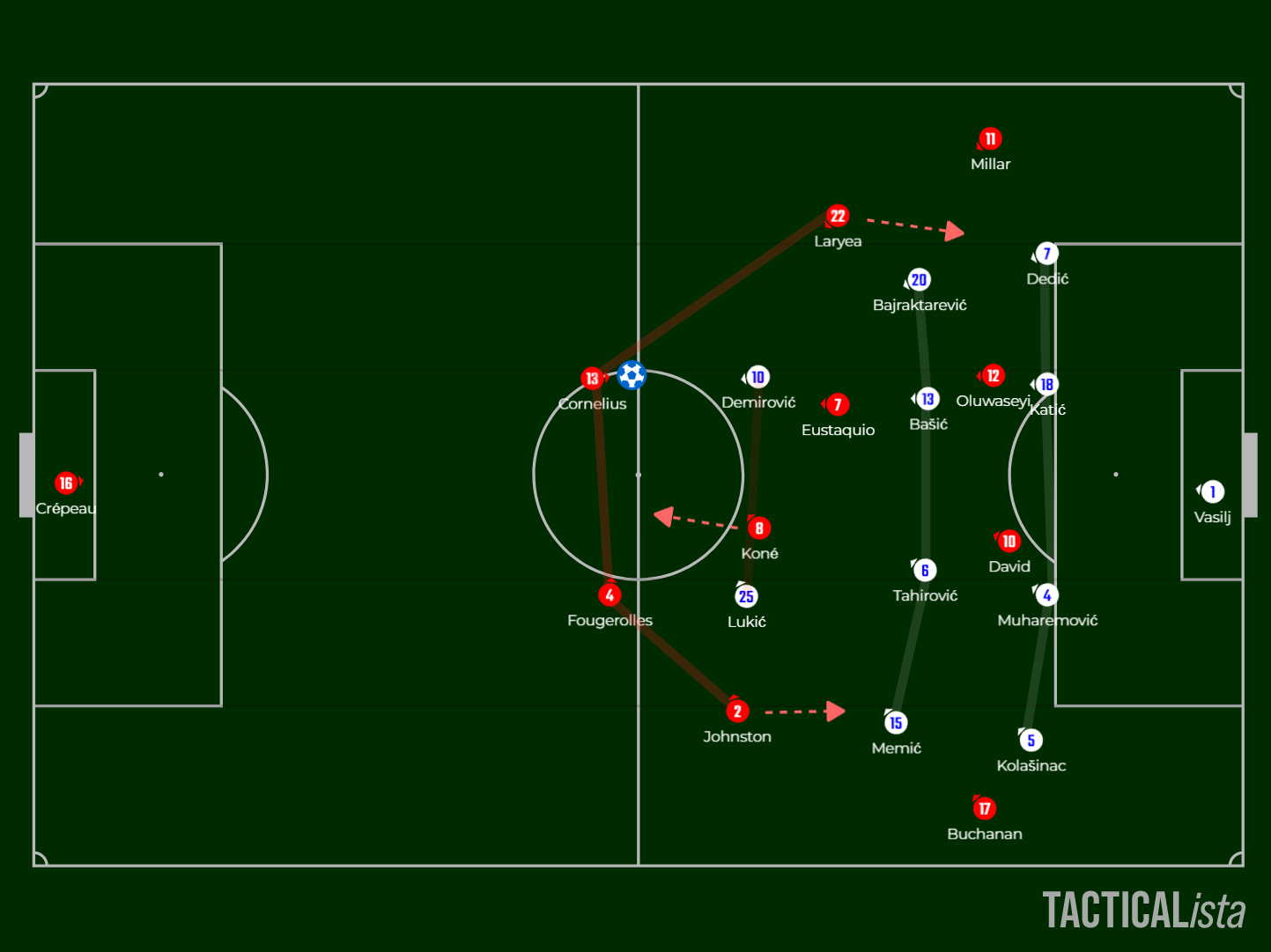
Image 1: Canada utilized their double width to pour crosses into the box whilst flooding the back-post zone. However, with BH having a physicality advantage, they were well-placed to deal with them.
As a result, BH primarily relied on counterattacks to create chances. This was the better option considering BH’s lack of in-possession quality. The same detail was evident during the sporadic and brief spells where they had the ball but usually lost it carelessly.
In transition, the visitors lacked pace centrally with a physical striker pairing. Although they were the outlets, the strikers did not directly threaten beyond the Canada backline. Instead, they often received, protected, and connected passes, with the quicker wingers offering pace and threat.
Although it did not prove to have a huge impact on the game’s proceedings, it was interesting to see how easily BH managed to force Canada long during their goal kicks. Despite numerical superiority in the first phase, with the midfielders having a 2v1 overload, Canada could not access it. This was partly forced by BH, as they pressed intensely whilst cutting off the passing angle into the spare man. Another reason was probably to do with risk aversion from Jesse Marsch. The rewards were probably not worth the risks, and so Canada were willing to mostly look long.
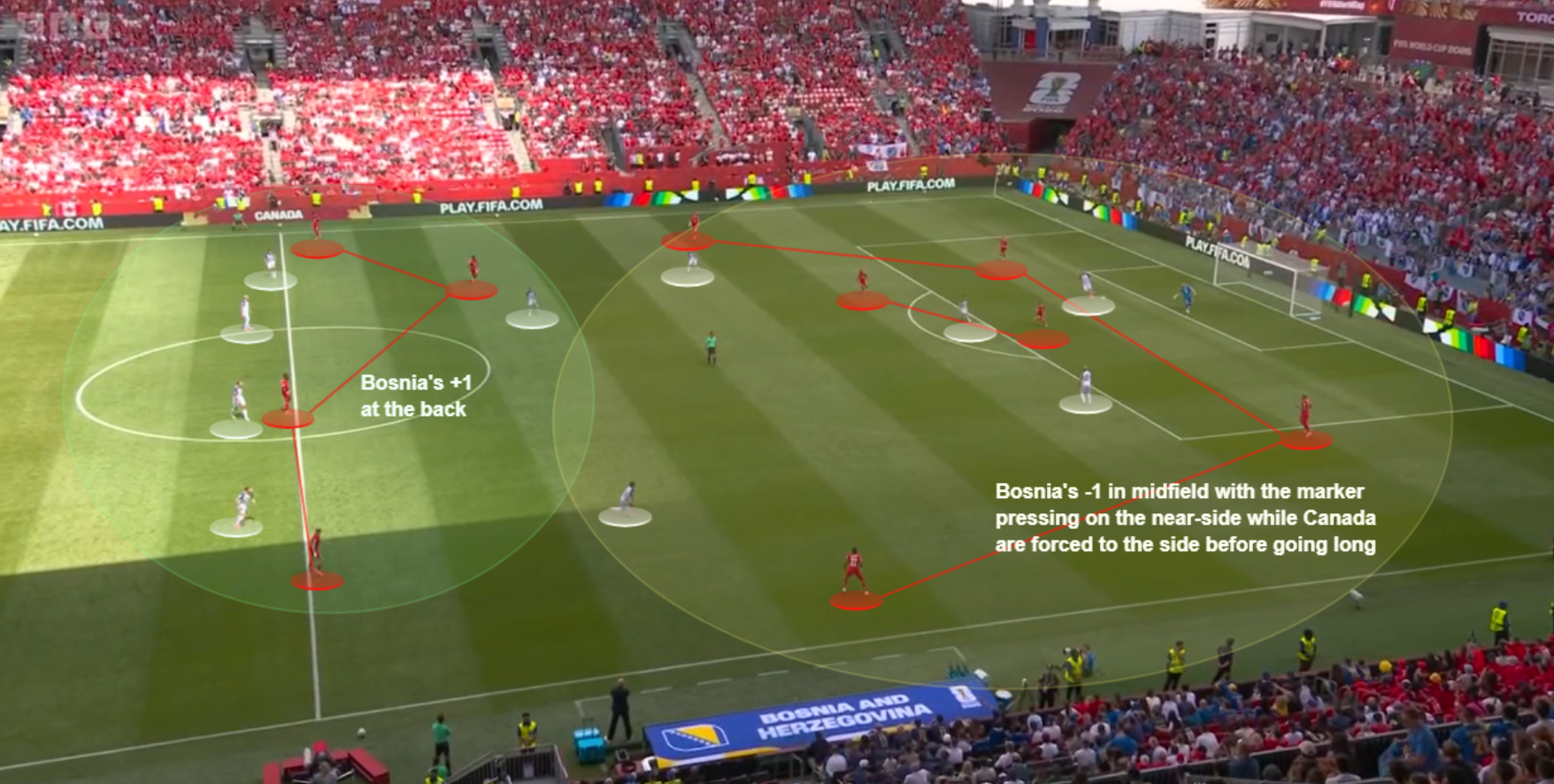
Image 2: Canada’s 4-2-4 goal-kick structure and BH’s high press set-up with a -1 against the opposition double pivot.
Importance of set-pieces
There was very little created from open play by both teams. Consequently, set-pieces emerged as a key theme, with both sides having their routines from free-kicks, corners, and long throws. BH usually kept their routine simple, but it proved to be effective, as seen with the opening goal.
They crowded the Canada box with a player ready to flick on from the near post, whilst the others positioned themselves to convert in the central and far-post zones. For the goal, Sead Kolašinac managed to connect with the near-post delivery since Canada’s Stephen Eustaquio, who was initially zonally marking the same area, stepped out. Kolašinac’s flick was well directed into the congested zone where Jovo Lukić was ready to convert. This goal seemed potentially inevitable considering BH had won first contact consecutively in their previous four offensive set-pieces.
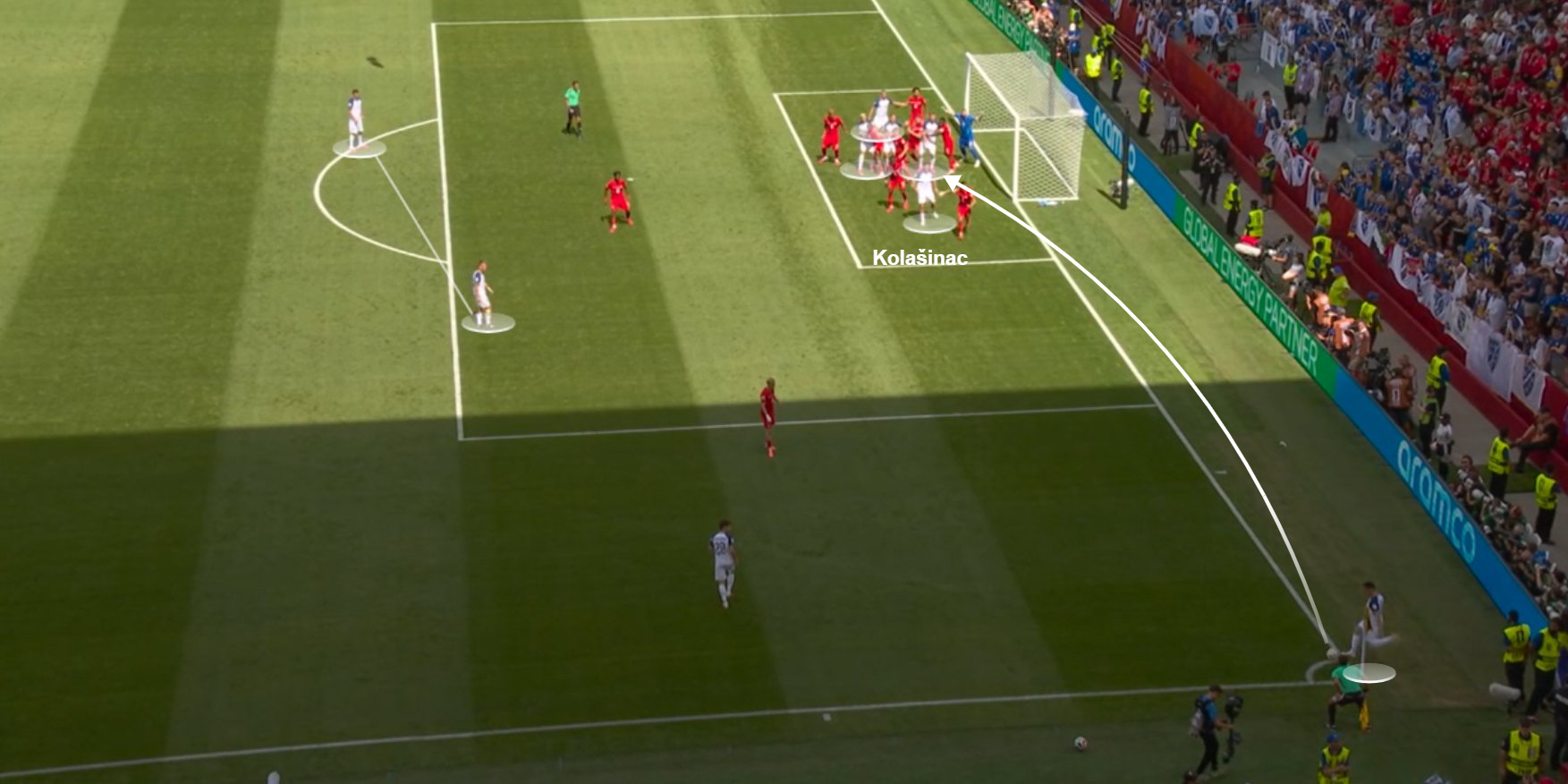
Image 3: The opening goal arose from a well-executed BH corner, with Kolašinac meeting the near-post cross whilst Lukić was ready to capitalize.
Meanwhile, since Canada could not offer the same threat due to physical inferiority, they had to be a bit more creative. From corners, Marsch had short-pass sequences in his back pocket, with a couple of attempts seeming to be promising. Canada also resorted to long throws, with Alistair Johnston providing a threat with his long and flat deliveries. However, none of their set-piece attempts yielded a goal.
Proactively and encouragingly shifting momentum in the second half
One of the main improvement areas for Canada was a shift in tempo and intent. Specifically, in the first half, when BH were retreating, having been in a higher defensive starting position, or when engaging in an active middle block, they left space between their lines of pressure.
This could have been capitalized on by Canada if they had attacked with quicker tempo and more directness rather than waiting to pin BH. Furthermore, as is the case when opposition defensive blocks actively engage in the middle third, Canada had opportunities beyond BH’s defensive line.
We saw the home side improve offensively in both these facets in the second half. The latter was on display initially, with Canada almost producing a valuable chance within the first few minutes of the restart. However, Tani Oluwaseyi could not convert and, more significantly, he was marginally offside.
An important detail worth noting here is the counter-movements from the Canada strikers. It is a concept that can be simply described as, “below run to attract and beyond run to attack”. To elaborate, Jonathan David’s below run attracted pressure from Tarik Muharemović, which opened the space for Oluwaseyi to attack.
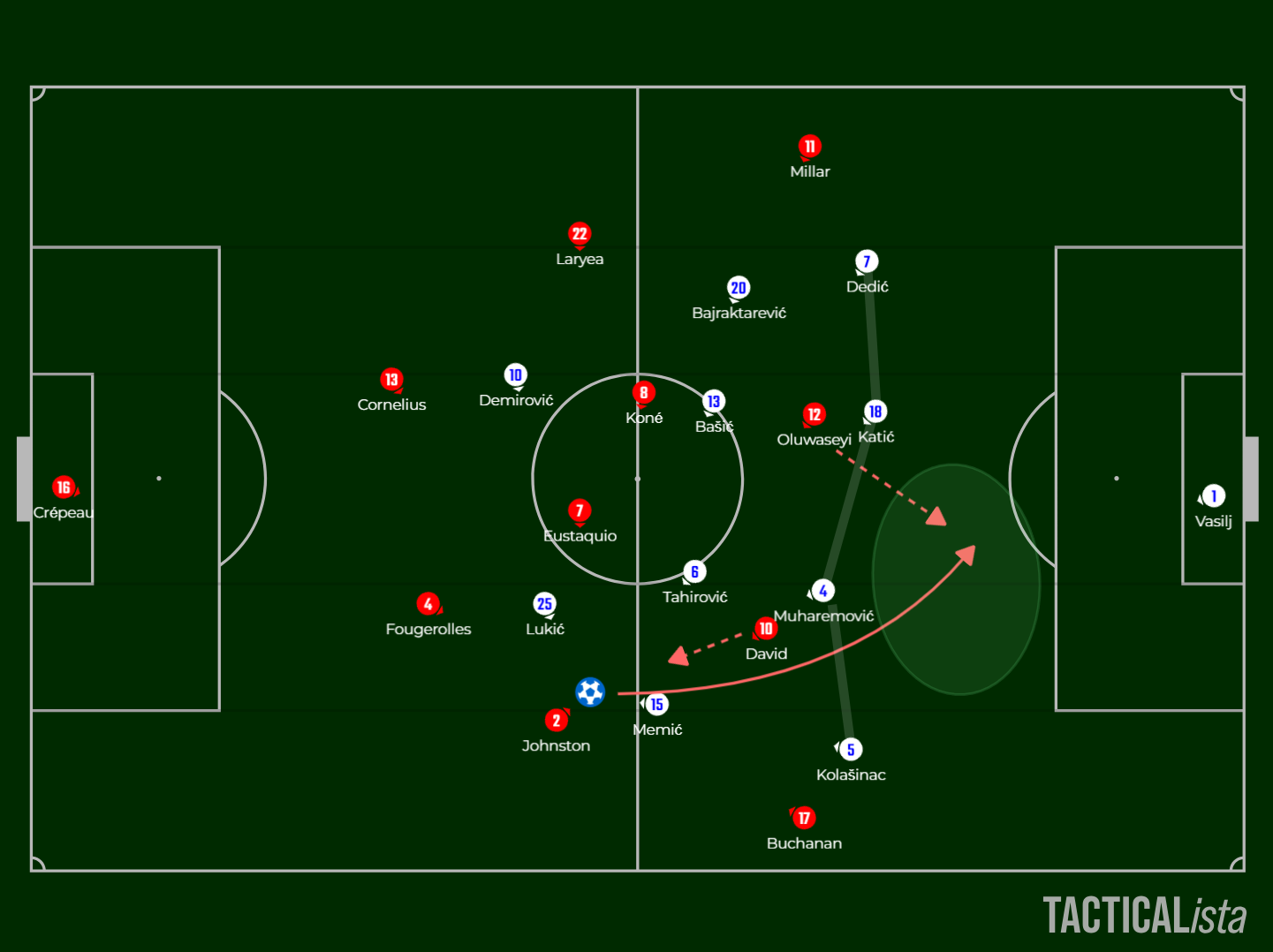
Image 4: Oluwaseyi’s chance early in the second half indicated a potential route for Canada to generate valuable goalscoring opportunities.
These synergies began shining more in the second half in the middle and final thirds. Once BH were pinned, Canada also started finding short passing combinations through the centre. The chemistry immediately improved as they began increasing the tempo, which likely was a message from Marsch at half-time. A great example of that came in the 53rd minute after Canada combined to get a shot off, but it was cleared by Kolašinac on the goal line.
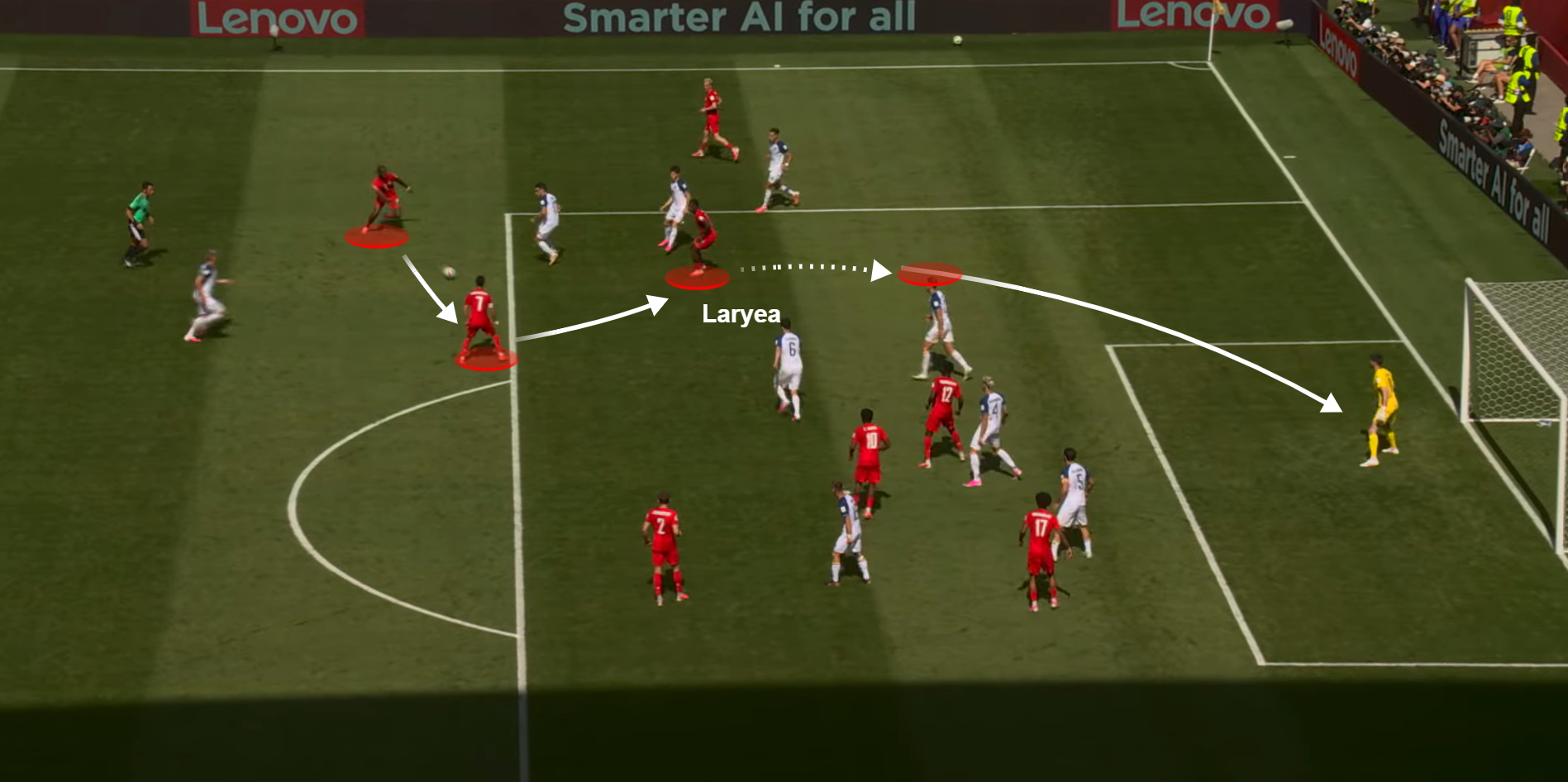
Image 5: Canada began finding short passing combinations in the second half to penetrate BH by increasing the tempo of their attacking play.
Despite dealing with constant offensive pressure, BH still had a threat in transition. There were a couple of situations where a deep turnover resulted in a dangerous attack for BH. Thus, they were still in the driving seat, especially considering the scoreline, although momentum had seemingly shifted.
The break later in the second half provided BH with a breather as they regained a degree of control following the restart. However, Canada grew into it again, with Marsch maintaining the intensity levels through numerous substitutions.
A special Canada move converted by Larin
BH’s last-ditch defending contained Canada for most of the second period, but a piece of excellence by Cyle Larin provided them with the extra quality to equalize. The details that were previously described and explored regarding short passing combinations with high tempo were illustrated beautifully by Canada.
A special moment for Cyle Larin and Canada 🇨🇦
— ITV Football (@itvfootball) June 12, 2026
He scores minutes after coming on and earns Canada their first-ever World Cup point! pic.twitter.com/l36rMxyyJw
The sequence also demonstrates the importance of certain individual details. Firstly, Ismael Koné’s ability to recognize and attack vacant central space with a brave dribbling attempt deserves immense credit. His pass to Promise David was met with a first-time flick towards Larin, who demonstrated top-level striker quality and instincts.
Knowing the angle of the defender’s pressure, Larin cleverly shielded the ball whilst simultaneously controlling it to bring it down in time. Having done so, with very limited space to wind up, Larin brilliantly turned his hips to face the goal before belting the ball with his laces to find the bottom corner.
Takeaways
In the remaining minutes, BH and especially Canada showed their intent to chase a second goal. However, with very little time left, they could not generate enough chances to sneak into the lead. Nevertheless, both teams will likely walk away with more positives than negatives.
Canada had a slow start to their World Cup campaign, having trailed in the first half whilst failing to produce numerous quality opportunities, which Marsch would have been disappointed about. He would have been pleased with how that shifted in the second period, with the team providing a needed reaction whilst riding the momentum and energy from the home crowd. They should have probably scored another considering the numerous chances created. Still, it was positive to see the reaction to come back and find an equalizer.
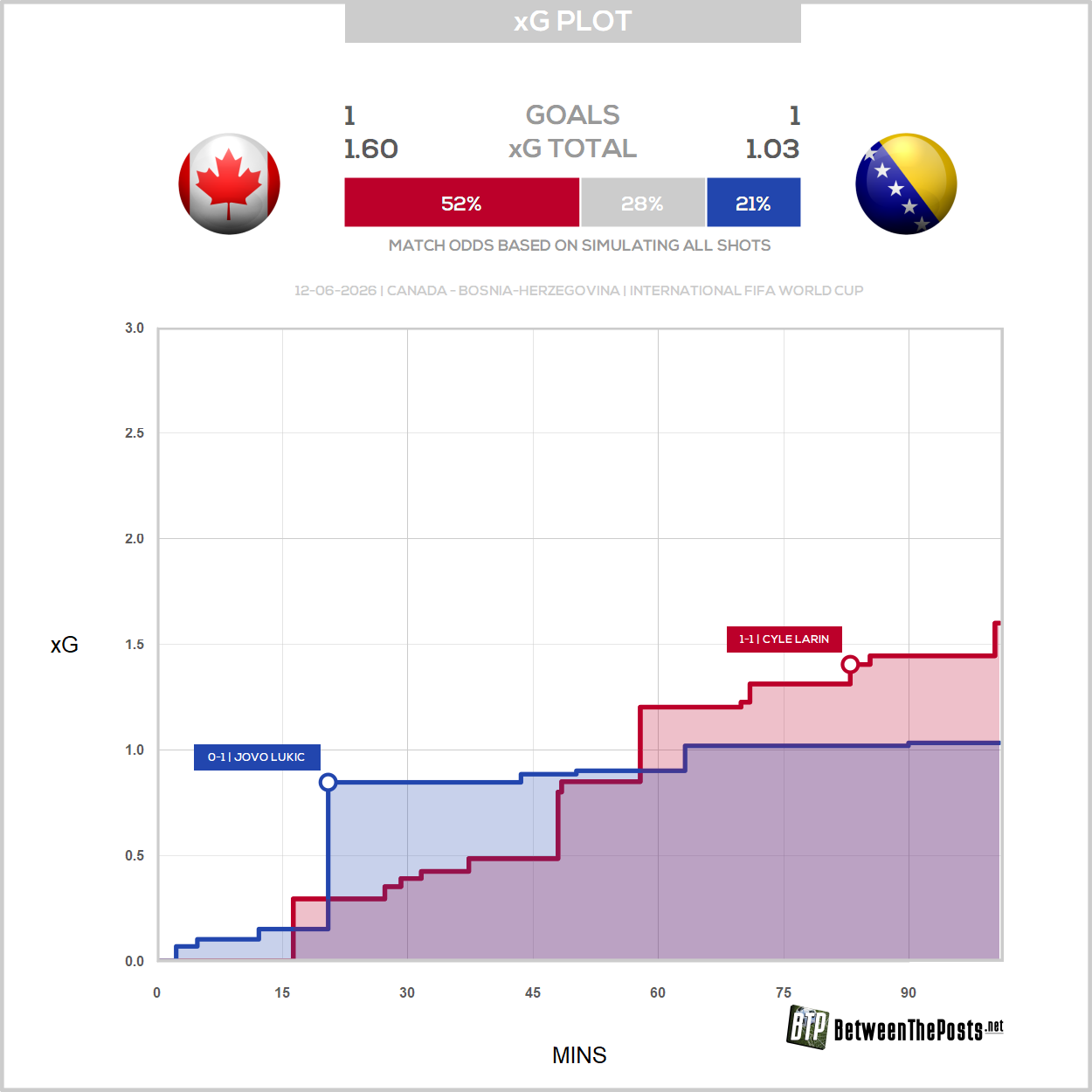
Image 6: The expected goals timeline reflects Canada’s dominance in the second half, and they maybe should have left with all three points.
On the other hand, BH commendably earned a point in a group where they will try to conjure at least a third-placed finish. Qualifying for the knockout stages after a 12-year absence would be a historic feat, and they could very well make that a reality.
Overall, that wrapped up a very entertaining game to open Group B, which will be tight and competitive, with Switzerland being a well-equipped team ready to fight for a top-two spot. With the Swiss ready to take on Qatar later on Saturday, there will be more clarity regarding the levels of the other Group B competitors and a potential indication as to how the table might shape up.
Use the arrows to scroll through all available match plots. Click to enlarge.
Check the match plots page for plots of other matches.