

Real Madrid – Bayern Munich: Bavarians Secure One-Goal Cushion At The Bernabéu (1-2)
The most anticipated Champions League quarter-final tie delivered entertainment as the two European heavyweights battled hard at the Bernabéu. Real Madrid looked most threatening during counterattacks whilst missing crucial opportunities in settled possession phases. Bayern Munich also consistently caused them trouble with clever movement and world-class individual quality.
Tactical analysis and match report by Fahd Ahmed.
We decided to make this article free to read. If you want to support our work, consider taking a subscription.
The Champions League has entered the most entertaining part of the season. At the quarter-final stage, there are multiple high-profile matches that supporters have eagerly waited for. The highlight tie among them was undoubtedly between two of the most decorated European clubs – Real Madrid and Bayern Munich.
Firstly, there are numerous world-class players on each team. The sheer individual quality on the field alone is worth tuning in for. From a tactical standpoint, it was also going to be an interesting matchup since the two managers utilize systems that encourage more individual freedom.
The game swung back and forth between Madrid and Bayern, which made it an entertaining watch. There were also many tactical details that made it interesting.
Missed opportunities in the middle third
During settled possession phases, Madrid had opportunities against Bayern’s 4-4-2 middle block. Their right winger on paper, Federico Valverde, drifted inside whilst Trent Alexander-Arnold pushed high. One of the pivots, Aurélien Tchouaméni, would support the centre-backs, and the other would alternate positions between the right half-space and central zones.
Meanwhile, up front, Vinicius Júnior often switched positions with Arda Güler. The Brazilian attacker prefers floating between a touchline winger role and an inside forward role. Kylian Mbappé generally occupied Bayern’s centre-backs but was not always fixed on maintaining a typical striker’s position.
These positional occupations by Madrid caused Bayern’s middle block problems, as the pivots, Joshua Kimmich and Aleksandar Pavlović, could not easily jump up to press the opposition central midfielders. Tchouaméni’s deep position especially was an issue due to the distance required to press.
Thus, as shown in image 1, Madrid would have a surplus in the first phase, which has been highlighted in green. As a result, Bayern could not transition from a zonal block into a man-oriented press. Instead, Madrid had the opportunity to play through the press using the initial surplus.
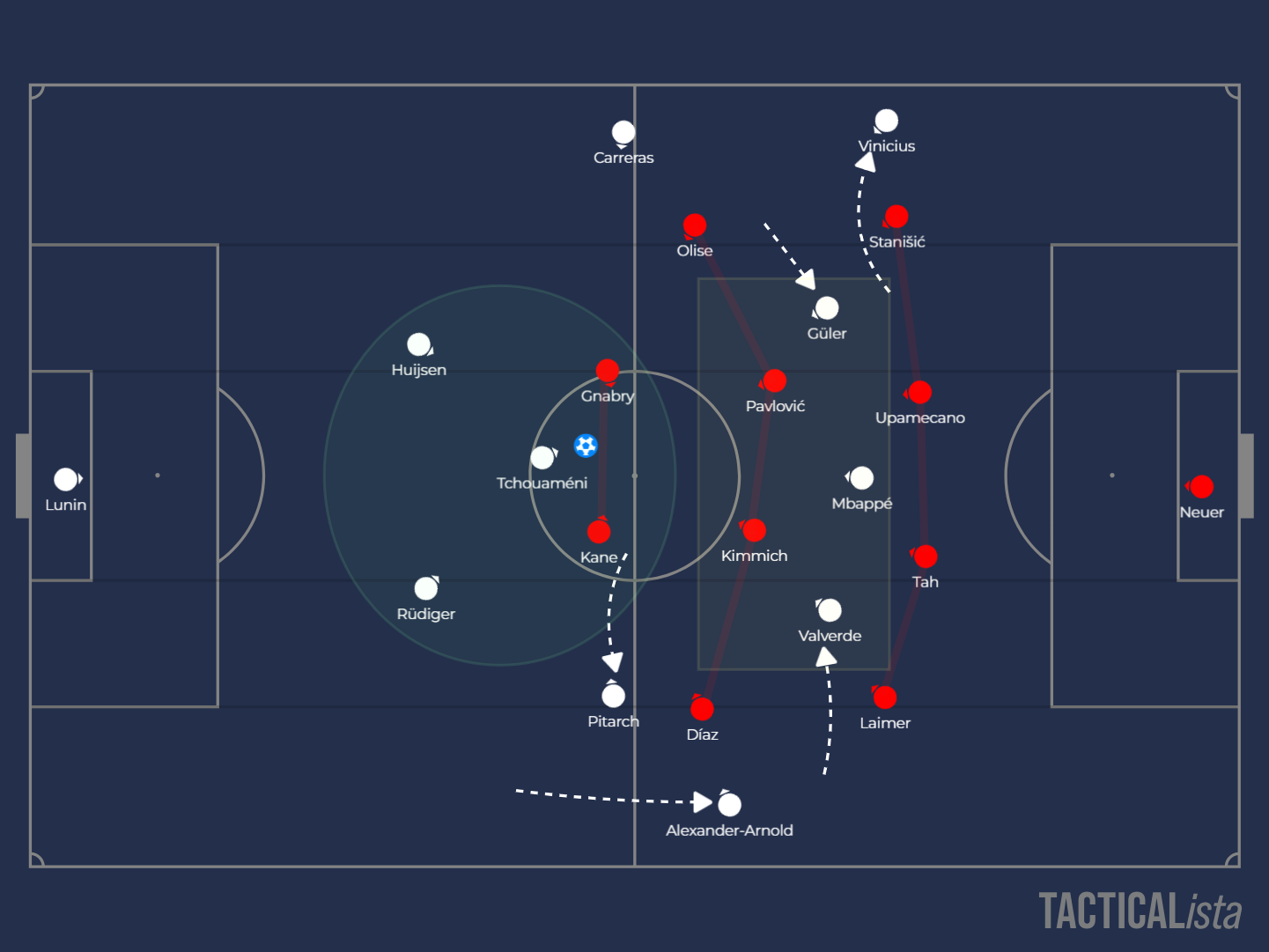
Image 1: Bayern’s 4-4-2 middle block could not seamlessly transition into a man-oriented press. This was due to Madrid’s right-side movements, especially by Valverde. Thus, Bayern often ceded an overload in the first phase as the frontline pressers were 2v3 against Madrid’s centre-backs and Tchouaméni.
However, Madrid did not capitalize on these opportunities enough. Firstly, they simply did not utilize the 3v2 situations that arose to their benefit. Secondly, Madrid could have produced more favorable moments to expand on these advantages.
For example, after pinning Bayern’s pivots, Madrid could have tested the opposition’s defensive organization by baiting the press. This would increase the gaps between the lines to play through. By then utilizing the initial 3v2, Madrid could break through Bayern’s press and have more space to attack.
High tempo and facing the consequences of defensive disorganization
Throughout the match, both sides were focused on attacking quickly upon possession restarts. This was especially the case when the on-ball team had possession in deeper phases. That might be because the opposition defended man-to-man in these situations. So, instead of allowing them to pick up their man-oriented references, a quick restart would create gaps between the markers.
Although this did not allow the defending team enough time to organize, it also prevented the on-ball team from organizing offensively. This trade-off was important as it resulted in open rest defense units. Therefore, if there was an immediate turnover following the quick restart, there were valuable chances to attack open spaces.
In the 40th minute, Güler initiated a quick restart after Thiago Pitarch was fouled in midfield. Madrid shifted possession to the left before Vinicius’ pass was blocked by Michael Olise. The loose ball was picked up by Kimmich, who played it back to his French teammate. This started a swift attacking move from Bayern against a disorganized Madrid backline.
The sequence led to Serge Gnabry picking up possession in a pocket of space after combining with Harry Kane. As this unfolded, Luis Díaz commenced a run on the blindside of Alexander-Arnold, who soon received a through ball and converted.
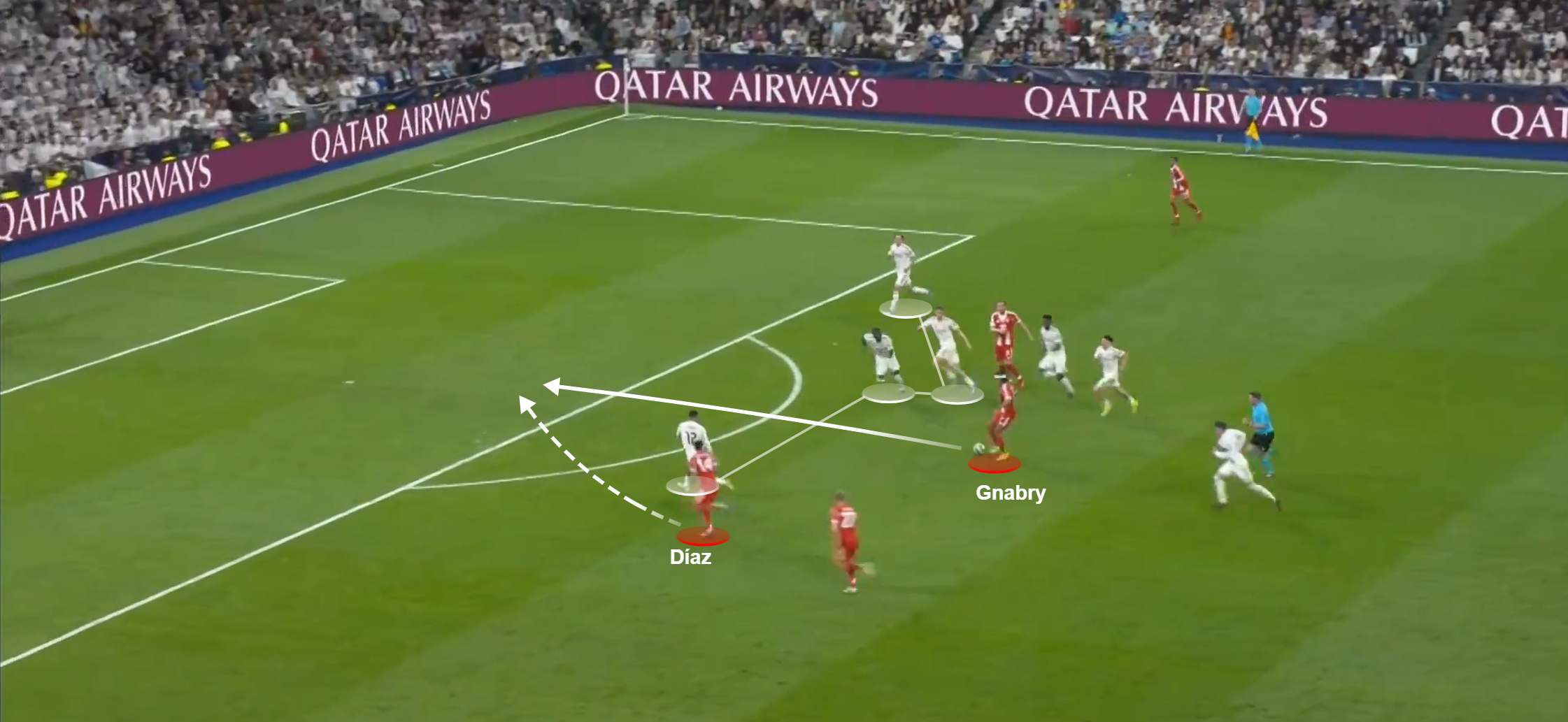
Image 2: Bayern retrieved possession in a valuable position after Madrid’s quick restart. When Gnabry received the ball, Madrid’s backline was disorganized. The German forward found an excellent through ball to Díaz, who executed a timely blindside run.
This brings up an interesting discussion on back-post defending – a common problem that many fullbacks face. At the highest level, nothing is easy, which goes without saying, but it is a caveat worth remembering. That being said, it can often be argued that fullbacks in these situations should do better to anticipate passes when a back-post run is made.
Back post defending: Anticipating the cross
— Fahd (@fahdahmed987) April 3, 2026
The main theme in Newcastle's second goal against Barcelona in the away tie was back post defending. In this sequence, Cancelo should've surely done better as Elanga was initially in front of him (image 1). Thus, he obviously noticed… pic.twitter.com/or35G8uCJ8
For Alexander-Arnold, it is not a simple situation, as he must watch the ball, the run, and also potentially maintain an offside trap. However, given that the right-back had already identified Díaz’s run and Gnabry’s unmarked position, he could have perhaps reacted quicker than he actually did. It is also possible that Alexander-Arnold did react quickly but simply did not have the same acceleration as Díaz.
Lastly, it is also worth noting that Bayern also conceded similar chances upon quick restarts. However, the visitors got away with them as the defenders and goalkeeper managed to save them. These are just the fine margins that can make a huge difference at Champions League level.
Second half, same issues
The main theme at the end of the first half was also the prevailing factor in the opening minute of the second period. Madrid kicked off with high tempo and shifted possession to Vinicius on the left. He then made a questionable pass to Carreras in midfield, who was immediately swarmed by Bayern players. Pavlović forced a turnover before playing it to Olise, who found Kane at the edge of the penalty box.
A disorganized Madrid could not, yet again, put enough pressure on the assister and eventual goal scorer. Kane’s shot was also a brilliant attempt, as he took it first time and tucked the ball into the bottom right corner.
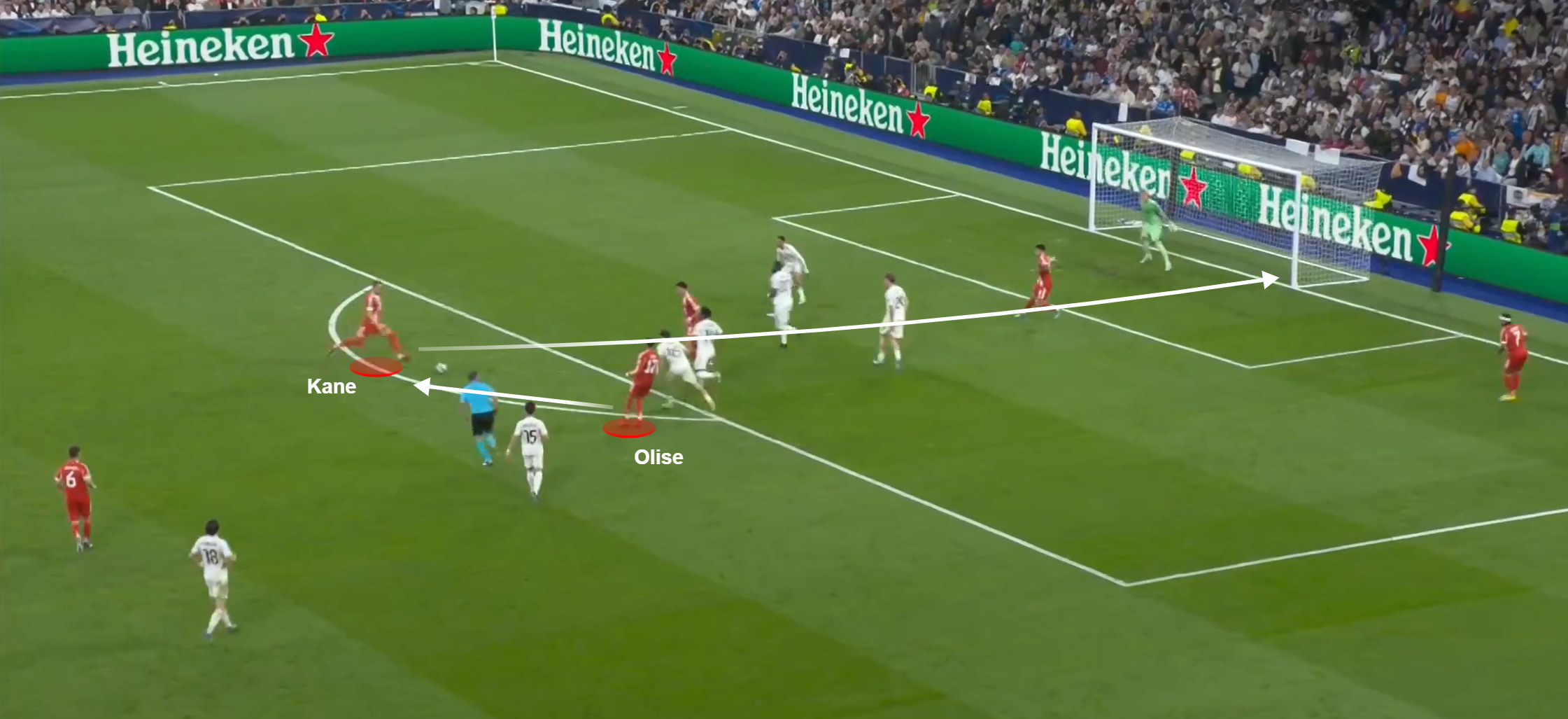
Image 3: Madrid yet again conceded a costly goal following a turnover from a quick restart. The disorganized defensive line could not stop Bayern, who capitalized.
Platforming the wingers with supporting runs and isolations
Constant movement through supporting overlapping and underlapping runs from fullbacks is a primary feature of Kompany’s Bayern. One of, if not the main reason why it is significant is because the fullbacks help platform Bayern’s wingers. Díaz and Olise, the preferred options, are world-class forwards with immense quality. By consistently creating favorable situations in a game, Vincent Kompany can extract their best traits, which is also beneficial for the team.
These runs were usually tracked by Madrid’s wingers, or the responsibility was passed to the central midfielder. Generally, the fullbacks did not threaten too much when receiving possession. However, it was a different case when Bayern’s wingers received the ball.
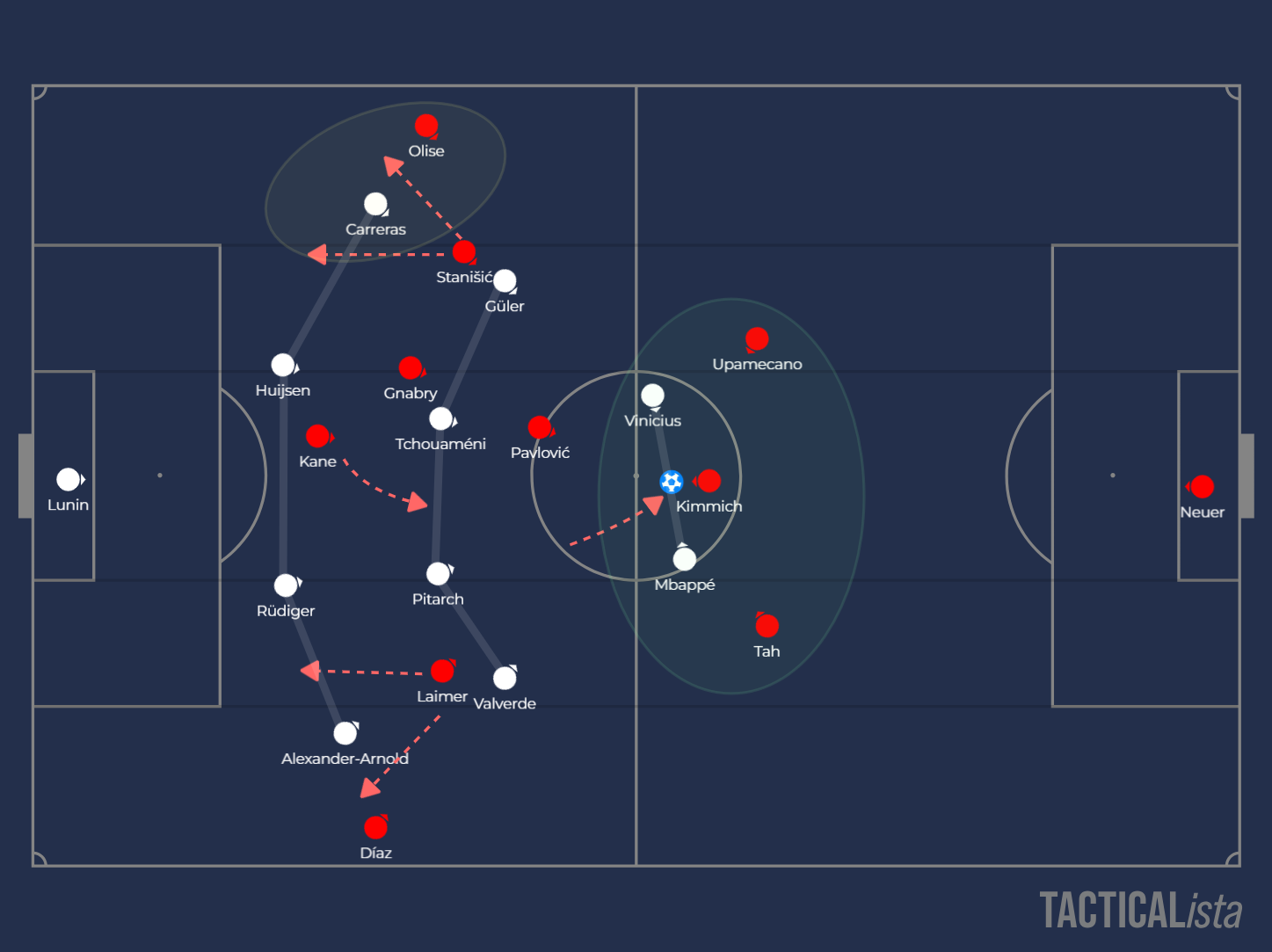
Image 4: Bayern’s 2-4-4 shape with advanced fullbacks platforms the wingers well. Olise especially looked exceptional on the night as he made the most of 1v1 isolations on the right.
Against Madrid, Olise especially thrived in 1v1 situations that were facilitated by Josip Stanišić’s runs, which dragged a marker. It also opened up space in the center of the field that could be attacked through dribbles. Olise also showed a level of efficiency, as he completed more than half of his attempted dribbles.
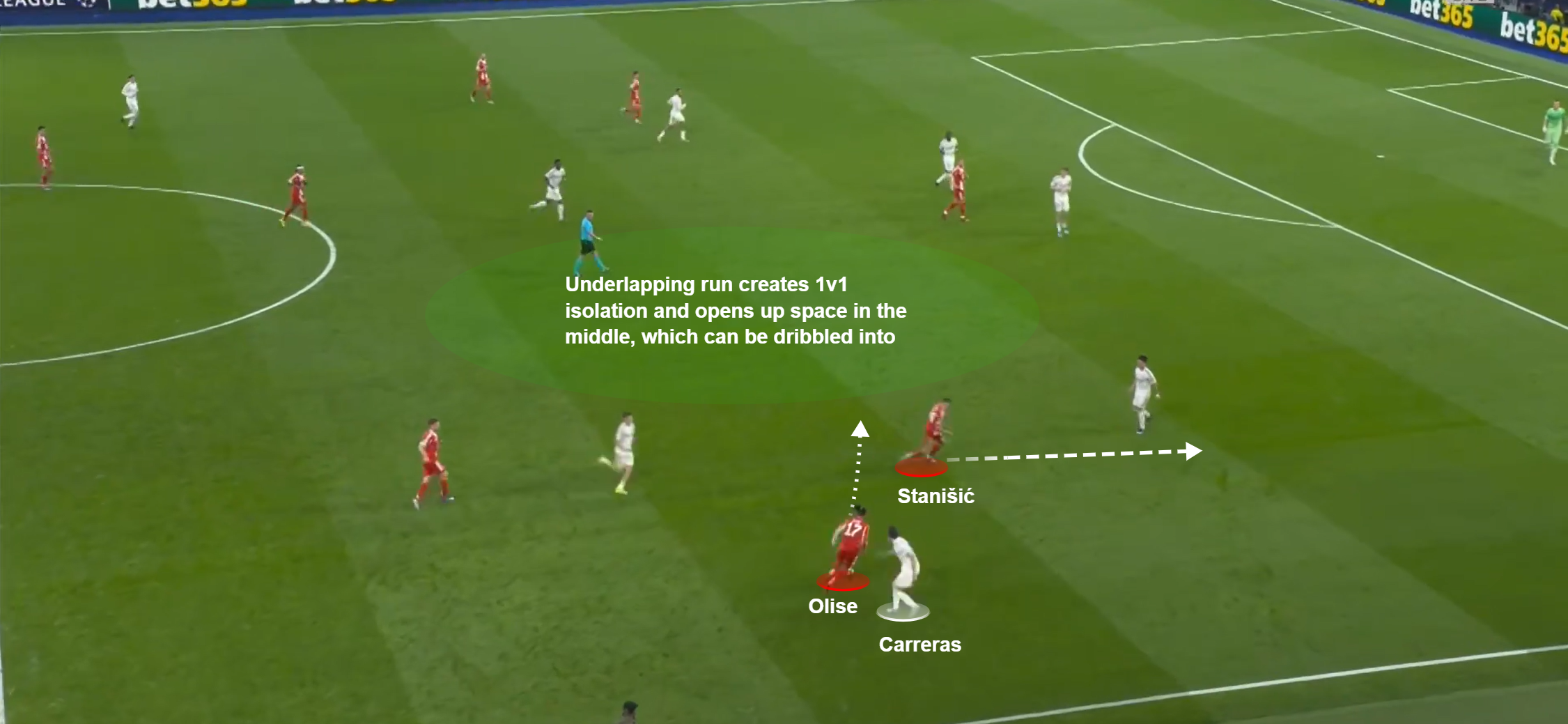
Image 5: Olise flourished against Madrid as he created numerous chances after efficiently beating his marker.
Although Bayern produced many chances from these in-possession situations, this phase also represented opportunities for Madrid. The home side was reliant on counterattacks for chance creation.
Since Madrid defended in a passive 4-4-2 low block, they looked to spring counters upon retrieving possession. With the pace and quality of Vinicius and Mbappé, Madrid are a threat in transition against every team in the world. Bayern were no different. However, the individual efficiency from these situations was slightly lacking, whilst the visitors also did relatively well to cope.
During Madrid counters, there's at least one player positioned between the lines while a forward attacks beyond the opposition backline. This offers two outlets on the transition.
— Fahd (@fahdahmed987) April 8, 2026
1. A short option to receive in front of the opposition defence.
2. Direct option to attack beyond… pic.twitter.com/EcgCaF5nIs
Right side connections to break Bayern’s 4-4-2 block
Although Madrid leaked many chances, they also created quite a few. Most were on the offensive transition, but a sweeping move from settled possession in the 74th minute provided them with a lifeline to get back into the game.
The sequence starts with a free kick in Madrid’s defensive third. After restarting possession quickly, they managed to bypass the immediate Bayern pressure and progress into the middle third. From here, the players began taking their positions before shifting the ball to the right side.
Alexander-Arnold, Valverde, and the substitute, Jude Bellingham, formed a wide triangle. There was a mini 3v3 situation from which the Madrid players looked to combine, which they did with great effect. A pass from Alexander-Arnold to Bellingham was then shifted to Valverde. However, the former Liverpool right-back was not stationary but instead attacked the space beyond the Bayern backline.
Since Alphonso Davies, the left-back, was pulled by Valverde, and Jonathan Tah was occupied by Mbappé, a gap opened. It was this area that Alexander-Arnold attacked. After receiving the ball, Alexander-Arnold’s first-time drilled cross was perfectly played. It went right across the face of the goal before Mbappé tapped it in.
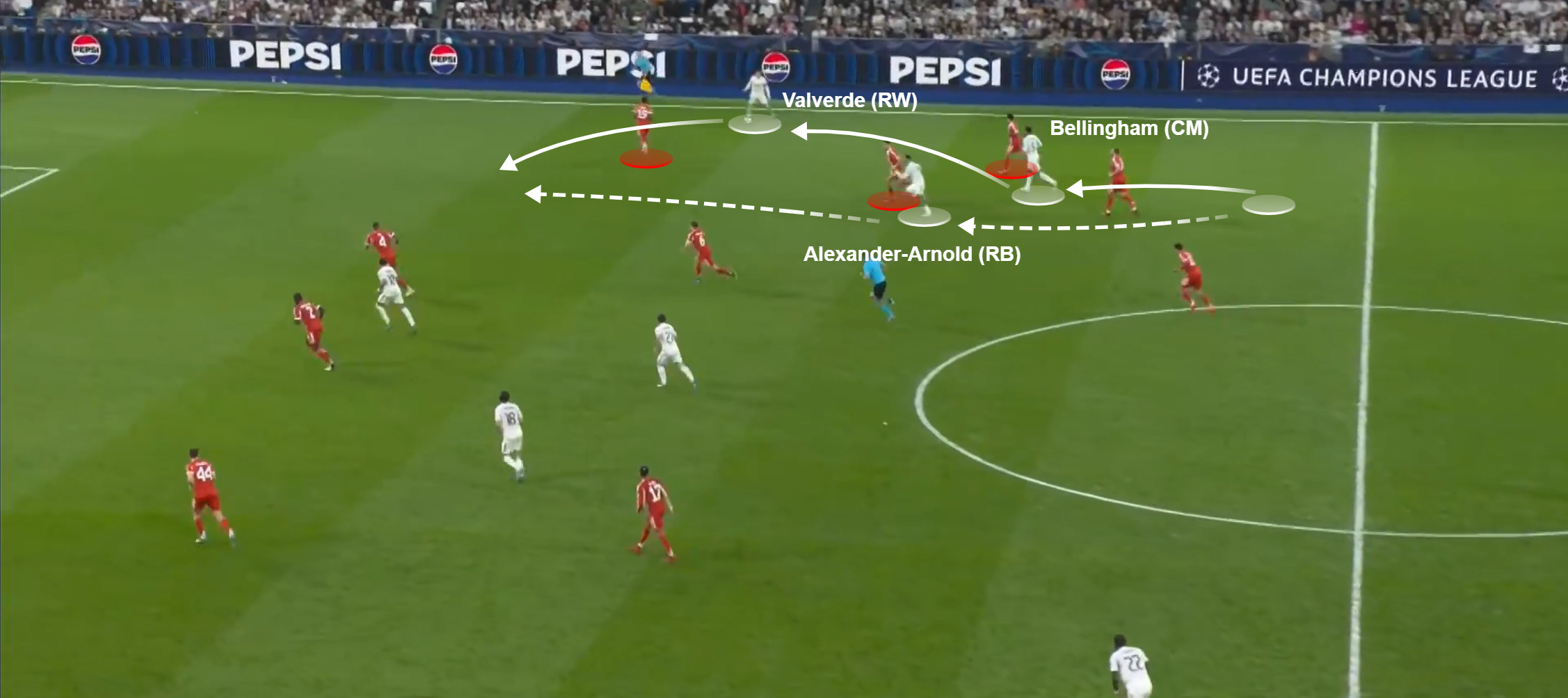
Image 6: Madrid capitalized on the wide 3v3, with Alexander-Arnold’s run beyond providing the penetration.
Despite Madrid reducing the margin, Bayern did not always sit back and protect the lead. They were on the front foot, pressed high, and generated a couple of opportunities. Until the last minute, it never looked like Bayern took their foot off the gas.
Takeaways
Both teams were open defensively, reflecting the mentality with which they approached the game. It is most likely going to stay the same for the second leg, with Madrid having to catch up whilst Kompany prefers his players to always be proactive.
It will be interesting to see whether either manager will indulge in a couple of tactical tweaks or if they will stick to the same game plans. Whatever the choice, it will undoubtedly be another entertaining ninety minutes.
Use the arrows to scroll through all available match plots. Click to enlarge.
Check the match plots page for plots of other matches.


Comments