
Netherlands – Germany: Xavi and Klopp Start Their Tenures In A Draw (1-1)
With Xavi Hernández and Jürgen Klopp kicking off their international managerial tenures, the Netherlands versus Germany match-up was one to keep an eye on for the Nations League group stage round. The visitors took the lead despite the Netherlands generating more tactical advantages in the first half. Klopp tried to minimise them after the half-time break, but the Netherlands kept piling on the pressure and generating numerous valuable chances. Cody Gakpo finally produced an impressive goal in the dying minutes to secure a draw.
Tactical analysis and match report by Fahd Ahmed.
The Netherlands and Germany have undertaken a new chapter by hiring different managers following an underwhelming 2026 World Cup campaign. Xavi Hernández was appointed by the Dutch federation and Jürgen Klopp excitingly returned to first-team coaching. Consequently, it was one of the more interesting Nations League group stage matches, as there was some ambiguity regarding how these teams would look under their separate managers. Further, Xavi and Klopp implemented different playstyles at Barcelona and Liverpool, respectively. Thus, from a tactical perspective, it was intriguing to observe whether there were elements of those styles and how they would be adapted to accommodate the national teams’ qualities.
Side connections to penetrate the block when attacking ‘around’
During the early period of the match, Germany controlled possession whilst the Netherlands formed a compact zonal defensive block. Xavi instructed his team to protect space and defend in a 4-4-2 structure in the middle third and when pinned back. During Germany’s deep build-up phases, it was a different story, as the Netherlands pushed up and pressed high.
On the other hand, Klopp set the men in black in roughly a 4-3-3 structure. Both full-backs advanced to offer double width, the pivots were staggered with Felix Nmecha occupying a higher position in the half-space whilst Joshua Kimmich sunk low to generate a 3v2 against the Netherlands’ frontline pressers, and Kai Havertz floated and tried to link by dropping below. Consequently, Germany had a solid on-ball system to create wide threats as they utilised side connections on both flanks to break through the Netherlands by funnelling their attacks around the block. Further, this was a clever set-up considering the Netherlands’ intention of congesting the centre.
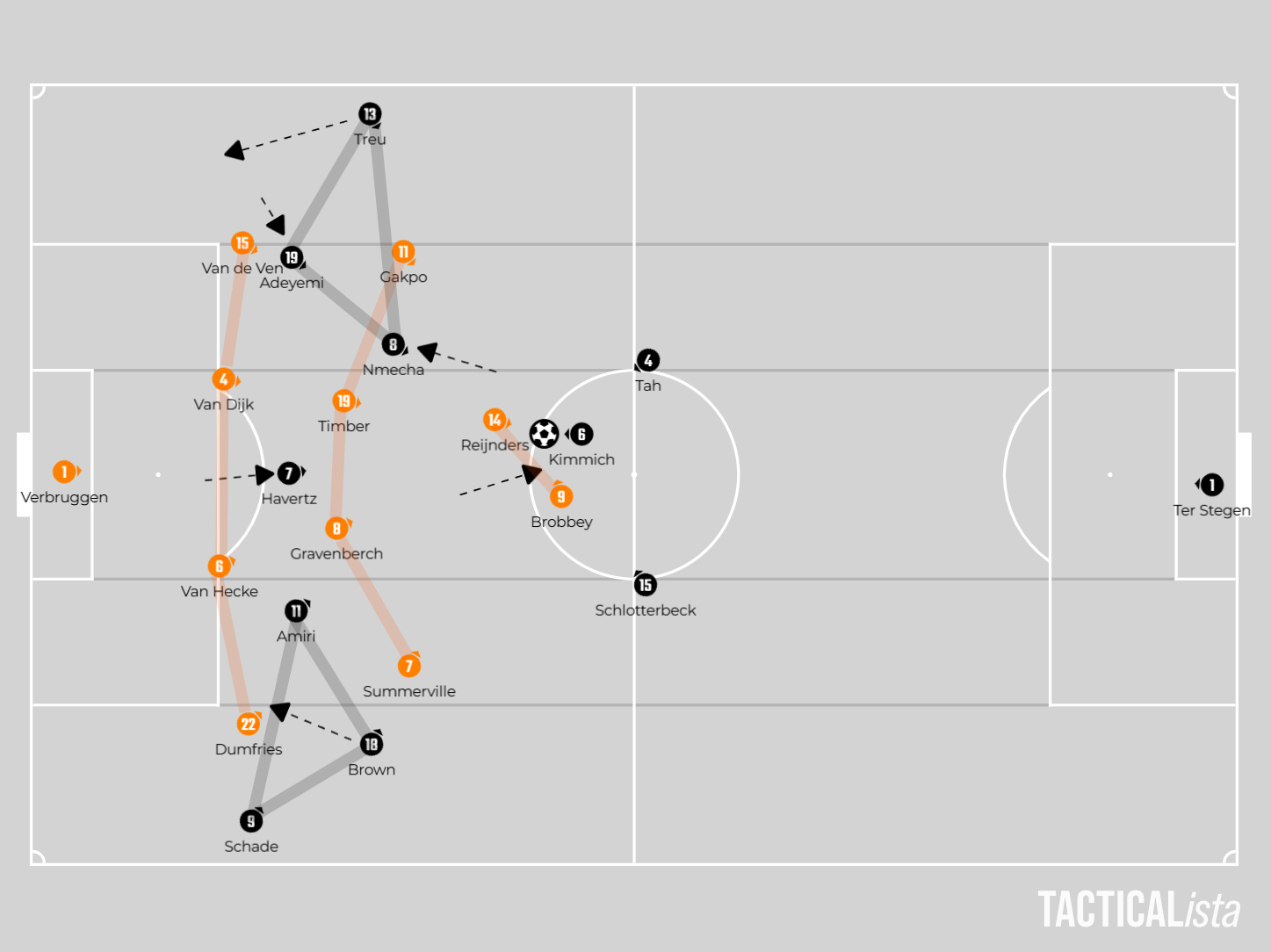
Image 1: Against the Netherlands’ 4-4-2 block, Germany adopted a system that produced side connections on both wings.
Performance-wise, the Netherlands seemed well-drilled as second and third lines of pressure coped with Germany’s off-ball movement, which attempted to provide penetration. Specifically, they tried to receive behind the Netherlands’ defensive line, but all of Xavi’s players understood their off-ball responsibilities and followed them, preventing Germany from creating wide overloads and free players to receive.
Finding the central overloads against a 4-2-4 middle block
The 4-2-4 middle block structure has its benefits from a rest attack perspective and can generate issues for teams that are not adept on the ball. Against elite possession sides like the Netherlands, this defensive approach provides the on-ball team with simple but effective solutions to play through the 4-2-4 middle block. In one of the Netherlands’ first possession sequences, this was evident as they played through Germany by basic tactical ideas.
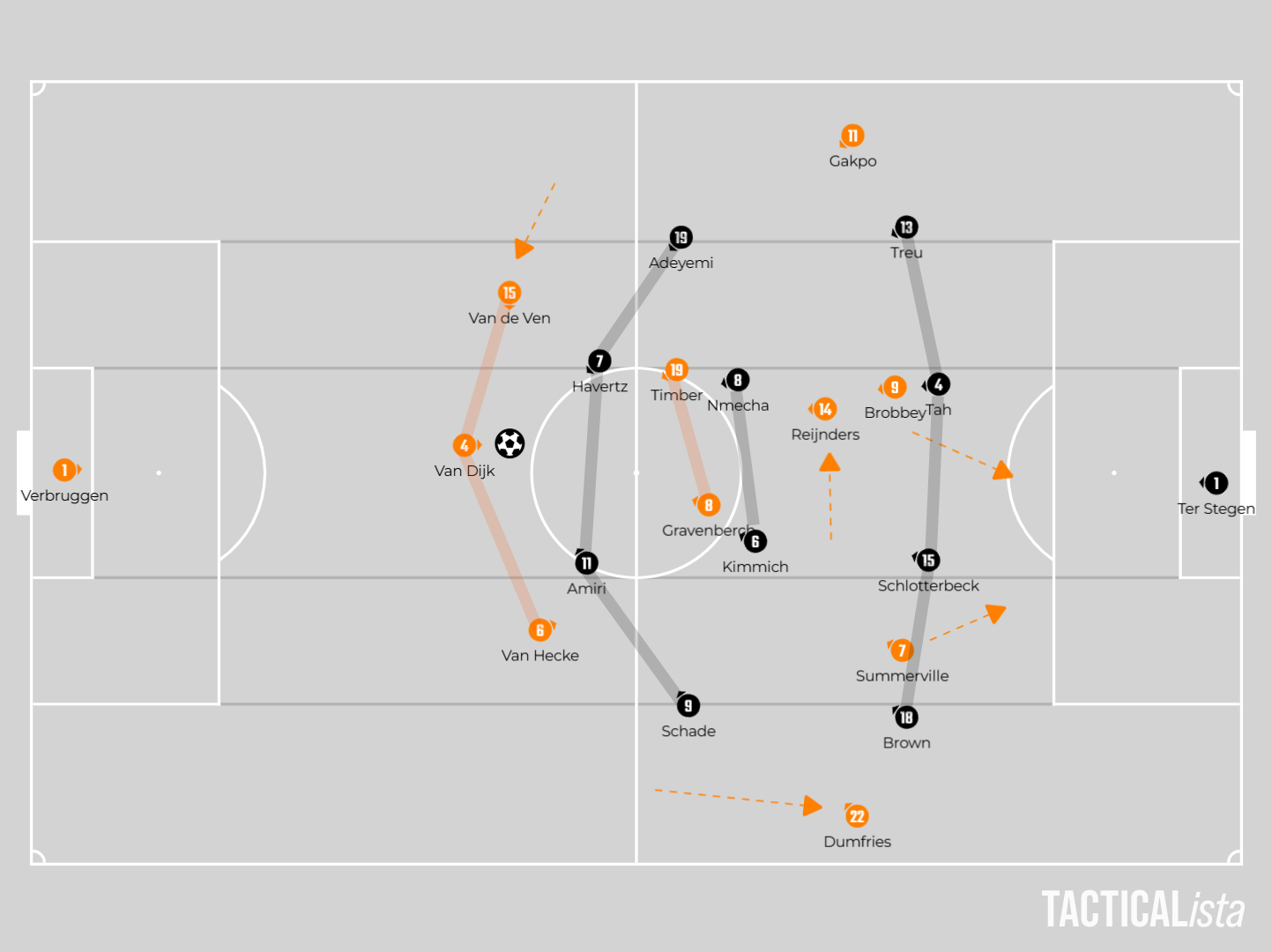
Image 2: The Netherlands easily managed to create 3v2 central overloads to attack through Germany’s 4-2-4 middle block.
First, holistically, by utilising a 3-2-5 on-ball structure, Xavi created an overload against Germany’s defensive line comprising four players. Second, with Germany committing four players to the frontline press, the Netherlands automatically produced a central numerical superiority with Tijjani Reijnders free to receive between the lines. Third, Brian Brobbey pinned the Germany centre-backs and especially occupied the near-side defender, which prevented the opposition from quickly being able to jump up and lock man-to-man. If they did try to shift markers, Brobbey could use that time to attack the space beyond and potentially receive unmarked. Fourth, Crysencio Summerville occupied a narrow position in the half-space to attack beyond, which also implied that Germany’s centre-backs could not seamlessly transition to prevent the central overload. Image 3 is a great example that illustrates the last point, as Reijnders receives between the lines, triggering Summerville and Brobbey to attack the space behind. Further, it highlights how the Dutch striker can create separation if a centre-back jumps up.
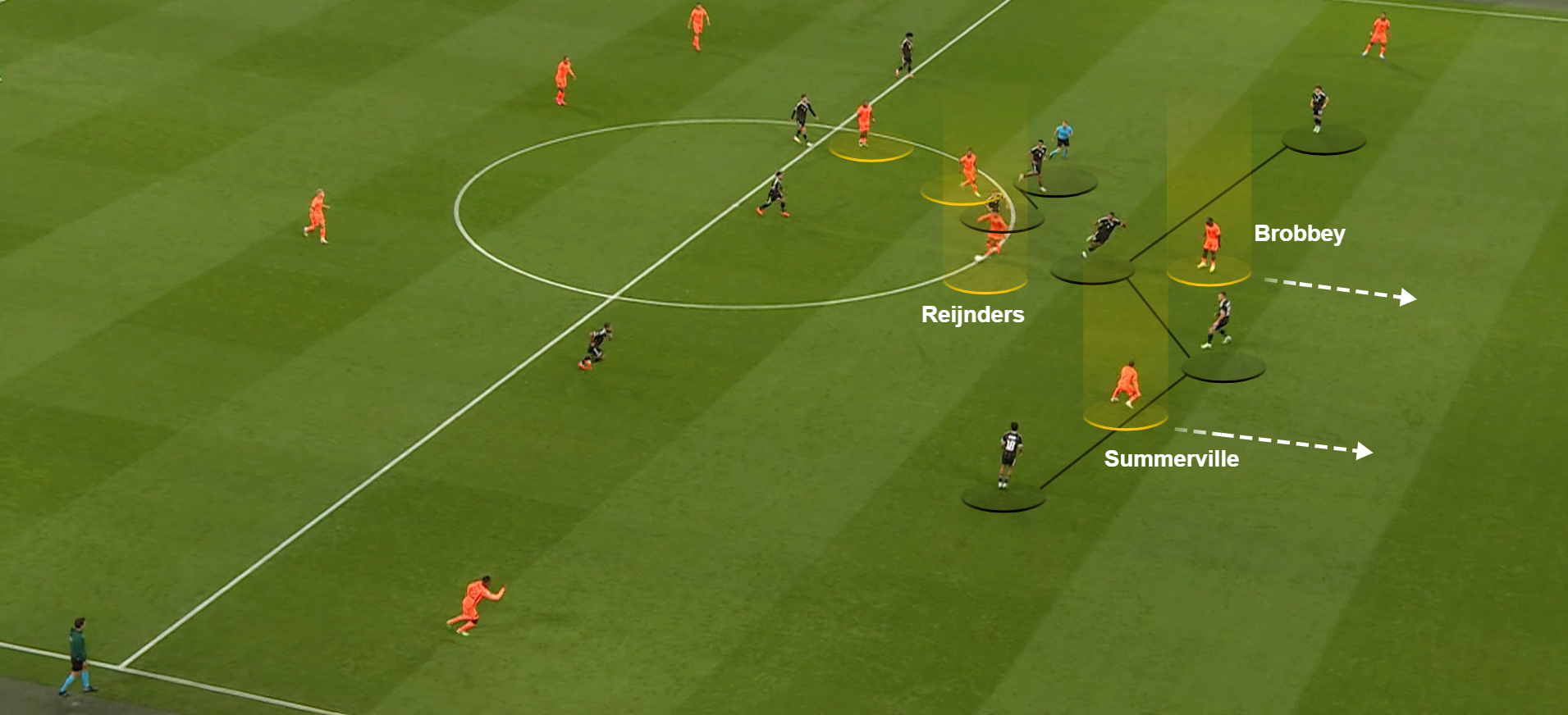
Image 3: Reijnders receives the ball between the lines and can initiate a dangerous attack with Summerville and Brobbey attacking beyond.
Set-piece struggles
The chance that the Netherlands generated, which was partly showcased in image 3, led to a throw-in. Denzel Dumfries’ long-range throw was utilised to deliver a looping ball into the box that was well met by Virgil van Dijk and created confusion in the Germany penalty box and was almost capitalised on by the Dutch as Reijnders managed to launch a shot. From a defensive set-piece lens, this was quite poor from the Germans considering how simply Van Dijk was able to attempt to head the ball free at the near post.
The struggles continued in the following corner despite a solid defensive structure that provided heavy zonal coverage at the near post. In theory, there was logic in leaving Van Dijk free given that the centre-backs were already in position to defend the near post area by occupying valuable spaces zonally. However, the individual details were missing, with Nico Schlotterbeck (no.15) not jumping up to compete for first contact as the corner was whipped in. Kevin Schade (no.9) also did not pressure Van Dijk enough to make it harder to win the duel. If Schlotterbeck and Schade were tighter to the Liverpool centre-back, it would have at least been more difficult to win the flick. Although Brobbey was deemed to have fouled Marc-André Ter Stegen, the back-to-back Netherlands set-pieces underscored Germany’s defensive set-piece issues.
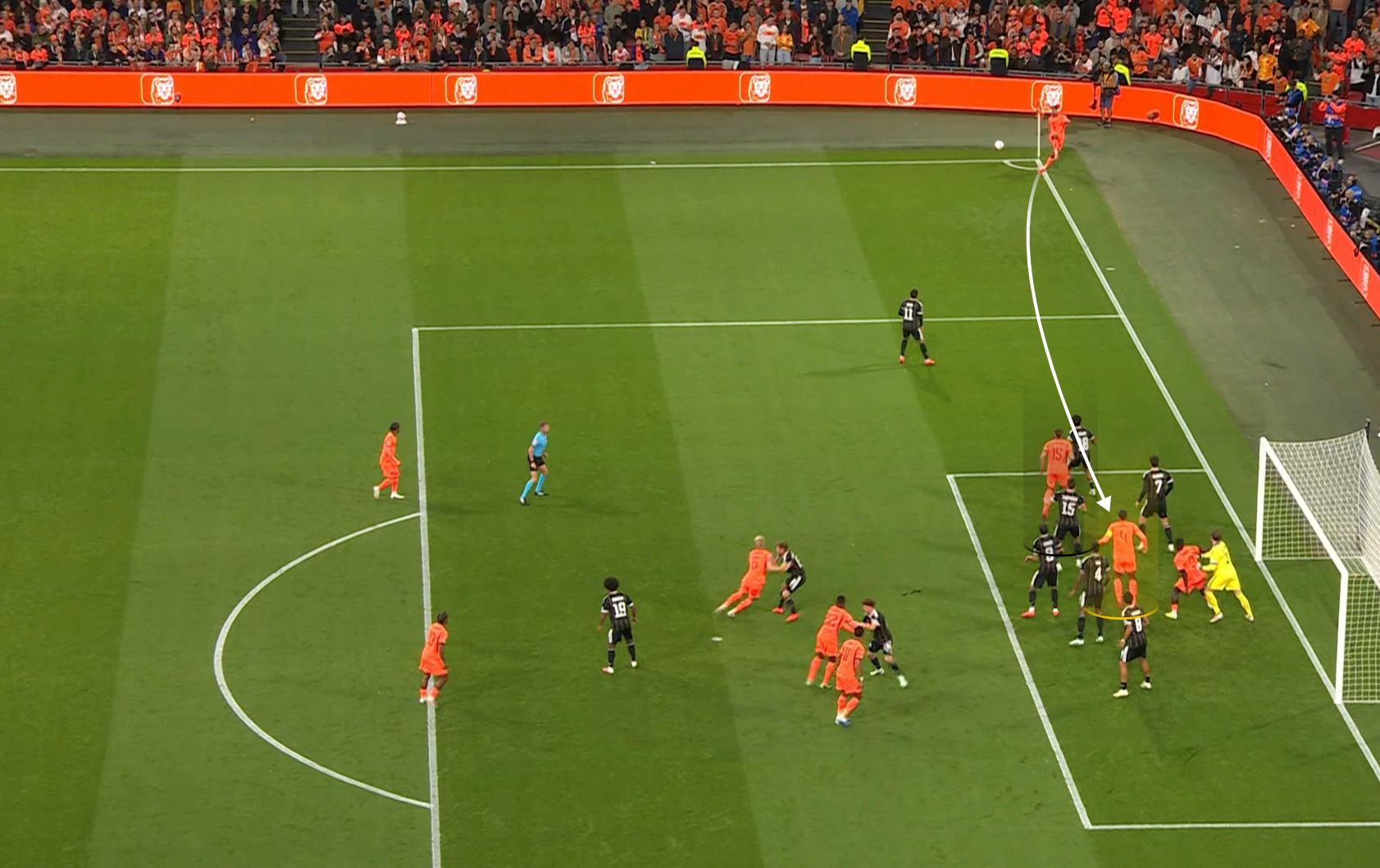
Image 4: Van Dijk converted from the near post after winning first contact from the corner kick but it was ruled out.
Play until the whistle blows
After Brobbey pulled his hamstring while trying to run beyond, Germany generated a turnover and continued attacking the Netherlands despite the Sunderland striker remaining on the ground. With the referee not blowing the whistle, Germany were within their rights to play on whilst the Netherlands also understandably wanted the opposition to kick the ball out so that their teammate could receive treatment and be substituted immediately. However, that did not transpire as Germany kept threatening with the Netherlands pinned deep.
In the opening quarter of the match, the Dutch defence performed well to deal with Germany’s switches of play. Perhaps because of the distraction caused by Brobbey’s injury, Cody Gakpo may have lost focus, but he should have done better to track the beyond run of the opposition right-back, Philipp Treu. Further, Karim Adeyemi lost his marker by attacking the box late whilst Quinten Timber moved towards the ball and Jan Paul van Hecke was unaware of the Barcelona winger’s movement. As a result of these separate events, Treu could receive Kimmich’s switch and the unmarked Adeyemi created chaos at the near post, but van Hecke extinguished it. Nevertheless, Germany capitalised after Nmecha reacted quicker than van Dijk to the loose ball and converted.
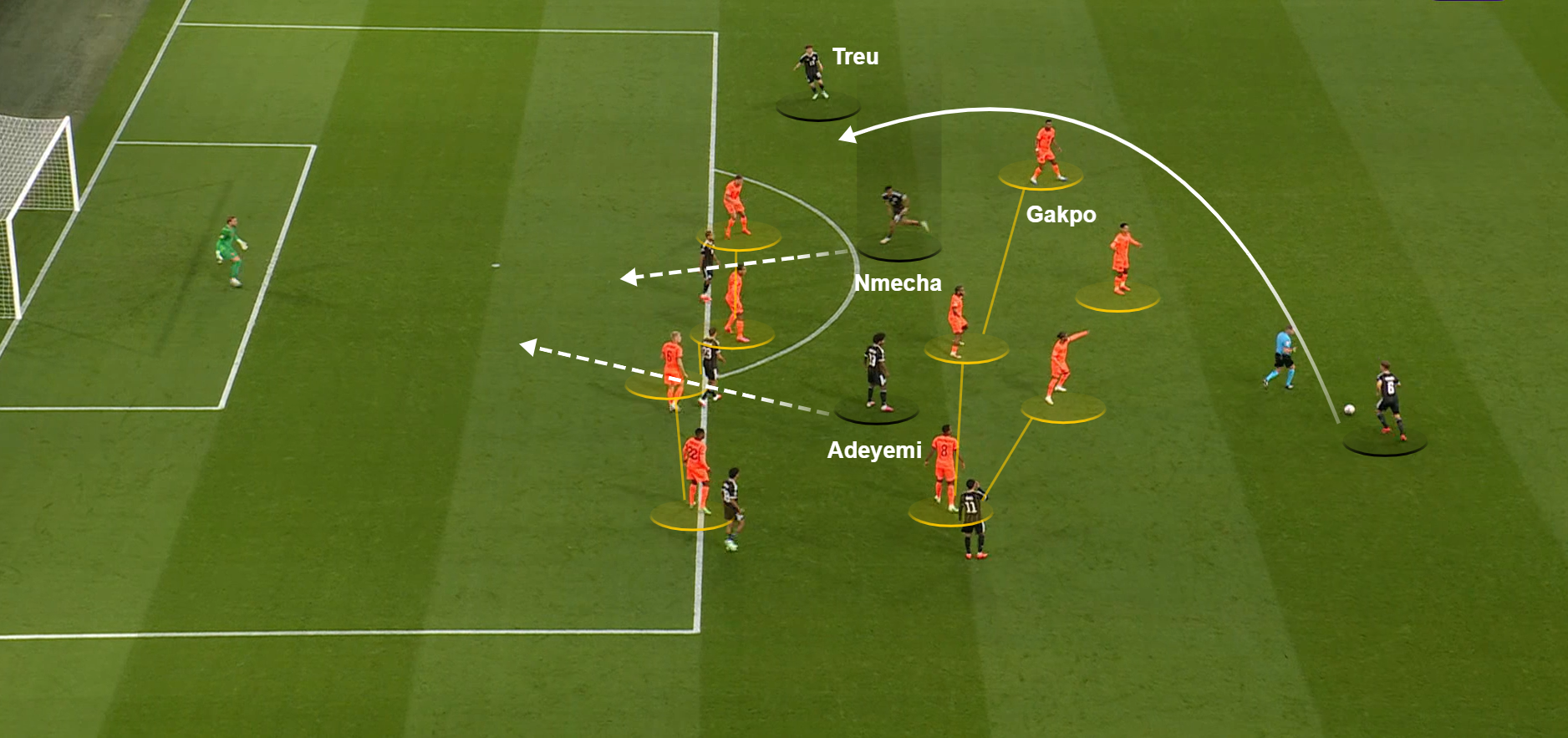
Image 5: Treu could receive Kimmich’s switch because Gakpo did not drop low to support. Meanwhile, Adeyemi and Nmecha attacked the box late, with the former creating chaos and the latter exploiting it.
Transitional opportunities arise as game state affects momentum
Following the lead provided by Nmecha, the possession-control momentum shifted in favour of the Netherlands whilst Germany defended in a low 4-4-2 block. The home team remained able to create central tensions with Reijnders particularly causing trouble by receiving between the lines. Further, Dumfries’ crossing quality was tapped into whilst Summerville’s beyond runs in the half-space also offered a different threat.
For Germany, this implied that they could now generate opportunities in the offensive transition. With pace in the team through Schade and Adeyemi, and late runs from deeper areas like those of Nathaniel Brown, Germany managed to attack the Netherlands in transition. There were also more artificial transitions when they were building up from deep and the Netherlands pressed man-to-man.
I've been impressed with Brown recently for numerous reasons. Positional flexibility would be at the top probably and Brown is capable of that because of his superb understanding of the game. This was a great example yesterday for Germany against Netherlands' man-man pressure.… pic.twitter.com/8vOa7e1B6f
— Fahd (@fahdahmed987) September 25, 2026
Attempting to neutralise the midfield overload and improving man-to-man pressing distances, but conceding in the end
Klopp and the coaching staff proactively changed Germany’s off-ball structure in the second half to cope with the Netherlands’ midfield overload. The change was straightforward but useful. Nadiem Amiri dropped from the frontline into the midfield line, allowing Germany to match the opposition 3v3 in midfield. Subsequently, this resulted in a switch from a 4-2-4 middle block into a 4-3-3 system, which morphed into a 4-5-1 when the wingers dropped low. In addition to the coverage in midfield, it afforded Germany better pressing distances when transitioning from a zonal block into a man-to-man approach. Therefore, these advantages played into Germany’s favour as they looked more solid out of possession.
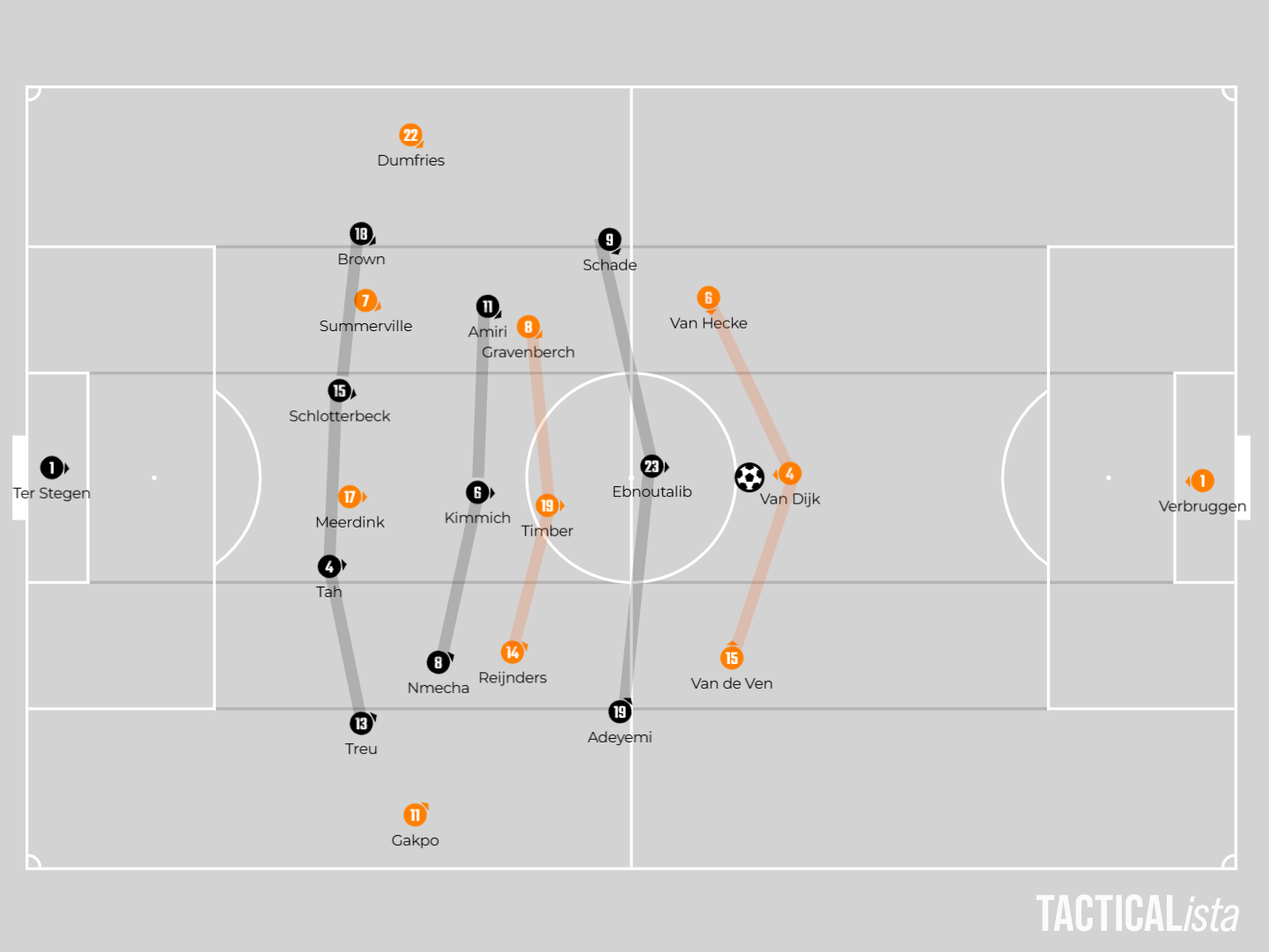
Image 6: By shifting into a 4-3-3 out-of-possession structure, Germany could match the Netherlands 3v3 in midfield and more seamlessly transition into a man-to-man press.
However, this does not imply that the Netherlands were completely nullified from generating chances. Germany’s defence was still permeable from wide areas and through set-pieces. One of the best opportunities in the second half fell to the substitute, Mexx Meerdink, after Dumfries received, turned to attack the space behind Germany’s defensive line, and crossed for the striker. Meerdink did excellently to run on the blindside of Jonathan Tah, but the connection with the ball was subpar despite being in point-blank range. More broadly, it highlighted the effectiveness of the Netherlands’ wide players and a degree of deficiency in Germany’s individual defensive details when dealing with threat beyond the backline. Specifically, the left winger was inconsistent with dropping low to support Brown when Dumfries advanced forward to generate the last-line overload.
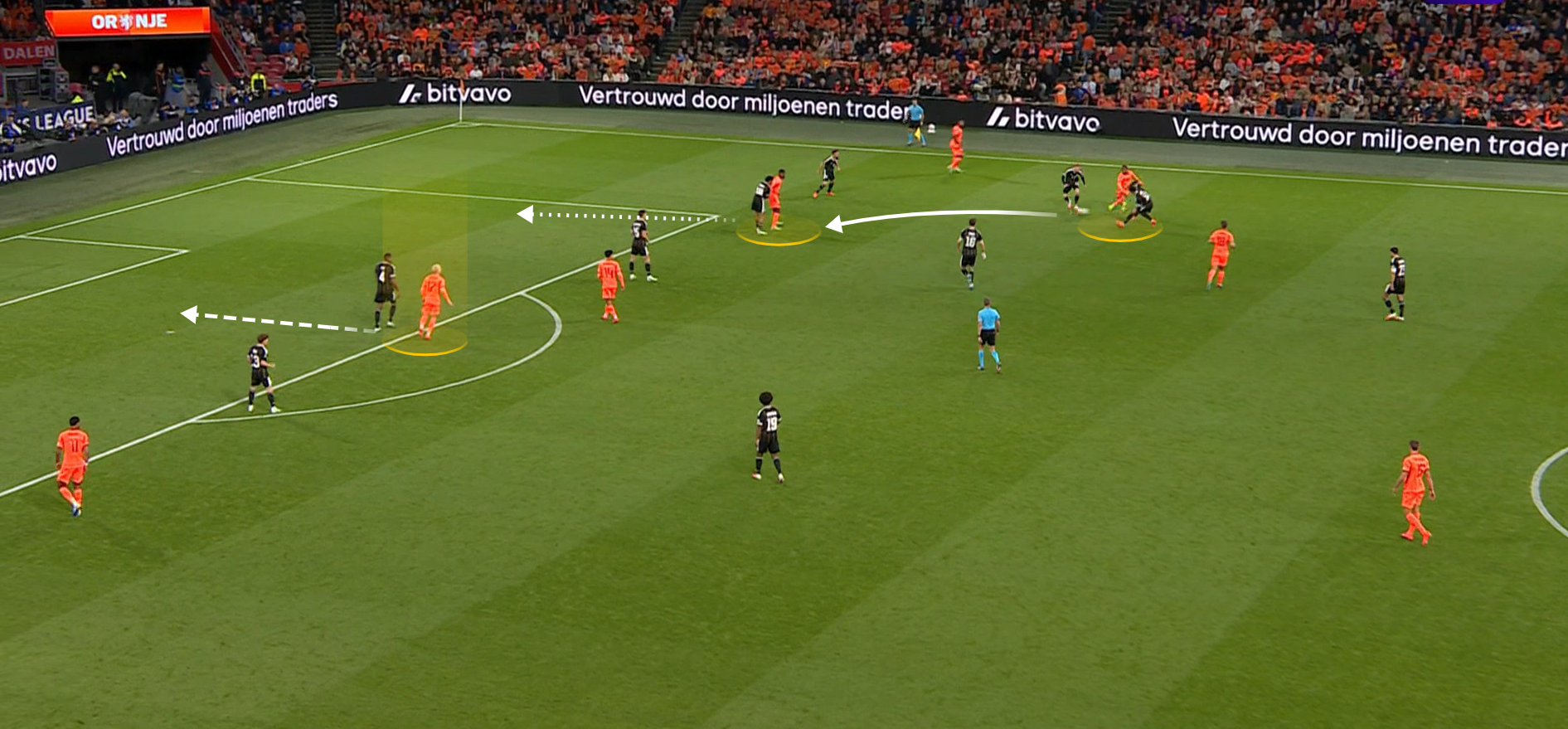
Image 7: Germany regularly conceded chances after being penetrated from wide areas.
Despite Germany leaking many chances in the second half, they held the 1-0 scoreline for a long period. However, the Netherlands finally managed to score following a midfield turnover from which they sprung a fast counterattack – types of situations that Germany often had after taking the lead. The transition was capped off by an excellent outside-of-the-boot cross from Ruben van Bommel and converted by Gakpo, who was faster than Brown to attack the box.
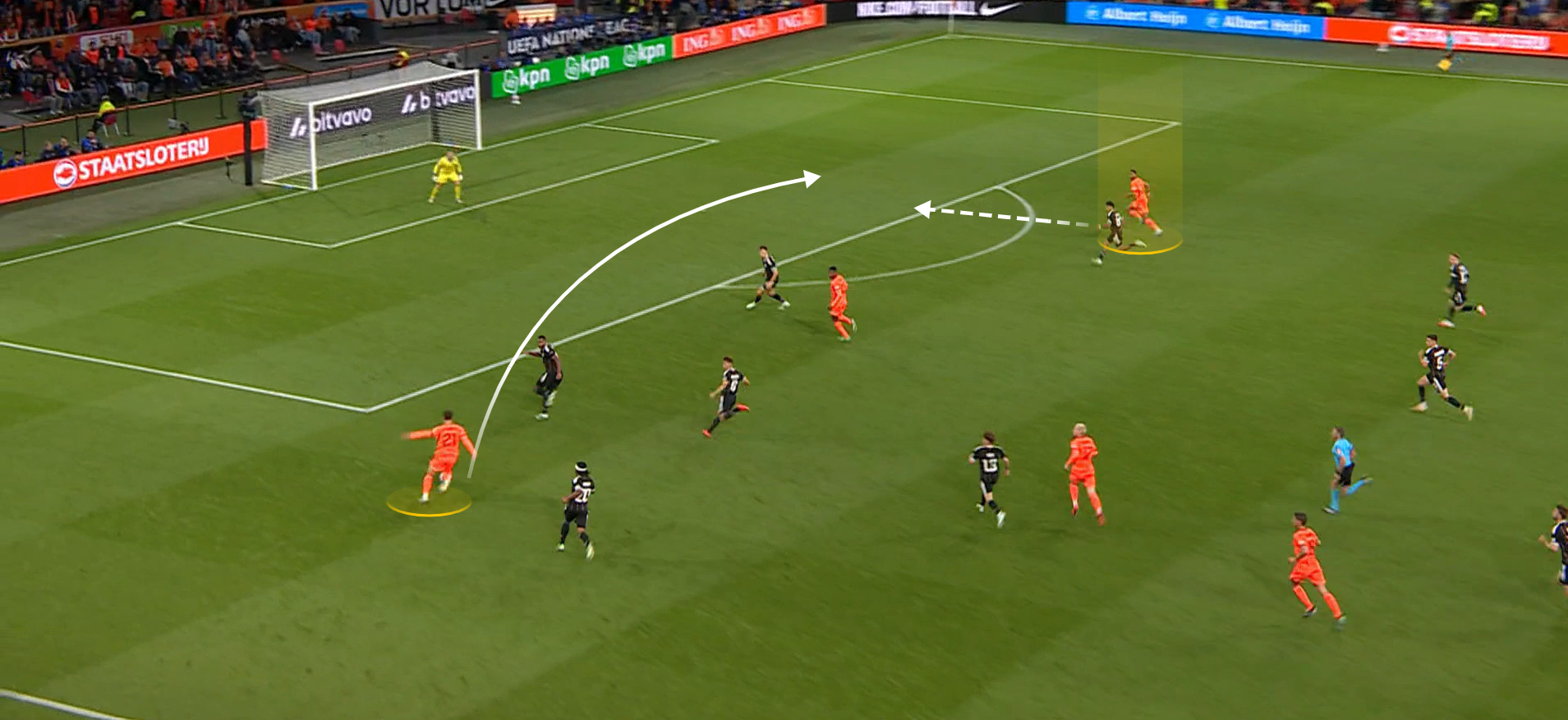
Image 8: Van Bommel’s terrific assist for Gakpo sealed a draw after a valiant effort by the Netherlands.
Takeaways
Xavi would have been pleased by the overall performance as the Netherlands were arguably the better team despite the even scoreline. The pre-game plan allowed them to generate advantages, but they did not fully exploit them in the first half. This changed in the second period, but conversion proved to be the next issue. Nevertheless, the players’ perseverance and determination to equalise was a significant positive that Xavi would have been extremely satisfied with.
Meanwhile, Klopp would have more to reflect on with their tactical systems, especially off the ball. There must immediately be an alternative to the 4-2-4 middle block, which was clearly ineffective in the first half. Klopp would want his side to be more active defensively, but the structure must still be one that would be difficult to break rather than through simple solutions. That said, Germany also had brief moments in the second period to double their lead in the attacking transition but also lacked the edge in the final third. Considering the broader performance, a point was not a terrible result, but it underlined key tactical areas that require some fixing in the coming weeks of the Nations League matches.
Use the arrows to scroll through all available match plots. Click to enlarge.
Check the match plots page for plots of other matches.


Comments