
Bayern Munich – Paris Saint-Germain: Reigning Champions March Into The Final (1-1)
After producing one of the best games in history, Bayern Munich hosted Paris Saint-Germain for the second leg. With a one-goal cushion, PSG were slight favorites, but given how much the first leg ebbed and flowed, spectators understood the result was far from decided. However, Ousmane Dembélé’s early goal increased the deficit, which Bayern could not close in time. Harry Kane delivered a goal in the closing minutes, but it was too late for Bayern to seal a comeback. PSG have marched on to their second consecutive Champions League final, where they will defend their crown in a few weeks against Arsenal.
Tactical analysis and match report by Fahd Ahmed.
We decided to make this article free to read. If you want to support our work, consider taking a subscription.
Football fans have been eager to watch the rematch ever since the dramatic 5-4 spectacle in the first leg. Paris Saint-Germain and Bayern Munich produced a game for the ages, with fluid attacking moves and stunning goals showcasing the very highest levels of the sport. Although there were questions regarding the out-of-possession standards, it is fair to say that even the current best set of defenders would have struggled given PSG’s and Bayern’s quality on the night.
The second leg was not expected to live up to the same standards. However, there was still a lot of excitement due to the sheer quality of the two sides. Not only are they blessed with world-class players, but collectively, Vincent Kompany and Luis Enrique have also coached them to operate cohesively as a team. Stylistically, although they vary in certain details, Bayern and PSG generally have a similar approach. Furthermore, since they are willing to go blow-for-blow throughout the ninety minutes, it is a match made in heaven for supporters to watch.
Manipulating and exploiting Bayern’s man-oriented pressure through clever movements for Dembélé’s opener
In the first-leg analysis, the tactical context behind the two managers’ approach, in terms of intent with and without the ball, was explained in detail. That approach was never going to change, with Enrique even mentioning, “We are certainly not here to defend. We’re trying to win the game”, in the pre-match press conference. Despite a slim lead, PSG were certainly going to play with the same intensity and intent as they did in their 5-4 victory in the previous week. The same unsurprisingly applied to Bayern, who had a one-goal deficit to chase. Therefore, a man-oriented defensive system and a high-tempo on-ball approach were expected by everyone.
Manipulating a man-oriented press is theoretically quite straightforward since the opposition will simply lock on across the pitch. However, exploiting it with clever movements is much harder, as there must be a team-wide understanding of the types of movement to make along with the right timing.
One of the reasons this fixture was such a fascinating tactical battle was because Bayern and PSG are among the best sides at tearing apart man-to-man defensive systems. With constant and coordinated below, beside, and beyond runs, Kompany and Enrique have coached their teams to a very high standard. Thus, they are both well-equipped to break the other’s press.
PSG showcased their quality in this regard within the opening three minutes. The sequence starts with a midfield turnover from which PSG recycled possession by playing it all the way back to the goalkeeper. Matvey Safonov immediately played it to Willian Pacho, who had time to pick a pass since Harry Kane was caught in a deeper position, which provided the visitors with a 4v3 overload excluding the goalkeeper. Pacho’s pass found Khvicha Kvaratskhelia, who flicked it to Fabián Ruiz. Before describing the move any further, it is worth pausing to highlight a few key details.
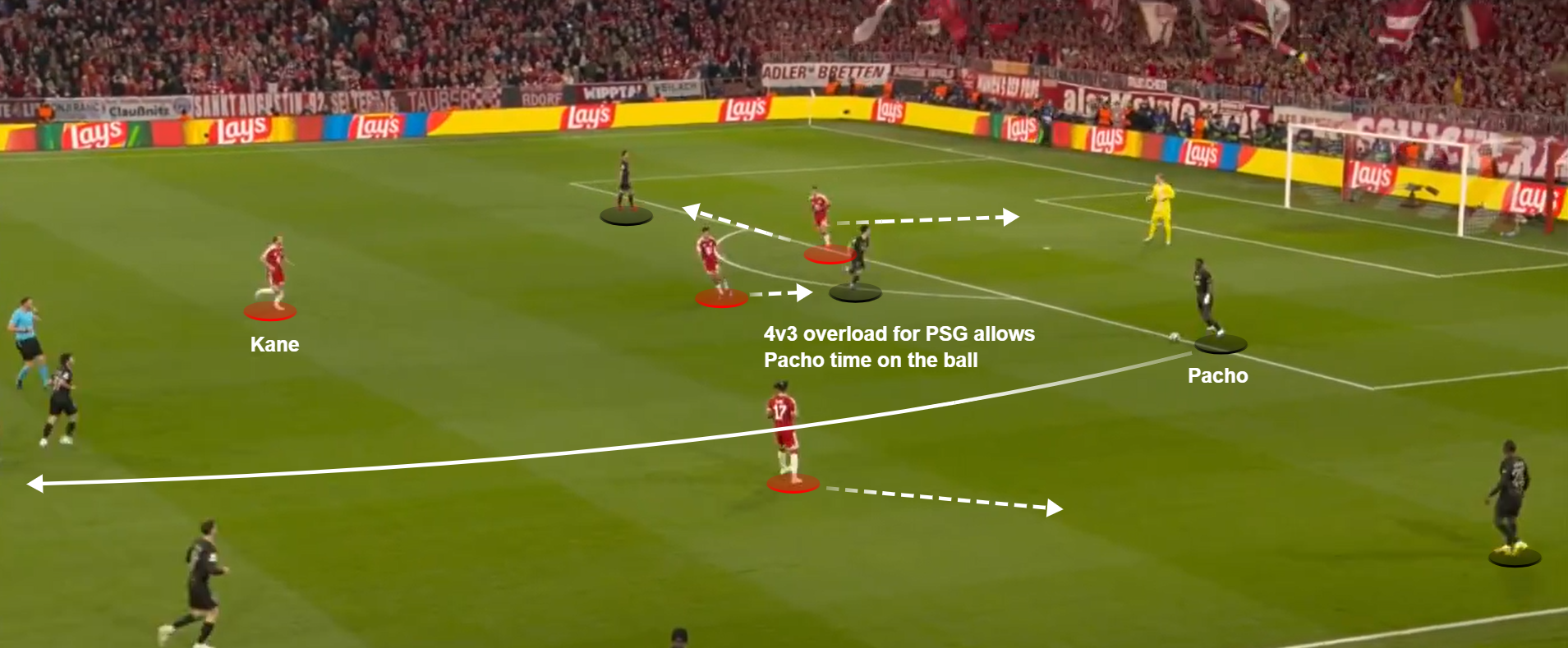
Image 1: After recycling possession following a midfield turnover, PSG have a 4v3 overload against Bayern once Pacho receives the ball. This allows the center-back enough time to get his head up and pick a pass.
Firstly, since the remaining Bayern players are locked on man-to-man, there is a 4v4 on the last line. The two most interesting positions are taken by Ousmane Dembélé on the right flank and Kvaratskhelia, who is located in the left half-space. The latter has an immediate impact on the play as he receives Pacho’s ball and shifts it to Ruiz. It is a type of movement that we have often seen Kvaratskhelia utilize when attacking space – specifically, the below-beyond double movement, which was also useful in the first leg.
Below is the video analysis breakdown of the points discussed in the post and article that I shared recently. We can clearly see how PSG decompress Bayern's block to find Doue between the lines. And then Kvara's movement to go against Stanisic's flow.pic.twitter.com/NBYtO2lAha https://t.co/f3lqXo3nJX
— Fahd (@fahdahmed987) May 1, 2026
Essentially, the below movement is used to attract the opposition marker, who, by stepping up, leaves a pocket of space behind. However, by anticipating the defender’s pressure, the forward can use the marker’s flow of momentum against him by shifting quickly. In this situation, considering Kvaratskhelia is smaller and nimbler than the 6’1” Dayot Upamecano, the Georgian winger had the upper hand.
Thus, after his layoff to Ruiz, Kvaratskhelia attacked Bayern’s backline with a beyond run whilst Dembélé commenced a run to target the back post. Interestingly, there was another player who had a crucial impact, which was the right-back, Warren Zaïre-Emery. Towards the start of the sequence, Luis Díaz was marking him. However, when Ruiz played Kvaratskhelia behind Bayern’s defensive line, Díaz lost track of Zaïre-Emery.
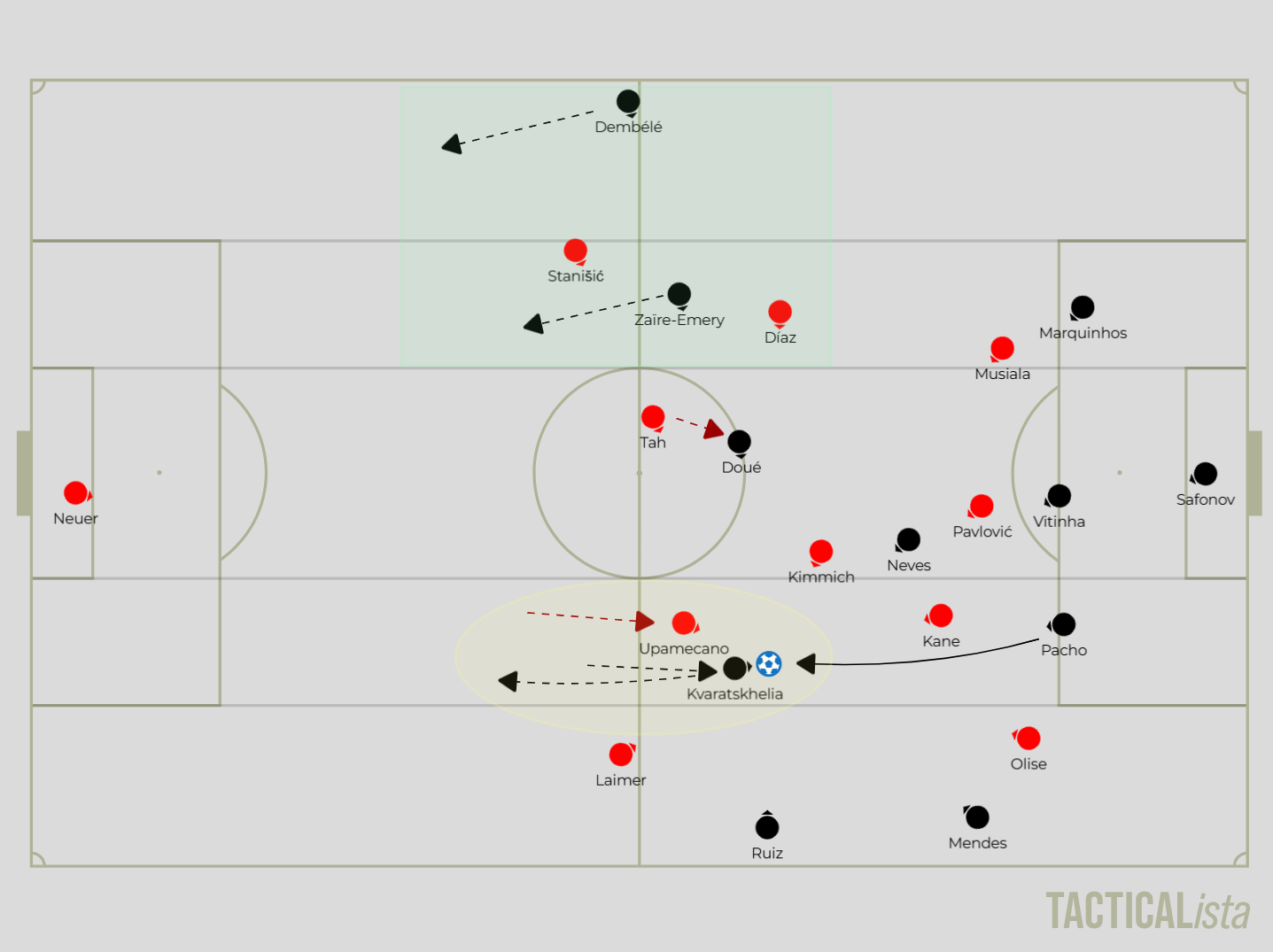
Image 2: Kvaratskhelia’s double movement to go below attracted pressure from Upamecano (yellow). This opened a channel for the PSG forward to attack with a beyond run. Meanwhile, Zaïre-Emery and Dembélé played vital roles as they targeted the back post (green). Díaz’s tracking was also subpar, which led to a 2v1 at the far post.
Therefore, when Kvaratskhelia entered a crossing position, Josip Stanišić had a 2v1 to deal with. He opted to get tighter to the closest threat, which was Zaïre-Emery. As a result, Dembélé was free to receive and score. The goal highlights the key nuances at the very top level. The finest details can have the most significant impact.
Opportunities through carries against an active PSG defensive block
Most of the chances created in the first half were generated from transitions and the 1v1 quality of the wingers. That is a simplification and generalization since each of those situations included minor details, as explored in the previous section, that are worth diving into. However, holistically, Bayern and PSG created chances from those situations.
The home side had the majority of possession and tested PSG’s defensive block. Unlike a zonally structured middle or low defensive unit, Enrique prefers to use an active block. Thus, players constantly step out to apply pressure and prevent the on-ball player from having comfortable possession. However, a downside to this approach is the gaps that it can open, especially through the center of the defensive structure.
With an effective carrier in these areas, opposition teams can exploit PSG in this phase. An appropriate example comes from the 44th minute when Jamal Musiala receives a pass from Olise behind PSG’s midfield line. Nuno Mendes aims to step up and apply pressure whilst Kane drags Pacho away. This opens a gap in PSG’s defensive line that Musiala targets with his dribble before following it up with a shot. The attempt was saved by Safonov, but it illustrated an avenue for creating dangerous chances that was perhaps not utilized enough by Bayern.
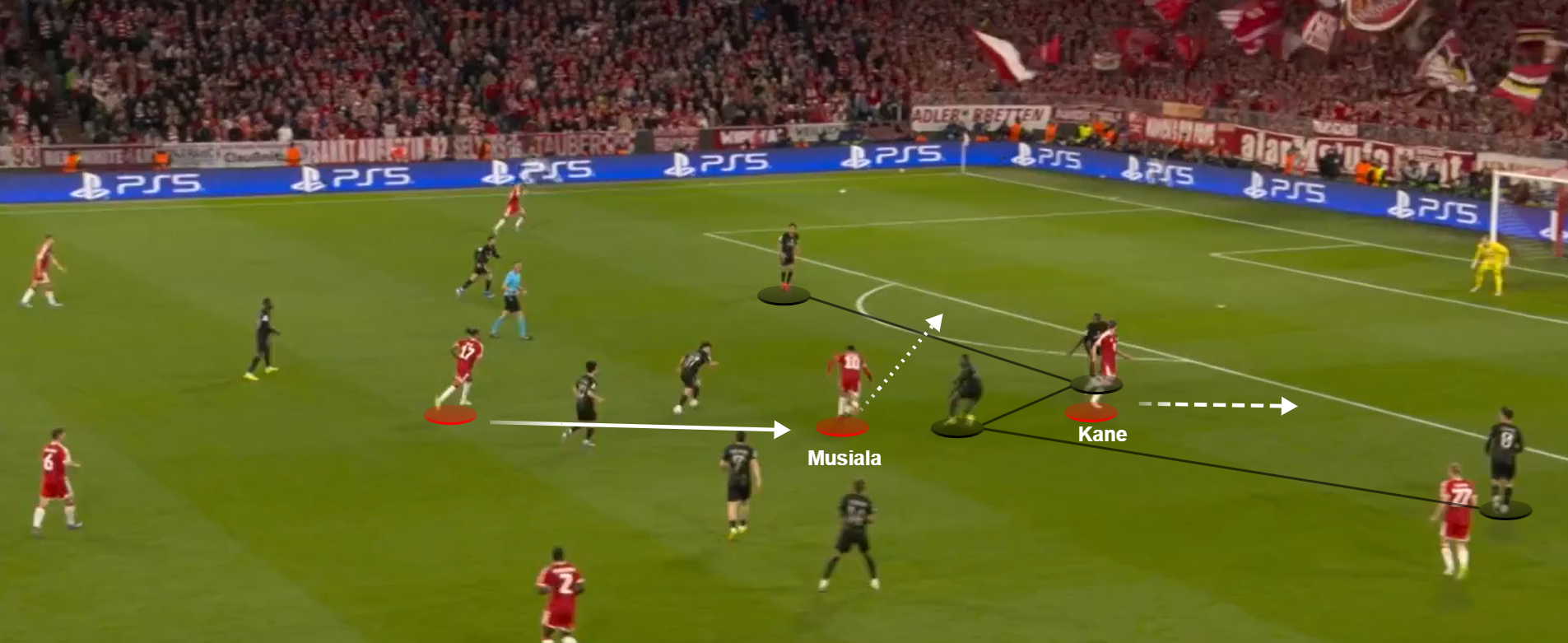
Image 3: Musiala’s opportunity late in the first half highlighted a potentially valuable avenue for chance creation. Since PSG’s active block would open space between the lines, a Bayern forward could be found in these zones to capitalize through the center.
Safonov’s deliberate goal kicks targeted towards the left flank
One of the big talking points of the game was Enrique’s instructions for Safonov to direct his goal kicks towards the left flank, which usually resulted in a throw-in. This was perhaps done to allow PSG to get up the field and initiate their press there rather than risk possession in deeper phases. There might have also been implications for Olise, as Roby points out in the post below.
Safonov is deliberately kicking every goal-kick to result in a Bayern throw-in but always on Olise’s side.
— Roby (@RobyPoto) May 6, 2026
A throw-in on that side forces both team to overload the right flank and leave Olise is numerical inferiority + in tighter spaces.
One of the reasons the French man had a…
There are personal reservations regarding the significance of that point for a few reasons. Firstly, since PSG were going to lock on man-to-man anyway, it would eventually leave Olise 1v1 once Bayern recycled possession. Secondly, although it briefly left Olise in a tighter space and at an underload, the significance of its impact on his performance is debatable.
Nevertheless, what can be said with almost certainty is that Safonov’s goal kicks reduced the pressure on PSG from having to build out from the back. Instead, they could move higher up the field and counter-press, which Roby also mentioned in a separate post.
Furthermore, in theory, once Bayern took the throw-in and PSG pressed man-to-man, they would be able to push the opposition back and force long balls from Neuer. Eventually, it would lead to the visitors retrieving the ball.
Defensive commitment when pinned back
It is worth noting that when Bayern pushed high, all ten PSG outfield players were willing to commit to their defensive responsibilities. Although the aim was to jump up man-to-man when possible, there were bound to be phases where they could not. In such situations, it was crucial to protect the box, track Bayern’s runs, and prevent shots, which they did well to a certain degree.
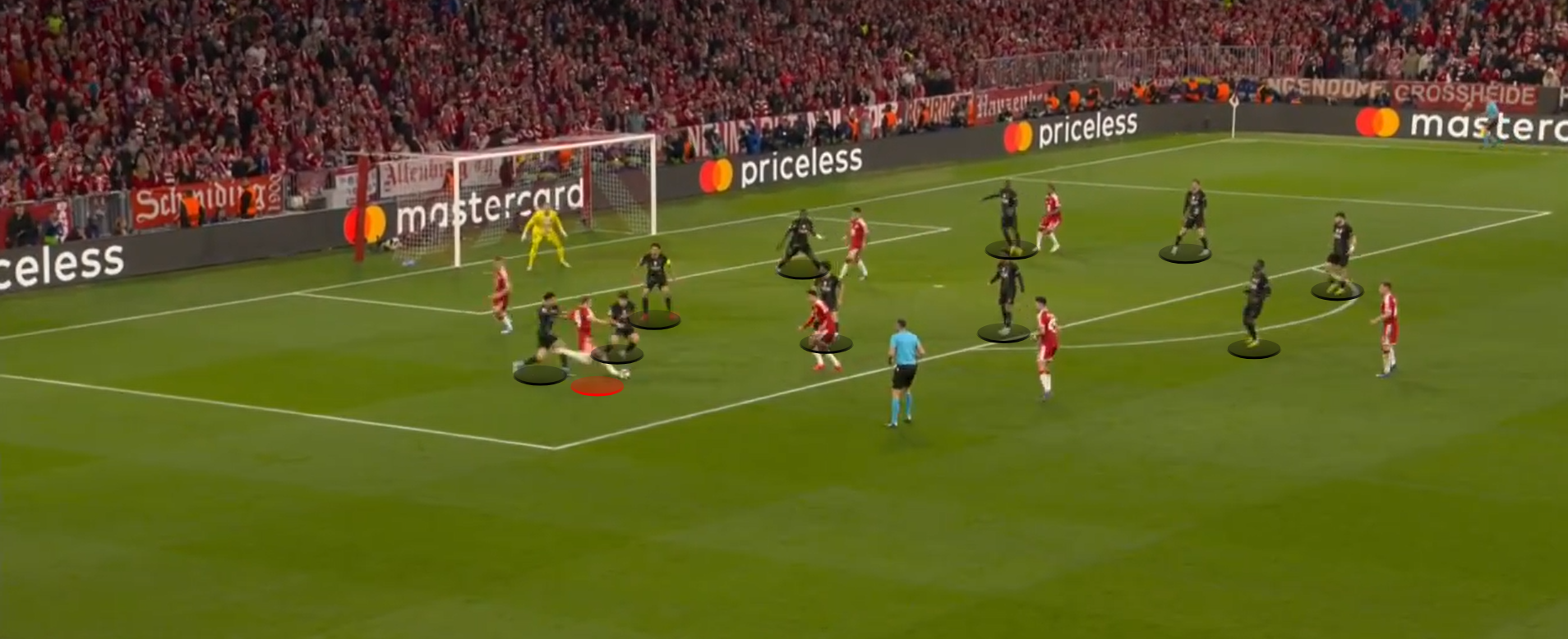
Image 4: PSG’s players were committed to tracking back and protecting the penalty box when Bayern had possession in the attacking third.
PSG’s box defending was not as simple as having all players in deep positions. The impressive part was their ability to cope with Bayern’s off-ball movements. There were countless situations where the PSG wingers were dragged deep due to the advanced positioning of the Bayern fullbacks. Furthermore, since PSG were defending in an active block, certain players had to switch marking responsibilities. These are difficult to communicate given Bayern’s movements, especially in the later phases of the match when fatigue creeps in. However, the Parisians generally did well in this regard.
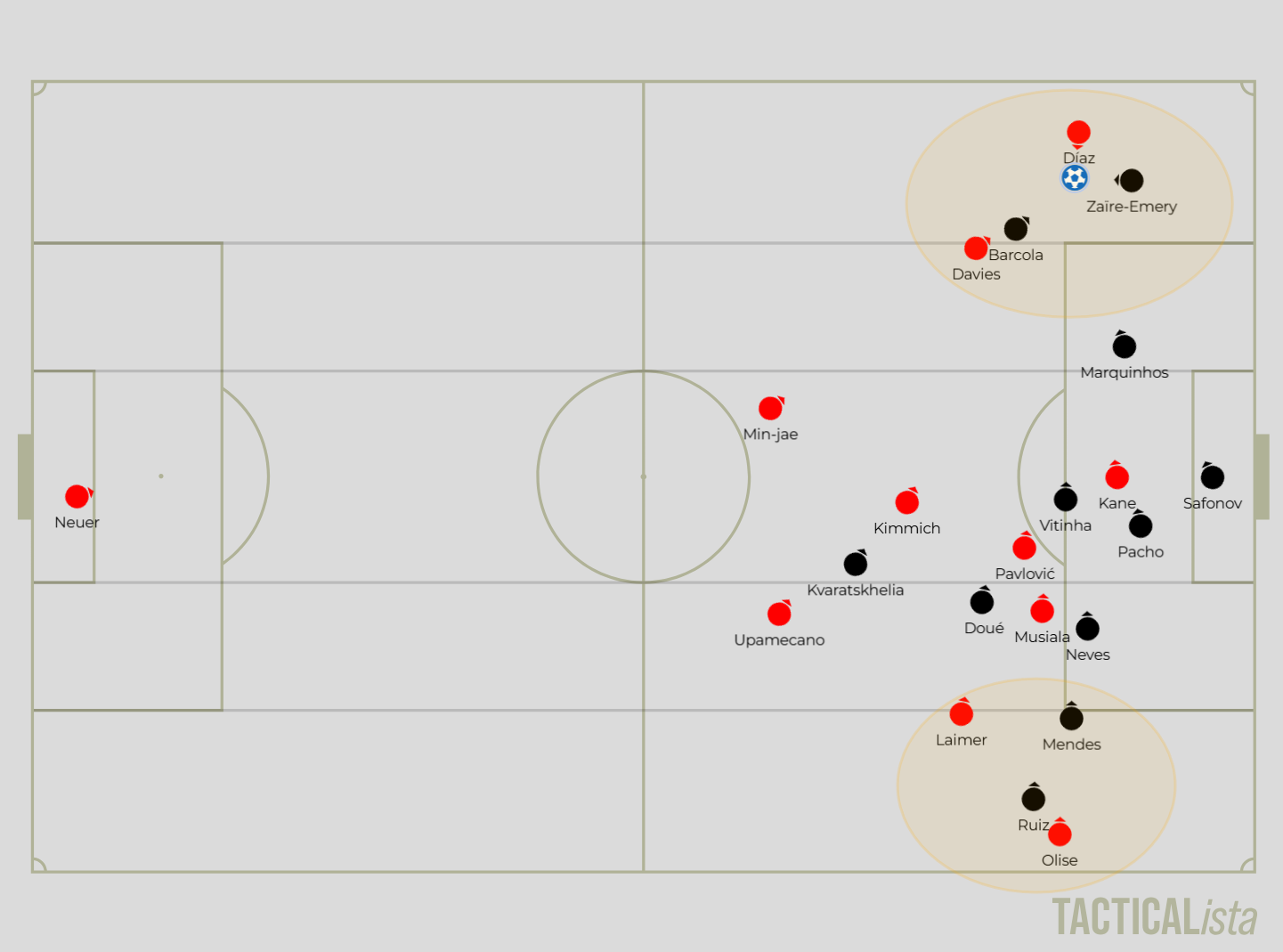
Image 5: PSG’s wingers did excellently to constantly track the movements of the opposition fullbacks, which prevented wide overloads.
There are also other individual elements of box defending, such as preventing the on-ball player from having comfortable shots, even from range. Other points include cutting inside passing angles, forcing the opposition player onto their weaker foot, and proactively anticipating crosses to intercept them. For the shots that Bayern managed to unleash, Safonov did pretty well to stop them. The same can be said about Manuel Neuer, who did superbly to save many threatening PSG shots, most of which originated from offensive transitions.
Takeaways
Bayern eventually found a breakthrough following a top-class shot by Kane. It illustrated Kane’s technical quality. The touches before setting himself up and the shot itself from his weaker left foot were of world-class standard. However, the sliver of hope was soon extinguished by PSG, who managed to edge through in the end.
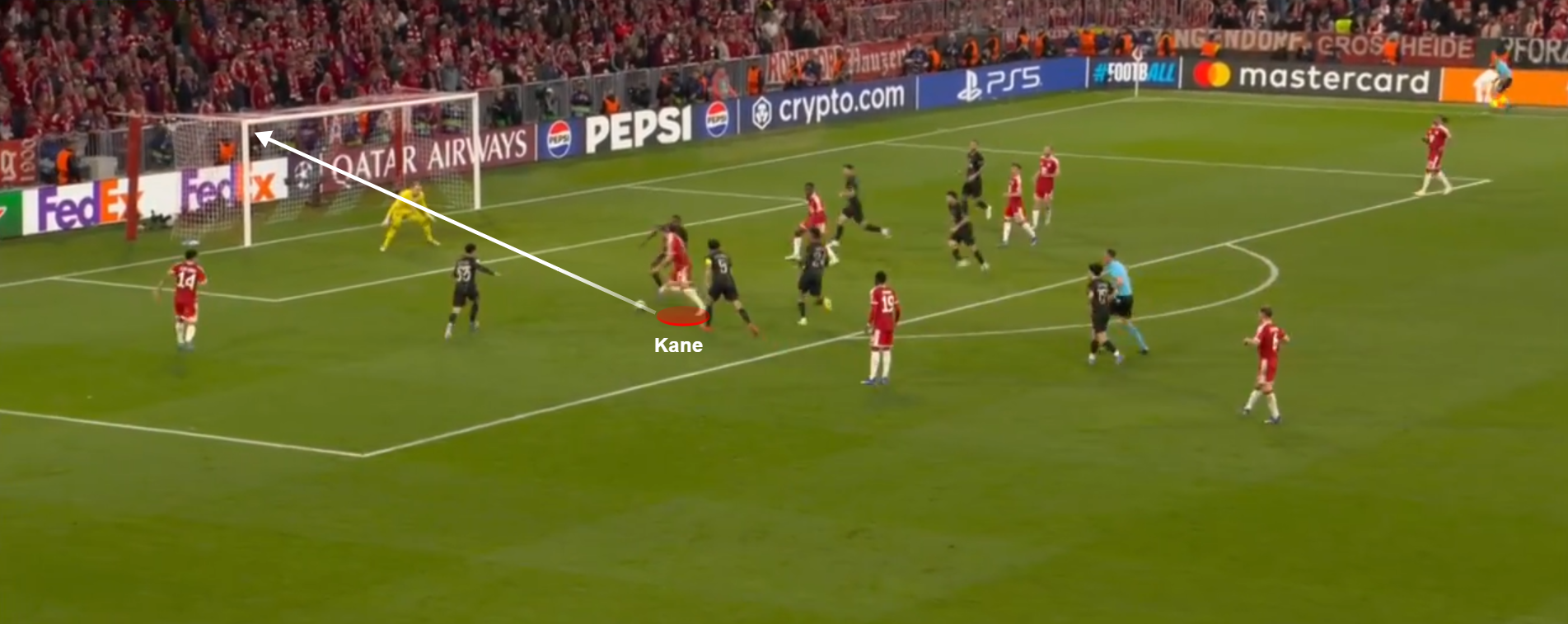
Image 6: Kane’s breakthrough gave Bayern a ray of hope, but it was too late as they could not find a second goal in the remaining minute and a half.
The entertaining and dramatic two legs between Bayern and PSG provided supporters with an enjoyable spectacle. The first fixture exemplified their attacking qualities, with some of the best forwards in the world in
full flow. The second leg showcased the reigning champions’ off-ball capabilities as they held off the Bundesliga titleholders for most of the ninety minutes whilst regularly threatening on the counter. Overall, it is hard to deny that the better side qualified for the final whilst still feeling for Bayern, who gave it their all.
With Arsenal overcoming Atletico Madrid on Tuesday night, the potential Premier League champions will face PSG, who will seek to defend their crown. Stylistically, it will also be an intriguing tie as Arsenal’s stern defense will meet the fluid and flamboyant attack of PSG. All eyes will be on May 30th for the penultimate game of the season.
Use the arrows to scroll through all available match plots. Click to enlarge.
Check the match plots page for plots of other matches.


Comments