
Paris Saint-Germain – Bayern Munich: An All-Time Classic Spectacle in Paris (5-4)
Heading into the Tuesday night clash between Paris Saint-Germain and Bayern Munich, fans knew that it was bound to be an entertainer. Fortunately, the game superseded already high expectations as they provided a spectacle that will undoubtedly be etched into the history books.
Tactical analysis and match report by Fahd Ahmed.
We decided to make this article free to read. If you want to support our work, consider taking a subscription.
The most exciting part of the season has kicked in, with numerous blockbuster games across the board. Arguably, the two most entertaining teams were part of the headline fixture of the Champions League semi-finals, as Paris Saint-Germain hosted Bayern Munich at the Parc des Princes.
PSG have not been their usual dominant selves domestically. They have only relatively recently climbed to the top of Ligue 1, with Lens occupying the top spot for a significant period. Meanwhile, PSG suffered a surprise Round of 16 exit to their local rivals in the Coupe de France.
In the Champions League, similar to last season, PSG’s form was patchy during the league phase. The Parisians also stumbled across the finish line against Monaco in the knockout play-off phase. However, since the Round of 16, the Parisians have struck form. They smashed Chelsea 8-2 on aggregate before comfortably beating Liverpool 4-0 over two legs. These results suggested that the reigning treble winners were hitting their stride right when it mattered the most.
On the other hand, Bayern have been near-perfect this season. They had only lost twice heading into the semi-finals. The first of those was a narrow defeat to Arsenal and the other, a shock upset against Augsburg in late January. Since then, Bayern have been undefeated across all competitions.
PSG and Bayern had also faced each other earlier in the season in the Champions League, with the Bavarians edging a 2-1 victory. Nevertheless, it was a clean slate. With more than three hours to play, everyone knew that anything could happen, especially given their respective styles.
Unwillingness to back down from a man-to-man press and the mentality to go blow-for-blow
Ahead of the game, there were interesting discussions around whether PSG or Bayern might opt for a different pressing system and change from their usual man-to-man approach. Considering the plethora of world-class attacking quality in both teams, it would have arguably been a rational decision to decrease the risk from leaving the backline in 1v1 matchups.
However, many expected neither manager to alter their strategy, which is also logical for various reasons. Firstly, going man-to-man was the usual pressing approach deployed throughout the season. Thus, the two groups of players were familiar with it. Changing the off-ball system may lead to the slightest confusion. Secondly, there is a valid argument that offering the opposition a player surplus in deeper phases can be damaging, considering the overload that could be generated in the first or midfield lines. Furthermore, due to the technical capacity in deeper phases from PSG and Bayern, it might have led to possession dominance and control.
Lastly, there is an important factor that tactical analysis should not overlook – the psychological side. Moving away from a man-to-man press would be an indication of backing down, which can affect team morale, as it suggests a potential lack of confidence in the standard approach. In a way, it would be an admission that the opposition is superior and that the defenders would not be able to cope when isolated. The ultimate implication could be a slight dip in confidence, which leads to players second-guessing their decisions. Against one of the best teams in the world, this can be costly.
Therefore, Enrique and Kompany stuck to their man-to-man press. On the ball, PSG and Bayern were, as usual, encouraged to attack directly with speed. Since there was bound to be plenty of space due to the man-oriented press, positional rotations, and constant off-ball runs, both sides were willing to play with high intensity in and out of possession. That set the scene for what would turn out to be one of the best games in football history.
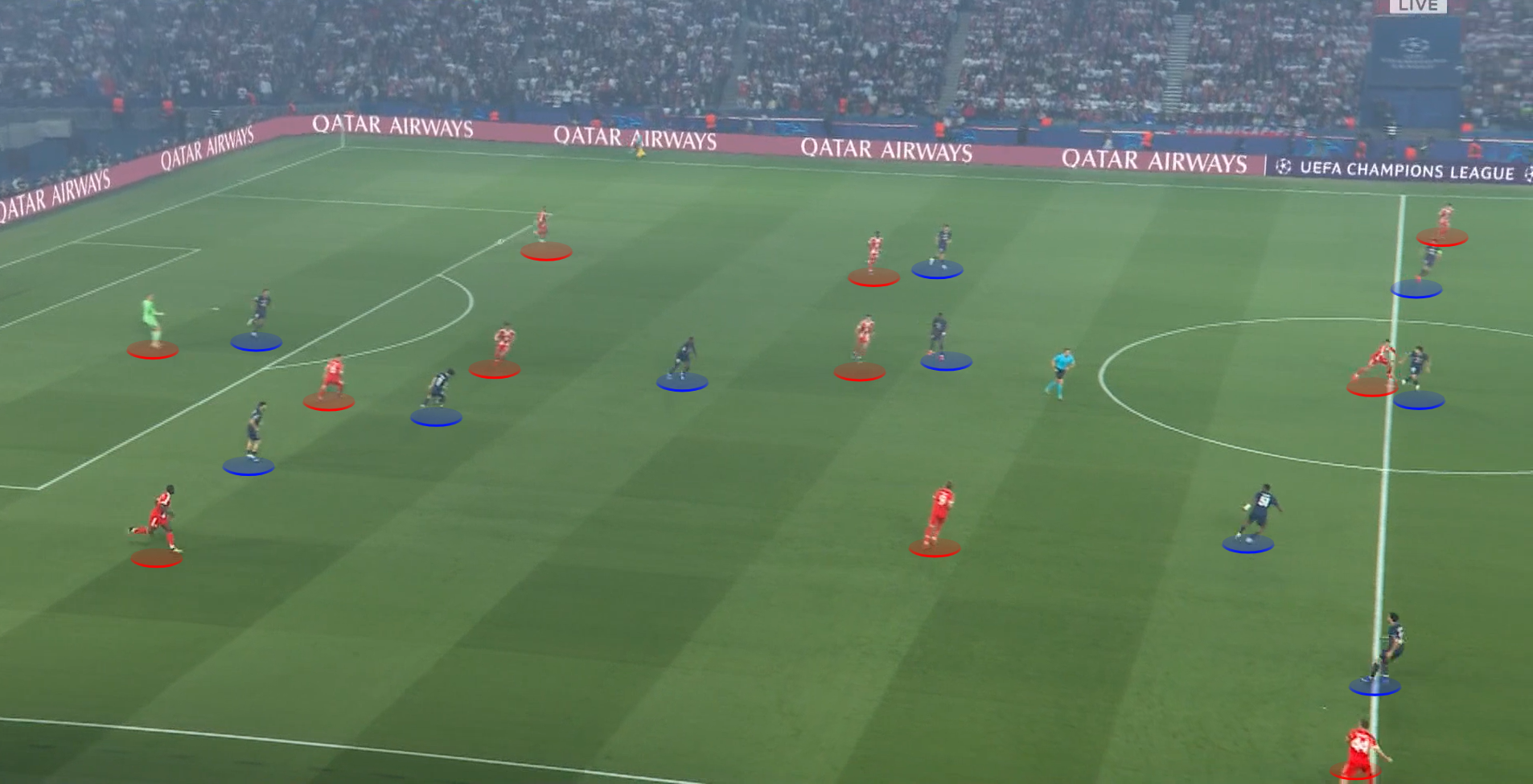
Image 1: Less than a minute into the tie, it was evident that PSG wanted to press Bayern man-to-man. The visitors utilized the same off-ball system when it was their turn to press.
Neuer’s long passes and the chaos that follows
Part of Kompany’s game plan was to regularly hit long passes from deep to target the space behind PSG’s defensive line. Since they were pressed man-to-man, Bayern could create opportunities by finding the beyond runs from the striker, midfielder, fullback, or even wingers. Due to their willingness to rotate, any player apart from the centre-backs ended up in advanced positions where they attacked the space behind.
Thus, there were numerous instances within the opening minutes where Bayern attempted channel balls from deep areas. Manuel Neuer, in particular, was the usual deliverer of these long passes since he was the surplus against PSG’s ten outfield players. This way, Neuer could also avoid finding himself in a sticky situation like the second leg against Real Madrid, where his misplaced pass was intercepted and converted by Arda Güler.
The trade-off of regularly attempting these long passes was that a possession turnover would leave Bayern vulnerable on the break. Specifically, there would be space between the lines to play through. This does not imply that it was easy to access this space since, in theory, Bayern would be matched player-for-player. However, the slightest gap between the marker and the intended pressing target would be sufficient to create separation.
A sequence in the 15th minute is an appropriate example. Neuer launched a long ball that was intercepted by Willian Pacho and laid off to Nuno Mendes, who found Warren Zaïre-Emery in midfield. The Frenchman was a meter or so away from his marker, Josip Stanišić, before receiving. That allowed him to pick a pass to Vitinha, who shifted it toward Achraf Hakimi.
Désiré Doué received the next pass on the right wing before it quickly shifted to Khvicha Kvaratskhelia, who tried to cross it to Ousmane Dembélé. That was a decent chance that originated for PSG, which originated from the initial Neuer pass.
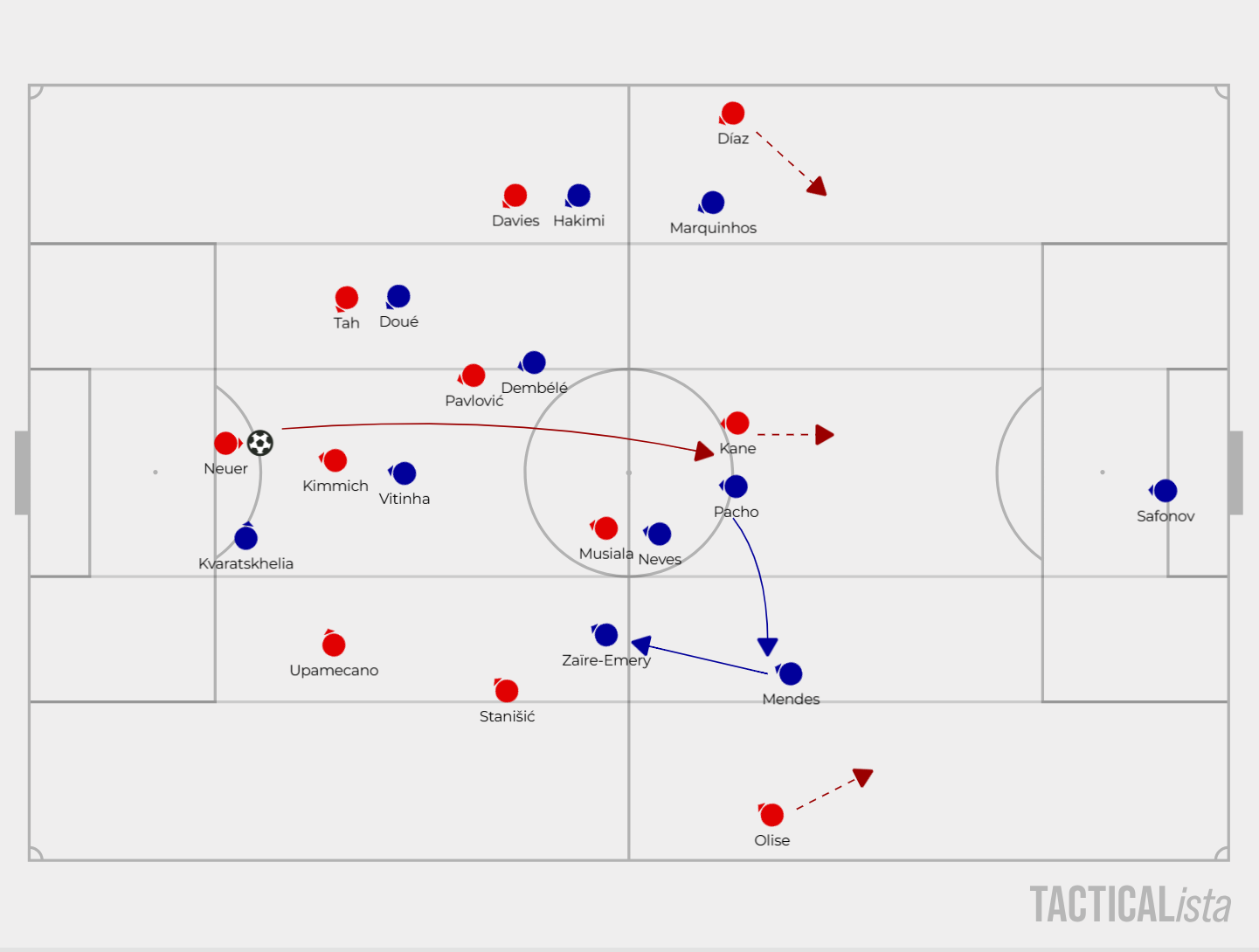
Image 2: An example from the 15th minute when Neuer attempted a long pass to find a beyond run. However, it was intercepted before PSG launched their counter against an open Bayern.
Due to both teams’ willingness to engage in quick transitions, it was unsurprising to see Luis Díaz carry the ball through the heart of PSG’s structure. He collected the intercepted loose ball following Kvaratskhelia’s cross and dribbled all the way through to the attacking third.
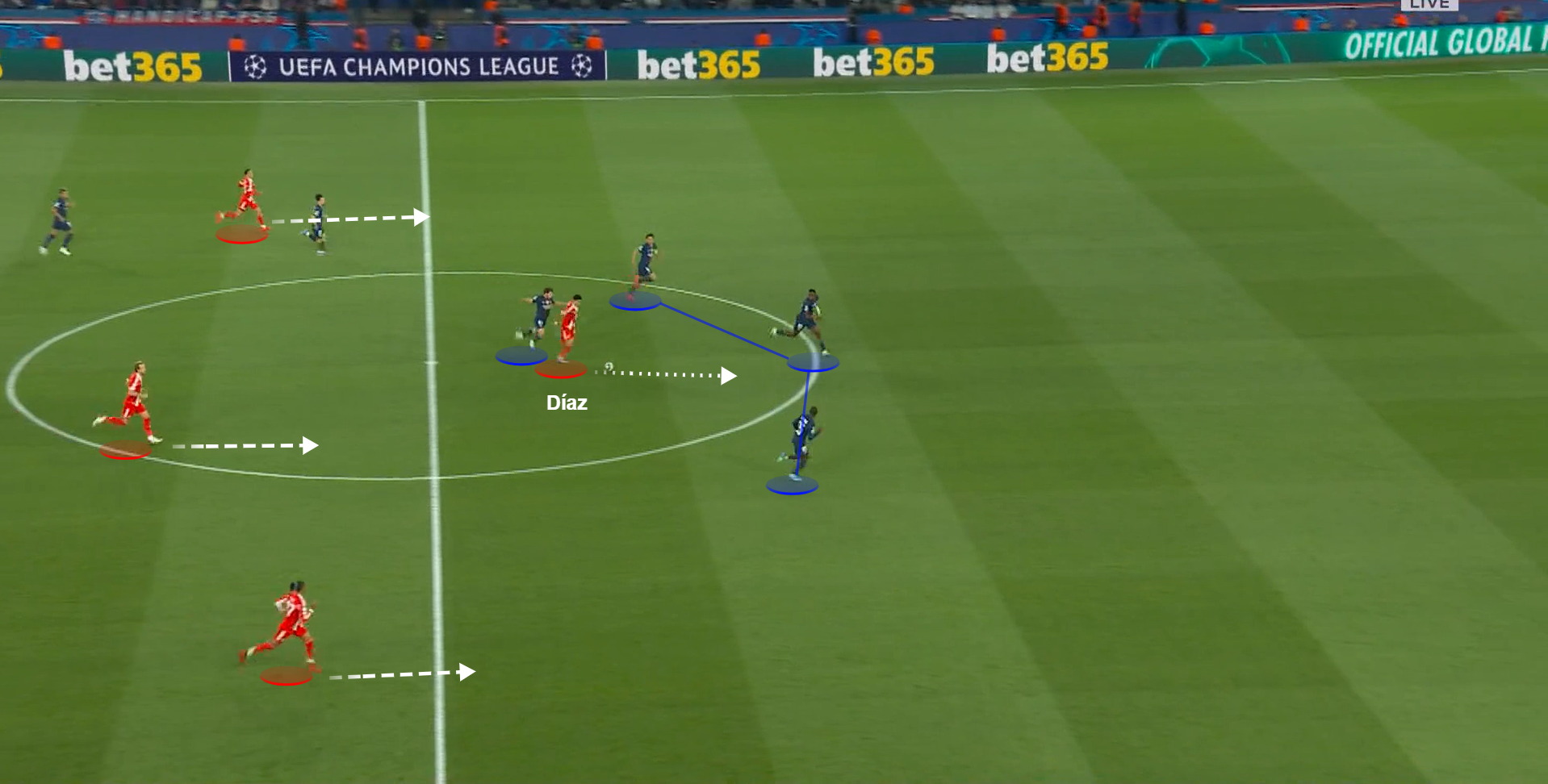
Image 3: Bayern’s choice to take risk during transitions enabled them to constantly end up in such situations.
A few passes later, Joshua Kimmich received the ball in front of PSG’s backline. With no immediate pressure on him, the German midfielder slipped a pass into Michael Olise, who laid it off to Díaz. The Bayern left winger very cleverly shielded the ball from the sliding Pacho following his initial touch. That action prevented Pacho from getting first contact on the ball but instead saw him go through Díaz, leading to a penalty. Harry Kane stepped up to convert as he slotted the ball into the bottom right corner whilst Matvey Safonov dived the opposite way.
These events were an illustration of the chaos that Kompany was willing to engage in. The regular Neuer long passes left them open to an immediate counter. However, that opened the opportunity for a transition against an exposed PSG. Those were the high-risk, high-reward odds with which the players and managers were dancing.
The chaos was also prevalent in midfield turnovers. PSG and Bayern were susceptible to possession losses in midfield leading to dangerous counters by the opposition. Olise’s chance in the 21st minute and Dembélé’s shot just a minute later are among the best examples.
Decompressing the Bayern block to create space and capitalize on isolations
The idea of decompressing a block simply refers to the concept of creating greater distances between the different lines of pressure in a defensive unit. As the post below mentions, this tactic can result in more space opening between the lines that can be accessed.
More backward passing to decompress the opposition block from Bayern. The De Zerbi philosophy (bait through static provocation) has evolved into a more dynamic mode. With teams using backwards movement as pressing trigger, it's a more sustainble way of generating space in block.
— Jon Mackenzie (@Jon_Mackenzie) April 15, 2026
However, on Tuesday night, we saw various instances where this concept was used to play behind the opposition defensive line. It also links to the principles of playing against the flow. Specifically, it refers to the advantages gained by the attacker when they go against the flow of the defender’s movement. This idea has been popularized by Paul McGuinness.
To outwit opponents attract them into your FLOW in order to ‘GO AGAINST THEIR FLOW’
— Paul McGuinness (@PaulMcG8) March 20, 2026
The secret is to time your move at the last millisecond so that just as you stop, turn or dodge, the defender goes flying past, my mentor Jim Ryan called it,
“The Arrogance of timing” pic.twitter.com/JW7OWxdolh
For PSG’s first goal of the evening, we see these concepts in action. Firstly, the home team have pinned Bayern to a middle block, which usually forms a 4-4-2 structure but were often forced into a 5-4-1 shape due to the PSG players’ positions. Specifically, Díaz was dragged back by Hakimi’s advanced position.
Bayern are then decompressed as PSG attract them forward by recycling possession. In such situations, it is almost guaranteed that Bayern will step out as they want to prevent PSG from establishing control.
When the ball reaches Mendes, there is a huge gap between the lines, which Doué moves into and soon receives. As Doué shapes up for a pass, Kvaratskhelia initiates a clever double movement. He fakes to go below before running beyond. Therefore, at the moment Doué dinks a pass, Kvaratskhelia and Stanišić are flowing in two different directions. It allows the Georgian forward to get enough separation to receive. Furthermore, it isolates him 1v1 against Stanišić. So often, Kvaratskhelia has displayed his quality in these situations. It was yet again on show for this move as he perfectly cut inside before scoring at the far post.
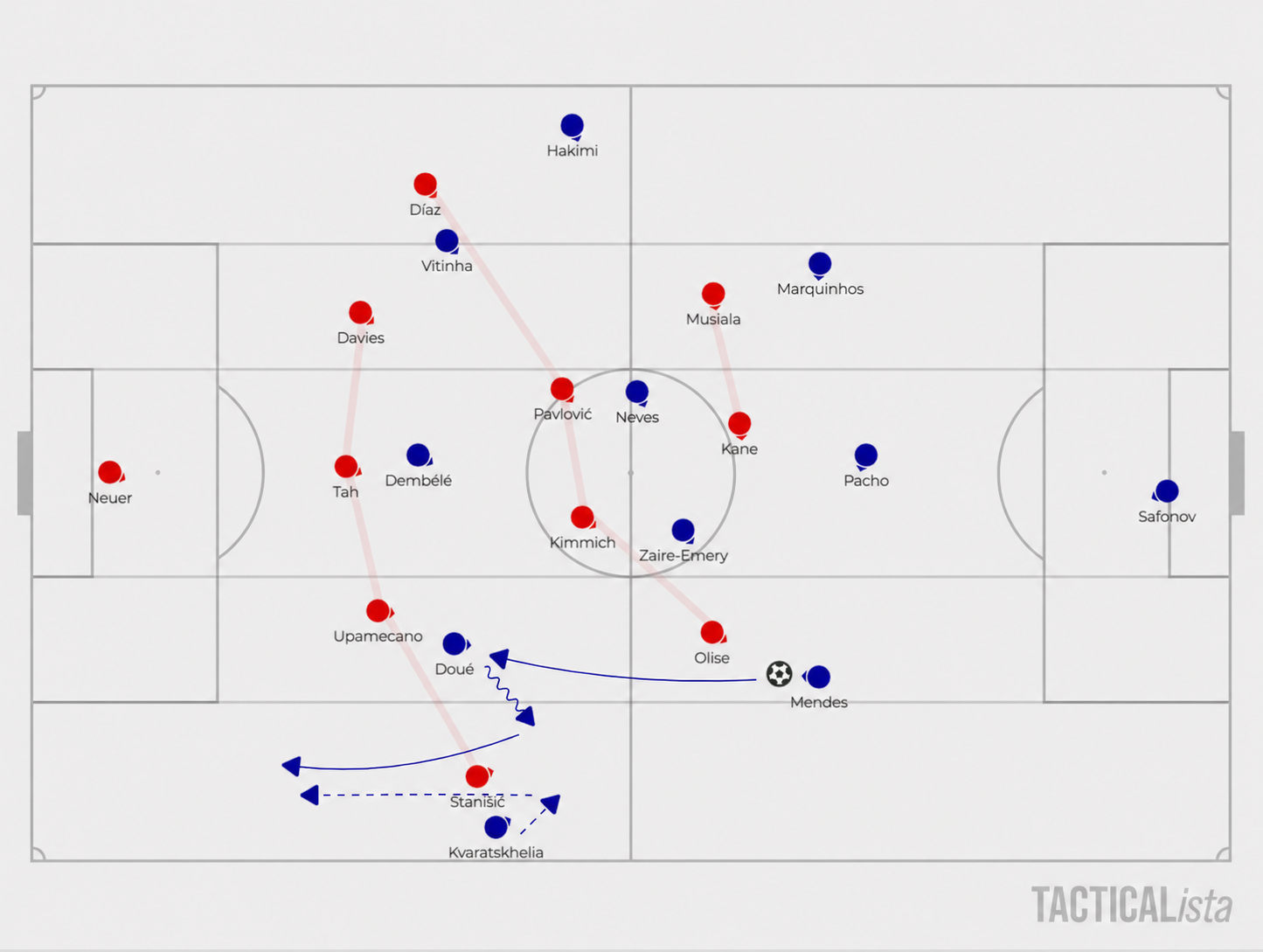
Image 4: PSG decompressed Bayern’s defensive block for Doué to receive between the lines. Kvaratskhelia’s double movement enables him to receive behind the opposition backline, having run against Stanišić’s flow. He then caps off the move by beating his marker when cutting inside and accurately slotting the ball past Neuer.
Neves’ glanced header to spur a comeback
PSG do not have many tall and physical players to pose themselves as a dominant aerial threat during set pieces. However, on the night, they delivered a sharply worked and well-executed corner that gave them the lead.
Bayern’s defensive set-up included five zonal markers in the first line, a trio of man markers in the following line, and two zonal markers in the farthest line. As a result, Dembélé’s ball was targeted to the space in front of Bayern’s first line and specifically into the 3v3 zone.
Timing the off-ball movement well can create separation, which would just be enough to comfortably meet the cross with a header. João Neves achieved just this as his burst into the front post was not perfectly marked by Jamal Musiala. The 5’7” midfielder managed to leap and connect a header to the cross whilst guiding it excellently to the far post. Neuer did not stand a chance. Within a matter of minutes, PSG flipped a trailing scoreline into a lead.
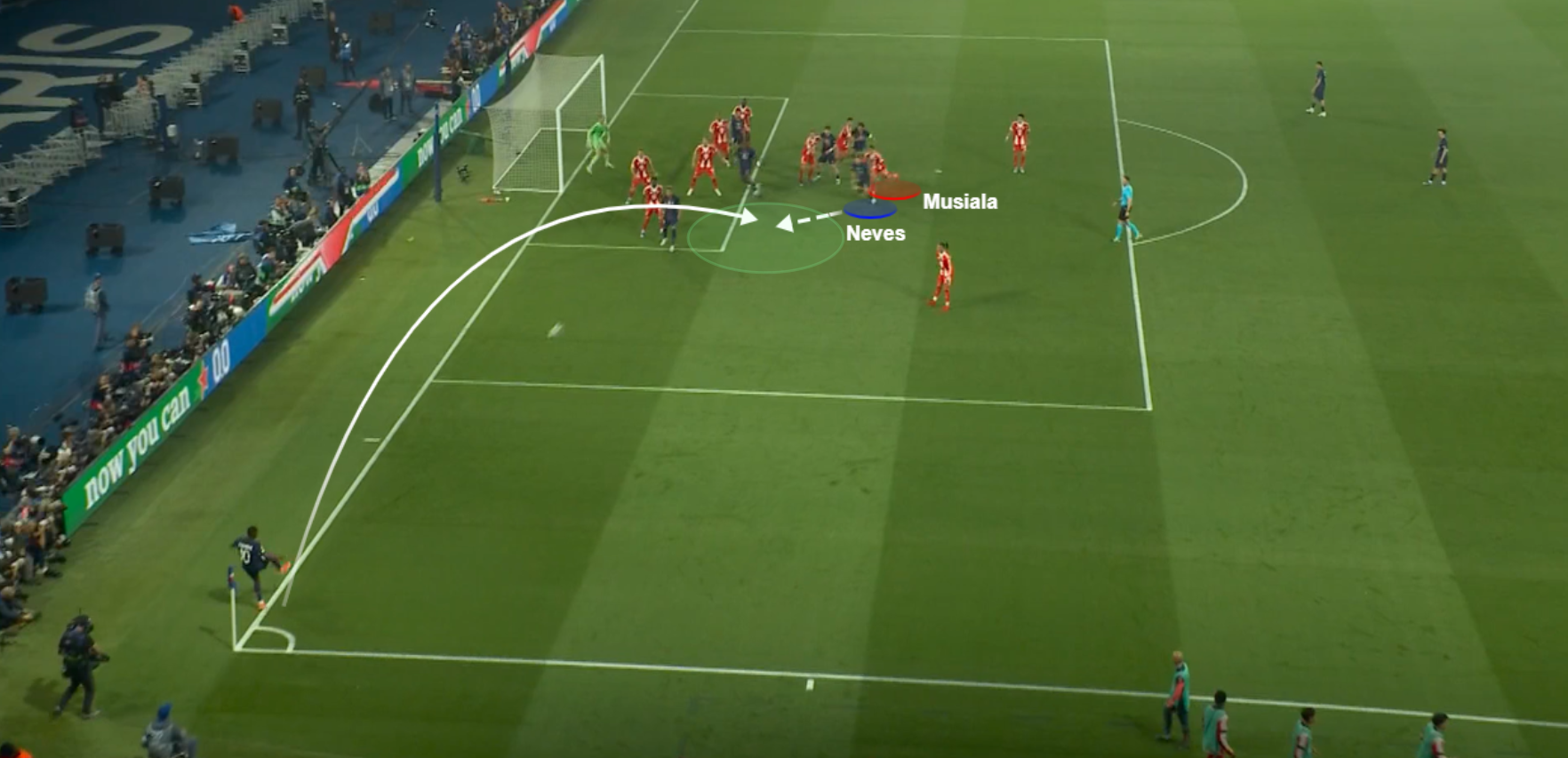
Image 5: PSG’s corner targeted the area where it was a 3v3 against Bayern. After getting past his marker (Musiala), Neves executed a well-timed and placed header to the far post.
Unstoppable Olise in full flow and Davies’ misfortune
There are very few players who have had a more successful individual season than Olise. The French winger has reached new personal heights with his form and consistency this campaign. Even on big occasions, like in the prior game against Madrid, Olise does not shy away from the spotlight. His battle against Mendes on the flank was a fun watch on its own. However, Olise had something in store late in the first half when drifting into the centre.
In a rare situation where the Parisians were defending low, Olise received the ball in the centre whilst PSG were stepping up to press. Without an easy passing option, Olise kept dribbling through the middle whilst riding off the pressure from Zaïre-Emery and Neves. Although the backline was initially retreating, Olise only had a narrow gap to release a shot since Marquinhos stepped up to press. Nevertheless, that is all the space and time Olise needed to power a shot past Safonov.
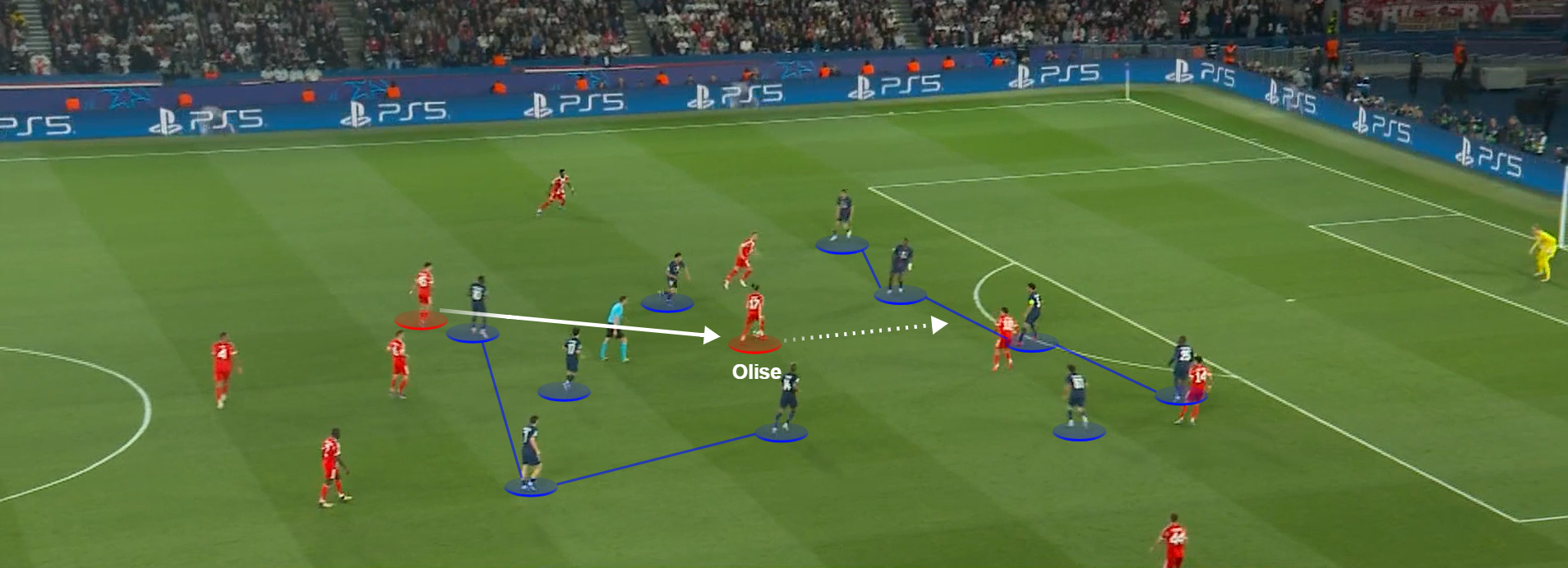
Image 6: Olise received the ball inside PSG’s block before driving with it and smashing it past the goalkeeper.
The first half was already a treat, but it had one more goal in store for the fans. This one was on the less pretty end of the spectrum, with Alphonso Davies conceding a controversial handball following a shot by Dembélé. The reigning Ballon d’Or winner converted the penalty kick, which was one of the last actions of a thrilling half.
Blindside run to catch Díaz off-guard and Dembélé’s uppercut
A similarity in PSG’s and Bayern’s in-possession principles involves the aggressive positions and movements from the fullback. Often, an opposition attacker, specifically a winger, tracks these runs. Although, in theory, the winger will be instructed to always keep tabs on these movements, forwards can get caught out. It is simply because attackers may lose concentration for a brief moment. That may just be enough for the opposition fullback to create separation and capitalize.
Thanks once again to everyone who joined the class on the build-up to tonight's big Champions League game, and thanks for your questions.
— Tactx (@Tactx_) April 28, 2026
We discussed the potential threat posed by both teams from wide positions, as the full-backs take unconventional roles. Hopefully, you see… pic.twitter.com/joJKFckKIy
In the 56th minute, following a possession restart from a throw-in, Vitinha receives the ball in midfield whilst Bayern press. In front of him, Neves and Doué make below runs to collect a potential short pass. Meanwhile, Hakimi runs beyond the Bayern defensive line with Díaz caught ball-watching.
Hakimi receives the ball in space with plenty of time and room to pick his pass. This was also due to Doué and Neves dragging their markers on the same side.
Although the low cross that followed was meant for either Dembélé or Zaïre-Emery, both players let the ball run through. Kvaratskhelia was ready at the far post to pounce on the ball. He brilliantly converts from that position, taking the shot first time and directing it to the near post, which Neuer did not expect.
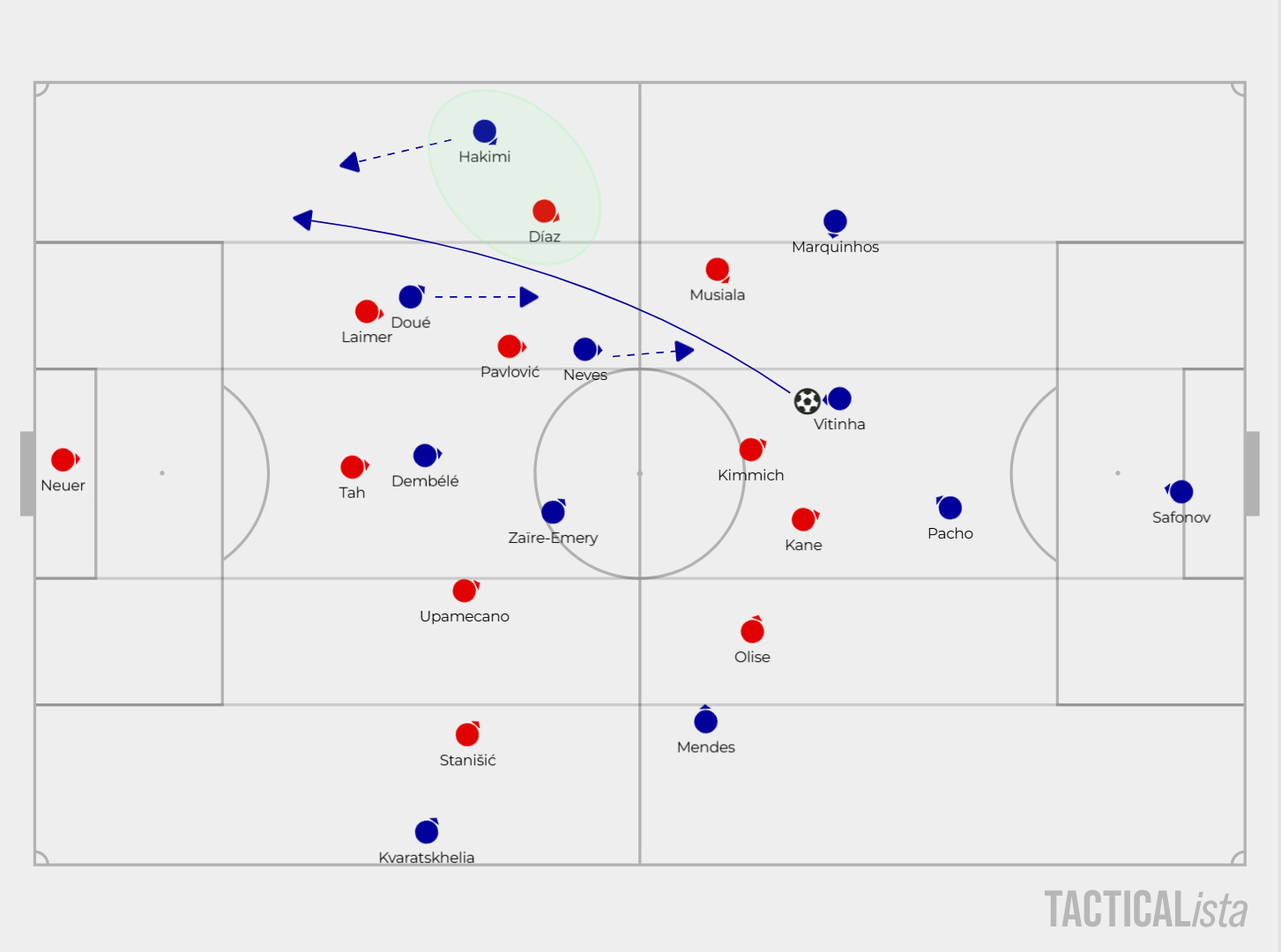
Image 7: Hakimi’s beyond run was not tracked by Díaz. The right-back then entered a valuable position before providing the decisive cross to Kvaratskhelia at the far post, who converted.
PSG’s two-goal lead turned into three very soon with a swift counter led by Doué, finished by Dembélé. It was a neat move with a superb effort at the near post, which struck the post before sliding past the goal line. Although a 5-2 score may knock out many teams in Europe, the reigning back-to-back Bundesliga champions were not ready to give up.
Embodying Tyson Fury with a quick resurgence after a seemingly vicious knockdown
After conceding three goals in the span of twenty minutes, some viewers may have thought that Dembélé’s goal was the knockout blow. However, like Tyson Fury seamlessly got up after catching a vicious hook from Deontay Wilder in the twelfth round, Bayern forced their way back into the game.
In the 65th minute, the faintest touch from Dayot Upamecano guided Kimmich’s cross to make it 5-3. Bayern kept piling on the pressure and tried to re-do their feat last weekend when they overturned a 3-0 deficit into a 4-3 victory against Mainz.
Bayern were one step closer to drawing level after a midfield turnover led to Kane receiving possession in midfield. The English striker adeptly found Díaz’s run. The Colombian winger still had a lot to do, to say the least. He expertly controlled the ball, settled it, and attempted a fake shot to create separation from Marquinhos. After making some room, Díaz belted a shot past Safonov to reduce the deficit to 5-4.
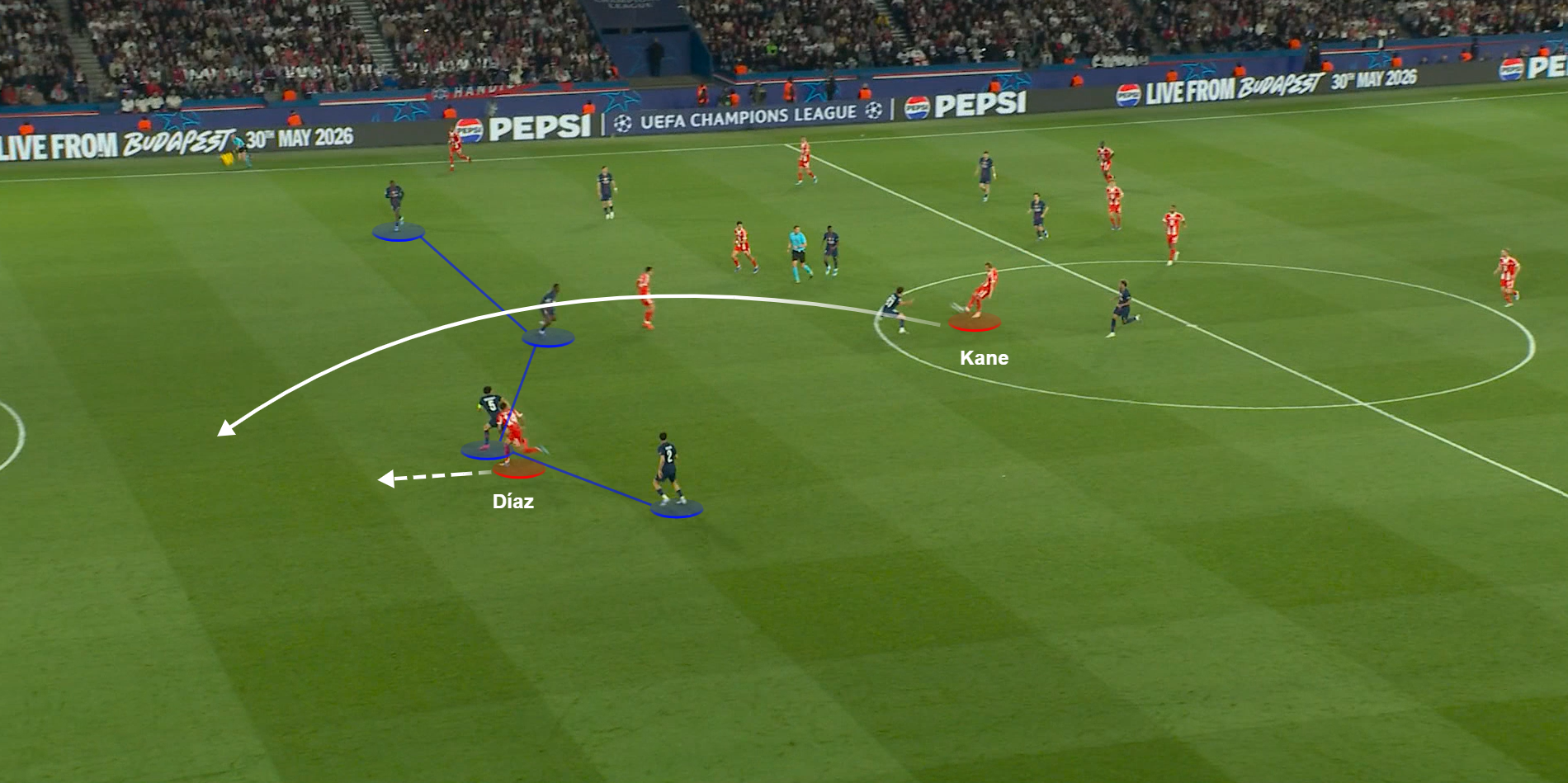
Image 8: Following a turnover in midfield, Kane set up Díaz for a goal that would go down as one of the best in the current Champions League season.
Takeaways
For the remainder of the ninety, PSG and Bayern never let off. They were trying to play with whatever energy remained to keep adding to the goal tally. The blow-for-blow nature was not only entertaining but also commendable. It was impressive watching them not compromise on their strategy and never letting their foot off the gas. As a result, it produced one of the best football games ever, which many will agree is not an overstatement.
Despite the one-goal lead heading into the second leg, the semi-final still hangs in the balance. There likely will be more goals, drama, and a rollercoaster of emotions for supporters to go through. Get your popcorn ready.
Use the arrows to scroll through all available match plots. Click to enlarge.
Check the match plots page for plots of other matches.