
Germany – Paraguay: Upset of The Tournament (1-1, 3-4 On Penalties)
Despite heading into the match as heavy favorites, Paraguay looked stronger in the first half, which they ended with a one-goal lead. Germany found their way back through a Kai Havertz equalizer. Germany came extremely close to producing the winner, but Jonathan Tah’s goal was controversially ruled out. In the end, Paraguay dragged Germany into a penalty shootout, which they won dramatically.
Tactical analysis and match report by Fahd Ahmed.
We decided to make this article free to read. If you want to support our work, consider taking a subscription.
After a long but entertaining group stage phase, the World Cup entered its most exciting period. With the stakes so high and the margins so fine, every match, despite the competitive balance, was worth tuning in for.
One of the more favorable fixtures for teams that were favorites to go deep was Germany’s match-up against Paraguay. The former finished top of Group E despite a frustrating defeat to Ecuador on the final day. Meanwhile, Paraguay qualified after clinching third spot in Group D.
Compactness and aggressiveness to limit central access
Many teams that seem inferior on paper have attempted to even out the scales by implementing a well-drilled low defensive block. Historically, this has been the case in previous years. However, this World Cup has revealed the tournament-wide tactical aptitude and coaching standard, as these sides have executed it to a high level on the field.
Paraguay’s compact 4-4-2 block against Germany was another apt example. Structurally, they were deep and did not engage in a high press. Further, Paraguay were passive when the opposition had possession in front of the defensive unit whilst being aggressive when the ball was shifted wide or if Germany tried accessing the center. The intensity when actively engaging in these phases was impressive, as Paraguay would close down potential passing lanes or tightly mark the likely receivers. This either dissuaded Germany from trying central passes regularly or, when they did, led to a return pass or even a turnover.
Attempted diagonal incisions from the left wing against Paraguay’s block
One of Germany’s primary on-ball intentions was to seek diagonal entry points to cut through Paraguay’s defense. This has been a constant theme of Germany’s attacking play under Julian Nagelsmann.
For Germany's opening goal, we see Nmecha thinking diagonally inside to combine with Wirtz and play a one-two before releasing a shot. When I discussed Germany's attacking play and the tendency to look for such diagonal inside passes, I focused a lot on the wingers. Here, it's a… https://t.co/OeaJPieapZ pic.twitter.com/2pipJvrbOJ
— Fahd (@fahdahmed987) June 14, 2026
Against Paraguay, there was an emphasis on funneling Germany’s attacks down the left to get Florian Wirtz on the ball. In that frontline, the Liverpool forward was best suited to be the creator from wide. The cost of having Wirtz occupy such positions, though, was that it prevented him from receiving centrally, which would have been more threatening.
Upon shifting possession wide, Germany attempted low diagonal passes to initiate combinations or crosses. Undav’s inclusion did increase Germany’s threat in such situations, and Havertz has proven to be decent in the air. However, the quality of the crosses and even, perhaps, the box movements were lacking – especially the former.
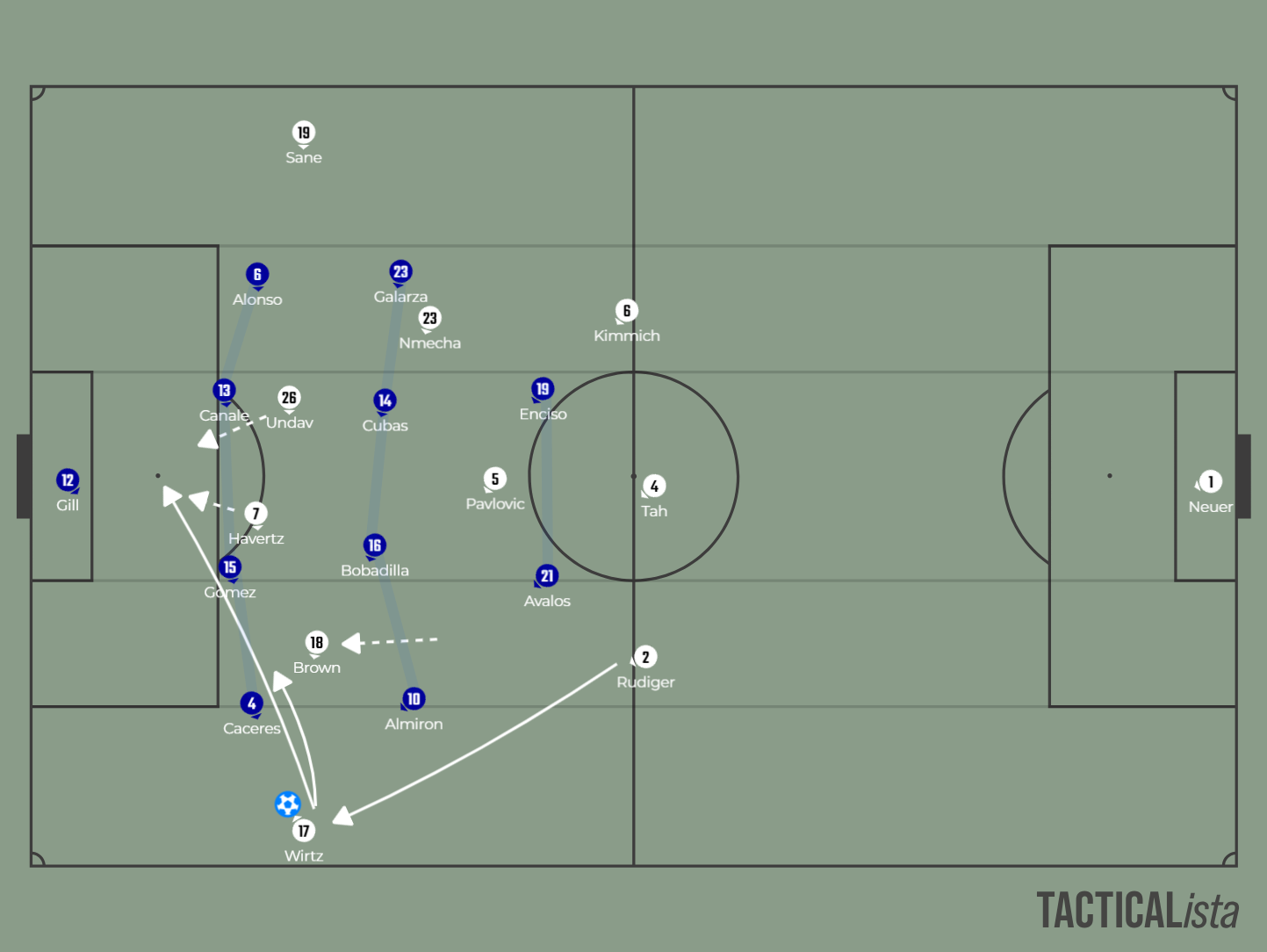
Image 1: Against Paraguay’s 4-4-2 block, Germany focused on creating chances from the left through Wirtz. Diagonal passes to initiate short combinations and crosses were the primary routes.
As the match progressed, Germany began engaging in direct attacks whenever opportunities opened up. Leroy Sané’s runs in behind to provide depth could have proven beneficial given his pace. Although these situations were rare, Germany were not effective enough to capitalize on them.
Overall, Paraguay were strong defensively during settled out-of-possession phases. Further, an important detail from a performance perspective was their ability to break momentum by winning fouls. It may seem insignificant within the broader picture, but it is an interesting point considering the existing impact on teams’ momentum from the hydration breaks. Winning numerous fouls within the quarters increased the number of small momentum breaks, which prevented Germany from building rhythm.
Drop when the defenders retreat to receive the cutback
With Paraguay ceding possession dominance, their main avenues of chance creation were obviously through counters. There were indirect potential benefits from those phases even if they did not lead to a valuable chance. If they earned a corner or a free kick from a foul, Paraguay would have offensive set-pieces from which they could create.
In the 41st minute, following an unintentional handball by Aleksandar Pavlović, Paraguay had a free kick from their defensive half. After the center-back launched it forward, Paraguay won the ball in the second phase, having initially lost the first contact. This led to a quick attack from Miguel Almirón, which resulted in a corner.
The corner kick had a similar outcome, where Paraguay did not win the first contact but came out on top in the second phase after extinguishing a Germany counter. They followed that with their own offensive transition, which led to Matías Galarza receiving on the right with time and space to deliver a cross.
The next few individual details were of high quality from the assister and goalscorer, as they both recognized how the movement of the Germany line to drop opened room for a cutback. Julio Enciso moved into this area and demanded the ball, which he received from Galarza, to score.
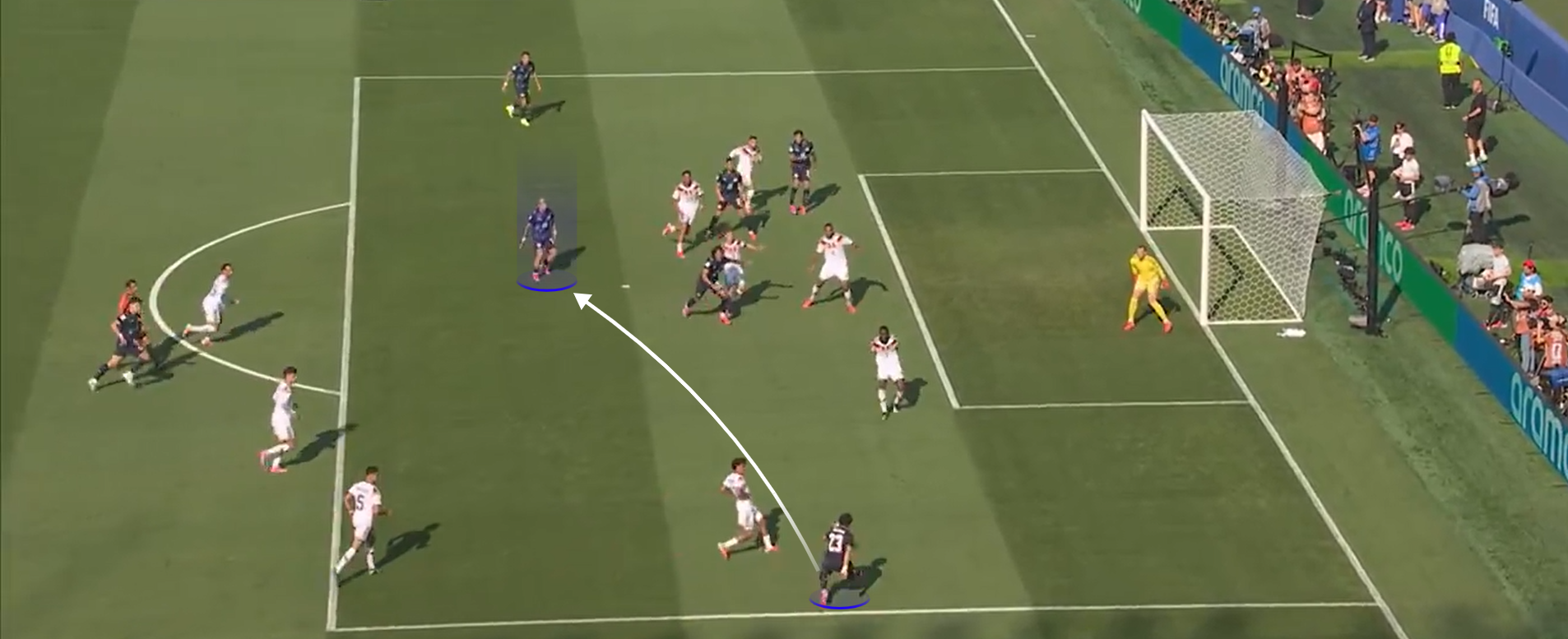
Image 2: Since Germany’s defensive line dropped whilst Galarza shaped for a cross, it created a gap in front. Enciso moved into this zone before converting.
Crosses eventually provide the breakthrough
Against low defensive blocks, crosses are often simple and effective solutions. Germany tried relying on them despite the inconsistent delivery quality. It eventually paid off when Havertz scored with a glancing header following a pinpoint-accurate cross from Wirtz.
The best tactical minds of our time have wrestled with this question for years, but against stubborn low blocks, nobody has come up with anything better than crosses. pic.twitter.com/AFjO9JJJnd
— markstats 🍁 (@markrstats) June 29, 2026
Interestingly, Paraguay’s defensive organization was not ideal due to the prior context of Germany’s attack. It started with an unsuccessful cross that was collected by the goalkeeper. Orlando Gill then launched the ball up the field whilst the entire team advanced. However, the delivery was too long and was collected by Manuel Neuer.
Germany then used this opportunity cleverly to attack Paraguay immediately since the defensive structure was relatively more disorganized. This eventually benefited Germany, as Wirtz had more time to deliver the cross whilst there was less congestion in the penalty box.
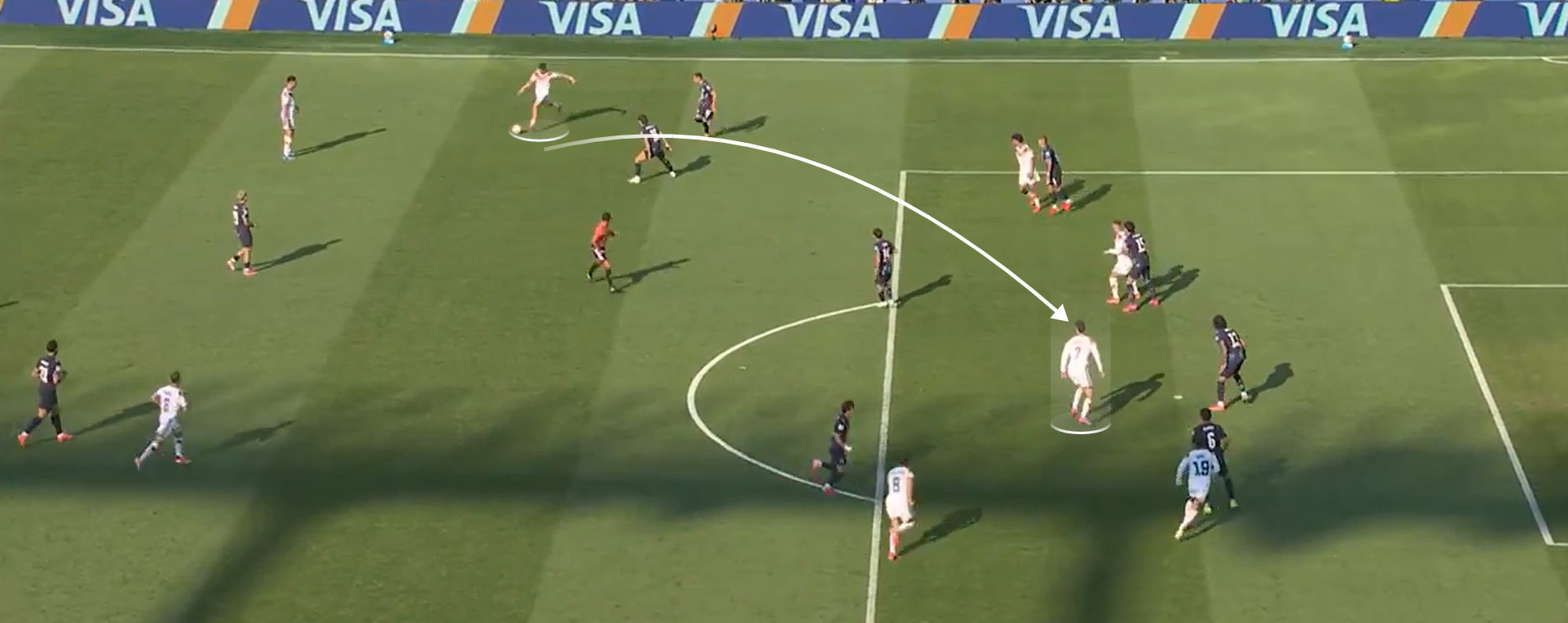
Image 3: After Paraguay were attracted up the field, their defensive block was decompressed, which ceded more space within the unit. This provided certain Germany players with more space and reduced congestion, contributing to Havertz’s equalizer.
Failing to find the winner despite opportunities in extra time and a lack of leadership during the shootout
Heading into extra time, Germany had the chance to build on the energy and morale boost after finding the equalizer. They also had quality substitutes to provide fresh legs who have previously proven to have the ability to contribute off the bench. However, Germany did not produce enough chances, specifically in the first half of extra time. That being said, it slightly improved in the second half, with Jonathan Tah’s goal controversially ruled out.
There have been multiple penalty shootouts in the knockout stages already where misses seemingly have been quite common. It turned out that way for Germany, with two misses in the opening four attempts. Antonio Sanabria had the opportunity to immediately send Paraguay through but missed his chance. They even almost let it slip after Fabián Balbuena’s shot was saved by Neuer. However, a lack of leadership amongst the Germany ranks led to Tah taking the first penalty of his professional career, which was skied over the bar.
Takeaways
Although a case could be made that Germany deserved to win that game considering the controversial call on Tah’s goal, it is difficult to say that Paraguay did not earn it either. Germany struggled to consistently break the defensive unit whilst leaking a few dangerous chances. Their unconvincing performances throughout the World Cup also reveal potential broader issues and gaps within the team and the manager that would need resolving before the next Euros.
Meanwhile, Paraguay illustrated their capacity to fend off a top attacking team through cohesive defensive organization and intensity. Progressing through to the round of 16 would not have been in the nation’s wildest dreams, but they have qualified to face tournament favorites France. With the odds stacked against them even higher, it will be an extremely tough game to win. Nevertheless, irrespective of how it turns out, the players and the manager have made the country proud.
Use the arrows to scroll through all available match plots. Click to enlarge.
Check the match plots page for plots of other matches.


Comments