
Ecuador – Germany: Crashing Into The Knockout Stage Party In Style (2-1)
Ecuador were fighting against the odds before kick-off, considering that they needed a win against the Group E toppers. Matters worsened when Leroy Sané provided Germany with an early lead. However, mental strength and tactical aggressiveness provided Ecuador with a solid platform to perform and return with an equalizer almost immediately. They eventually secured a comeback following a flick from Gonzalo Plata, who sent Ecuador into the knockout stages against the odds.
Tactical analysis and match report by Fahd Ahmed.
We decided to make this article free to read. If you want to support our work, consider taking a subscription.
Group E has been one of the most fascinating due to the strength of three of the four teams. Heading into the final group stage match, Germany were in the driving seat after defeating Côte d’Ivoire following a valiant second-half performance, along with a crucial brace from the super substitute Deniz Undav. Meanwhile, Côte d’Ivoire were expected to qualify for the knockout rounds as they had the easiest game on paper, facing Curaçao.
Ecuador had a very difficult task ahead as they had to beat the table toppers to qualify. Having disappointingly picked up only one point from their two matches, they were backed into a corner and had to take risks against Germany to give themselves a shot. Therefore, it made for a very intriguing penultimate Group E fixture.
Julian Nagelsmann made only two alterations to the side that started in the 2-1 victory. With Nico Schlotterbeck and Nathaniel Brown unfortunately suffering injuries, Nagelsmann was forced to introduce Antonio Rüdiger and David Raum. On the other hand, Sebastian Beccacece similarly decided to change two players, with Pervis Estupiñán benched for the more attack-minded Nilson Angulo and Joel Ordóñez returning to the side instead of Jordy Alcivar.
Sané’s controversial opener out of nowhere to briefly dent Ecuador’s hopes
Before the game had even settled enough for significant tactical themes to begin emerging, Germany took the lead. Following a clearance from Ecuador, Germany won a throw-in, which was taken by Raum into a crowded area where Aleksandar Pavlović was surrounded. After controlling the ball with his chest and recognizing the immediate Ecuadorian pressure, Pavlović raised his leg to quickly get a touch.
However, his foot made contact with Pedro Vite’s head, for which a foul was not awarded by the referee. Pavlović proceeded to turn towards goal and then played a pass inside the box towards Florian Wirtz. The Liverpool forward did well to guide the ball towards Leroy Sané, who attempted a first-time shot that found the bottom left corner. There was almost nothing Hernán Galíndez could have done better, considering that his body momentum was shifting towards the left whilst the shot was directed towards the opposite side. Furthermore, Sané generated enough power and precision, which did not leave much time for the goalkeeper to react.
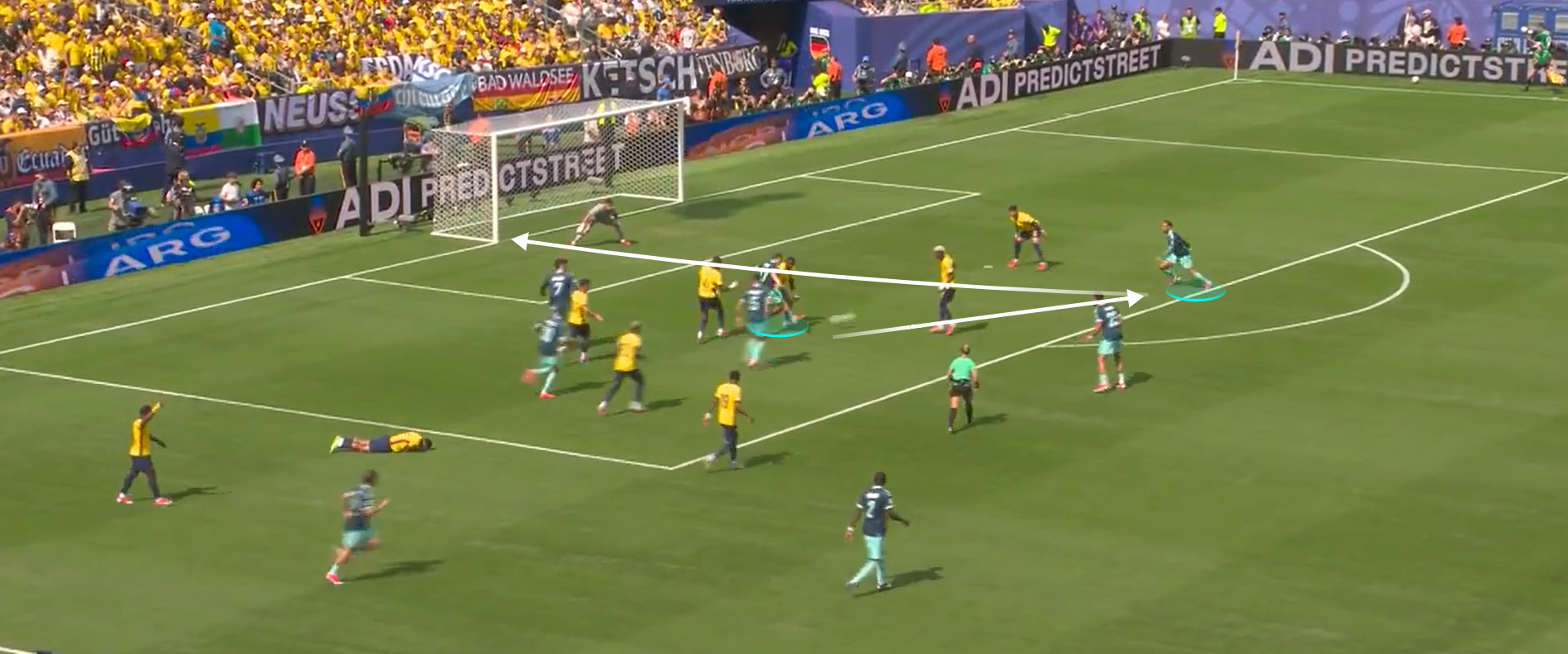
Image 1: Wirtz did very well in the tight space to protect the ball and release it quickly towards Sané, who executed an accurate and powerful shot to score.
Nevertheless, it is very difficult to see how Pavlović’s high boot, which directly contacted Vite’s head, was not a foul. The Ecuador players and coaching staff would have been extremely frustrated by the call and the absence of VAR intervention. Given that the match had just started, there was plenty of time left for Ecuador to spur a comeback.
Controlling possession, pinning the back five, getting numbers forward, and aggressive defending
Ecuador did not require any initiative before the match to deliver a front-footed performance, given the dire need to produce a victory to qualify for the knockout stage. Having trailed early, Ecuador had an additional reason to raise the intensity as they chased a goal.
Beccacece’s on- and off-ball systems reflected that intention. During possession phases, Ecuador structured themselves in a base 3-1-6 shape, which got numbers forward. A minor but important detail worth noting here was Piero Hincapié’s movements. Despite initially positioning himself as a wide centre-back, Hincapié often initiated supporting runs and advanced forward.
Thus, with the full-backs offering double width and Vite willing to push up, there were times when Ecuador had seven players attacking the opposition backline. Consequently, Germany formed a back five and defended passively, with their second line of pressure consisting of four players whilst Kai Havertz did not seek to trigger a high press.
Defensively, Ecuador applied pressure following a turnover to regain possession immediately. Even the backline were willing to step up and close down any loose balls in midfield. Lastly, during settled defensive phases, Ecuador were proactive, as we will explore later.
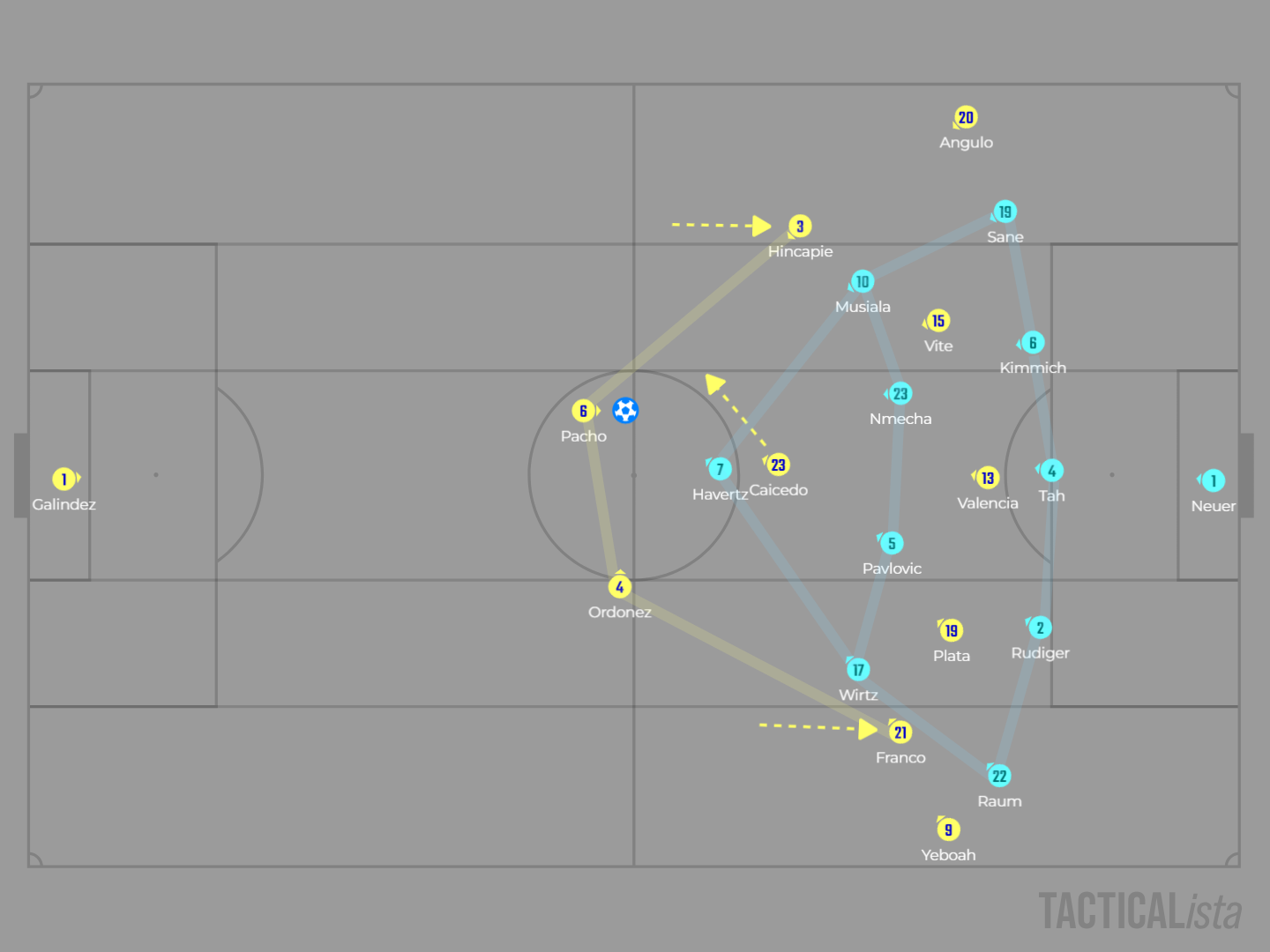
Image 2: Ecuador’s aggressive on-ball system was met with a passive 5-4-1 defensive block from Germany.
In the 9th minute, against a deep Germany defensive block, Gonzalo Plata attempted to find Alan Franco from the right wing. The ball was intercepted by Rüdiger, who cleared it forward, but it was intercepted by Ordóñez. The second ball had to be contested in a 1v1 midfield ground duel between Felix Nmecha and Vite, which was won by the Ecuadorian after the German executed a loose touch.
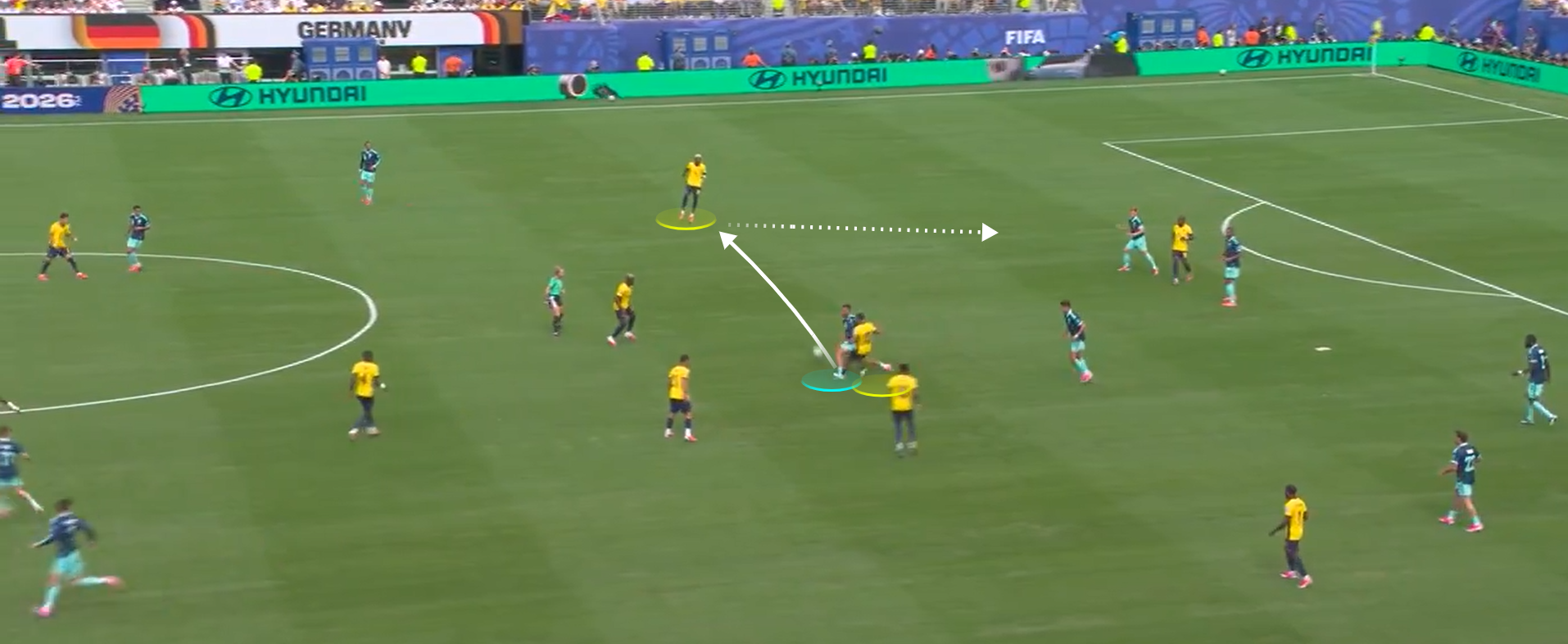
Image 3: Vite’s crucial interception in midfield set up Angulo, who immediately carried the ball forward to threaten.
Vite cleverly guided the ball towards Angulo, who drove forward. Having recognized Pavlović’s immediate pressure and close proximity, the winger tried a quick-release shot. It paid off with a slice of fortune as it went perfectly between Pavlović’s legs. The attempt was still impressive considering the very little back lift Angulo generated before his shot, which flew past Manuel Neuer as it found the bottom corner.
The goal illustrated the effectiveness of Ecuador’s press and also how leaving numerous players forward initially provided them with a valuable rest-defence structure. It carried its own risks, which Beccacece had to accept considering the context of the game.
Generating tensions in Ecuador’s block
Like the match against Côte d’Ivoire, Germany created issues for Ecuador through the centre due to certain positional occupations and movements. Before understanding what Germany did, it is useful to understand Ecuador’s defensive approach.
Against Germany’s back three, Ecuador pressed man-to-man, with Angulo pressing Joshua Kimmich whilst the strikers jumped towards Jonathan Tah and Rüdiger. Meanwhile, on the right flank, Franco often followed Wirtz’s runs and John Yeboah tracked Raum’s advanced movement. As a result, the 4-4-2 block would be stretched.
On the other hand, Germany had numbers forward due to their 3-1-6 set-up. More importantly, they had players occupying central positions, with the collective intent being to access the middle of the pitch.
Zooming in further, Nmecha’s fluid role is quite interesting and consequential, as it was an avenue to generate tensions. Due to his well-rounded skill set, the Borussia Dortmund midfielder has the capacity to contribute to ball progression by receiving deep, carrying forward, positioning as an option between the lines, and attacking the box.
When Ecuador’s frontline triggered a press, he would often position himself behind Angulo’s run to receive between the lines. Since the opposition left-back and centre-back were pinned by Sané and Jamal Musiala, Nmecha could receive freely. Furthermore, Vite could not constantly man-mark Nmecha since it would open direct passing angles into Havertz or leave space through the centre for Pavlović to carry into.
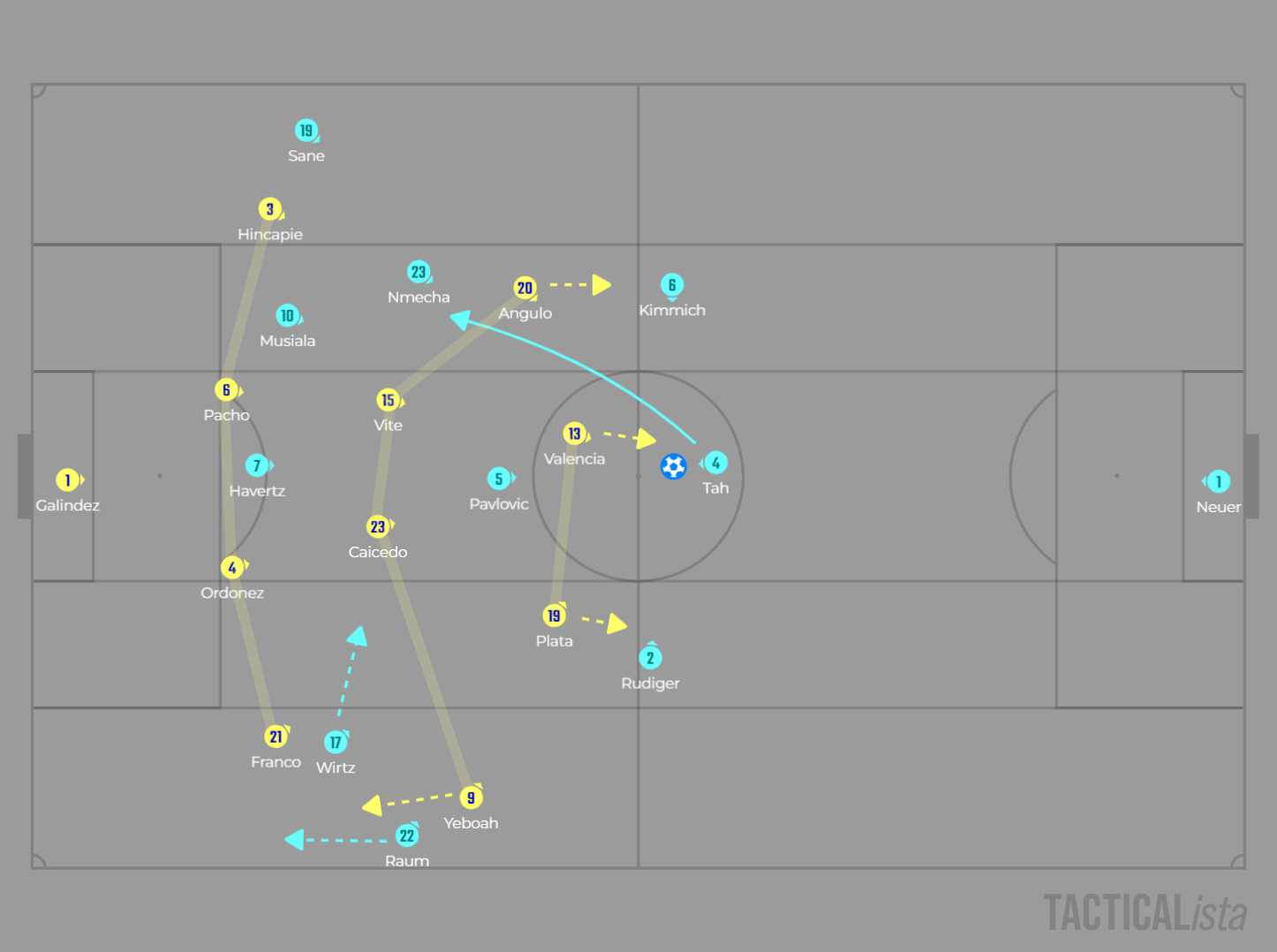
Image 4: Germany’s positional occupations, movements, and intent generated tensions in Ecuador’s 4-4-2 defensive unit.
Continued concerns over Germany rest defense the ability to cope with defensive transitions
Although Germany could create such valuable conditions, they looked shaky at times by carelessly losing possession. This was partly due to Ecuador transitioning into a man-to-man press, but the individual decision-making was also questionable at times. In other instances, Germany had to give away cheap fouls to prevent Ecuador’s counters. Overall, Nagelsmann would have been frustrated considering how Germany’s biggest weakness continues to be a significant area of concern. It will be interesting to see how they fare against stronger opposition in the knockout rounds.
These are the type of situations that I was previously referring to, which will be the most critical when defending for Germany. As seen below, Nagelsmann prefers a 3-1 rest defence, which leans to the riskier side during transitional moments since there's only a lone pivot… https://t.co/oVF7dXhQaf pic.twitter.com/1FF09lMCwO
— Fahd (@fahdahmed987) June 10, 2026
A tightly fought contest until Plata’s flick made the difference
After Angulo’s equalizer, neither team generated valuable chances from settled possession phases. Since they both defended deep, penetration was rarely achieved. Counter-attacking situations posed the main route to chance creation. Still, for most of the game, we did not see Ecuador or Germany causing the other significant problems.
Ecuador had a promising opportunity in the 73rd minute following a clearance from Neuer that immediately initiated a transitional situation and a 3v3. Confusion between Tah and Neuer almost put Kevin Rodriguez through on goal. It ended with a low cross from Caicedo, which Plata almost converted.
In the end, the difference-maker was a cleverly worked corner-kick routine. The delivery was targeted at the near-post zone where Rodriguez was ready to flick it back into the congested area. Plata proactively anticipated the play, as he was positioned close to Neuer. As the goalkeeper reached out to collect it, Plata extended his foot to nudge it into the goal.
"It's a touch of Ecuador gold" ✨🇪🇨
— Match of the Day (@BBCMOTD) June 25, 2026
Gonzalo Plata gives Ecuador the lead and the stadium goes wild! pic.twitter.com/1ngc5oibRe
Takeaways
After a marginal defeat to Côte d’Ivoire and a disappointing draw with Curaçao, Ecuador fought against all odds to earn three points against the Group E table toppers. Especially considering that they trailed early, the psychological strength to remain composed and stay in the game should not be understated. Heading into the knockout rounds, Ecuador could carry their momentum to produce more upsets against teams that may be favourites on paper.
Doubts remain over Nagelsmann’s Germany despite finishing first in the group stage. Offensively, they can impress and have the capacity to slice through most, if not all, teams. However, out-of-possession concerns, which are partly tactical and partly because of the lack of physicality, are the biggest sticking point with this side.
With the knockout rounds due to commence in a few days, there will be many interesting narratives to keep an eye on. The three teams that have qualified from Group E have strong chances of making deep runs at this World Cup. Get your popcorn ready.
Use the arrows to scroll through all available match plots. Click to enlarge.
Check the match plots page for plots of other matches.


Comments