Germany – Côte d’Ivoire: Undav’s Double Uppercut Clinches Group E Top Spot (2-1)
The opening period revealed an interesting tactical battle between Germany and Côte d’Ivoire, with the former having an initial advantage. However, it was Côte d’Ivoire who scored the opener, with Yan Diomande yet again appearing central to their attacking threat. The reaction from Germany later in the second half exerted a higher degree of dominance as Côte d’Ivoire defended deep before leaking two goals to the substitute hero Deniz Undav.
Tactical analysis and match report by Fahd Ahmed.
We decided to make this article free to read. If you want to support our work, consider taking a subscription.
After winning both their opening games, Germany and Côte d’Ivoire faced each other on Saturday in an eagerly awaited match-up. Although Germany looked impressive in their 7-1 thrashing of Curaçao, there were periods during that match, specifically in the first half, where they looked shaky. Meanwhile, Côte d’Ivoire had a highly competitive but marginal victory against Ecuador. Thus, the Saturday clash was a high-stakes game since the winner would be in the driving seat for top spot in Group E.
The two managers were not expected to make severe alterations to the line-ups that they named in the prior game. It turned out as predicted for Germany, with Julian Nagelsmann fielding the exact same eleven. However, Emerse Faé shuffled the team with five changes. The frontline and midfield were almost entirely replaced, with only the captain, Franck Kessié, and the talented Yan Diomande remaining.
Faé’s preference for a 4-5-1 out-of-possession shape
One of the defensive tactical themes that we have seen from Faé has been the 4-4-2 zonal block approach. This detail has also been a broader out-of-possession trend in the World Cup, with many managers opting for such a structure. However, adapting against opponents will be necessary depending on their possession approach and quality.
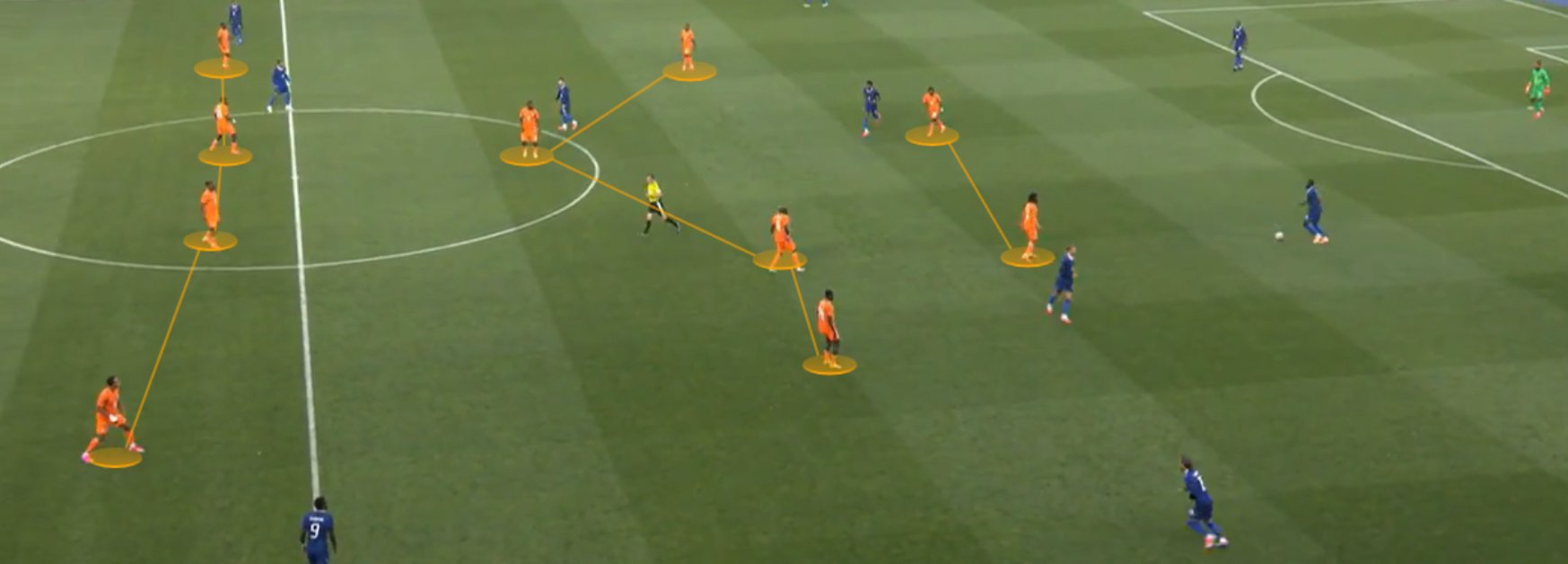
Image 1: Côte d’Ivoire’s 4-4-2 defensive block against France in a pre-World Cup friendly.
Since Germany attack in an aggressive 3-1-6 system with central and wide clusters, there is an emphasis on short passing combinations and associative football. Due to the number of players Nagelsmann wants his team to occupy in central positions, they can, in theory, find 3v2 midfield overloads if the opponent defends with a double pivot.
Therefore, Faé’s preference for a three-man midfield was sensible. An additional body in the centre offered Côte d’Ivoire the needed coverage to cope with Germany’s system and enable them to, in theory, defend passively.
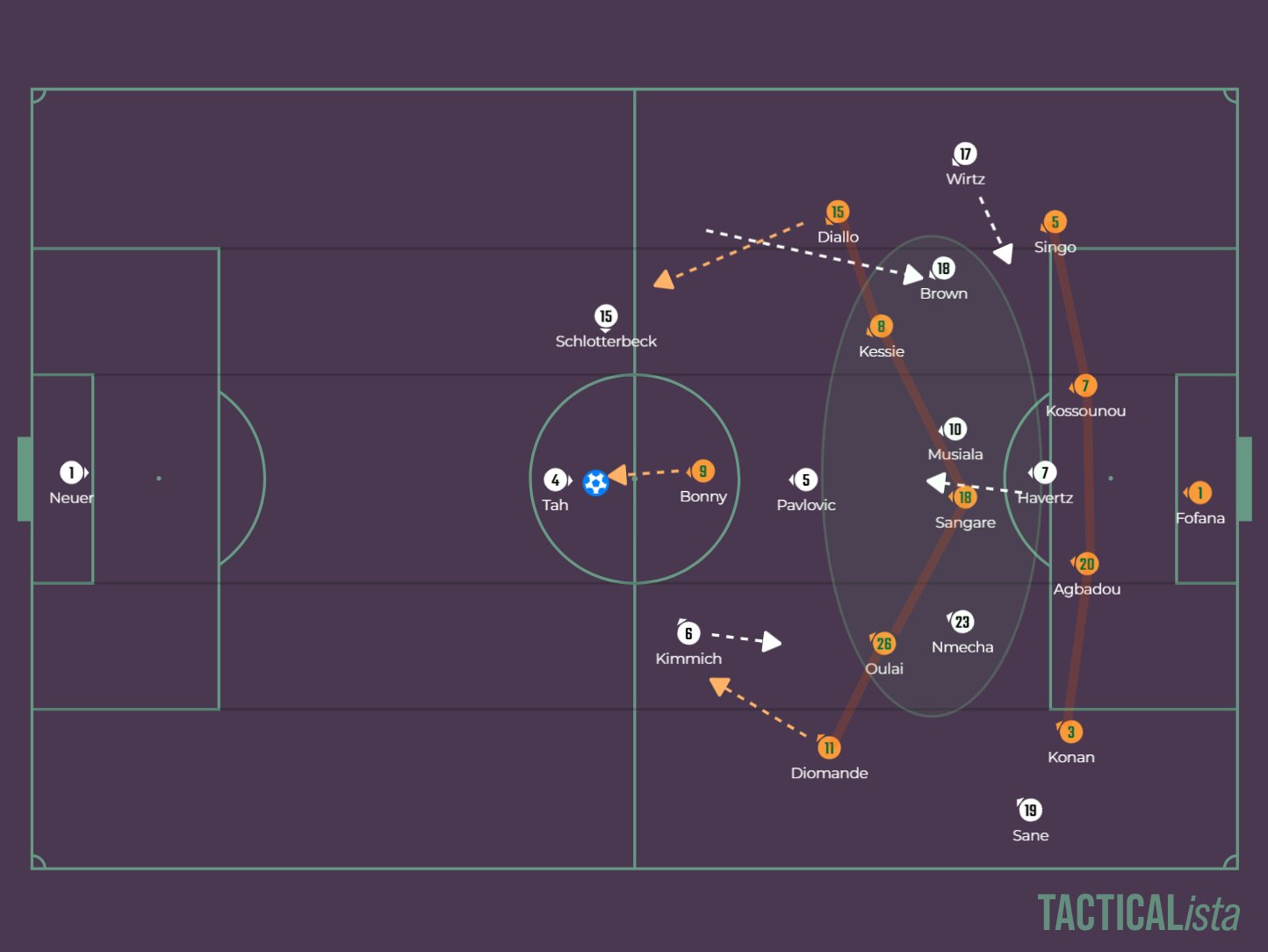
Image 2: Germany’s 3-1-6 in-possession structure against Côte d’Ivoire’s 4-5-1 defensive shape.
Germany find early solutions through separation and midfield overloads
The trade-off for Faé’s out-of-possession system was the emergence of greater pressing distances. Specifically, if Côte d’Ivoire wanted to press high and transition from their 4-5-1 block, certain players had huge jumps to make, which would create opportunities. Due to the time that it would take for Côte d’Ivoire’s players to apply pressure, which was also partly due to the lack of required intensity, Germany’s backline and midfielders would have the space to pick their pass and play through.
Faé’s rationale might have been that sitting back for too long invites unnecessary pressure in the defensive third. That is fair, but it is also reasonable to suggest that Côte d’Ivoire did not have to actively engage constantly. They could have picked their moments when the distances were right. Instead, Côte d’Ivoire regularly stepped out, leaving them vulnerable to central overloads. There were numerous situations like the example below where Germany pierced Côte d’Ivoire through the centre and entered the final third.
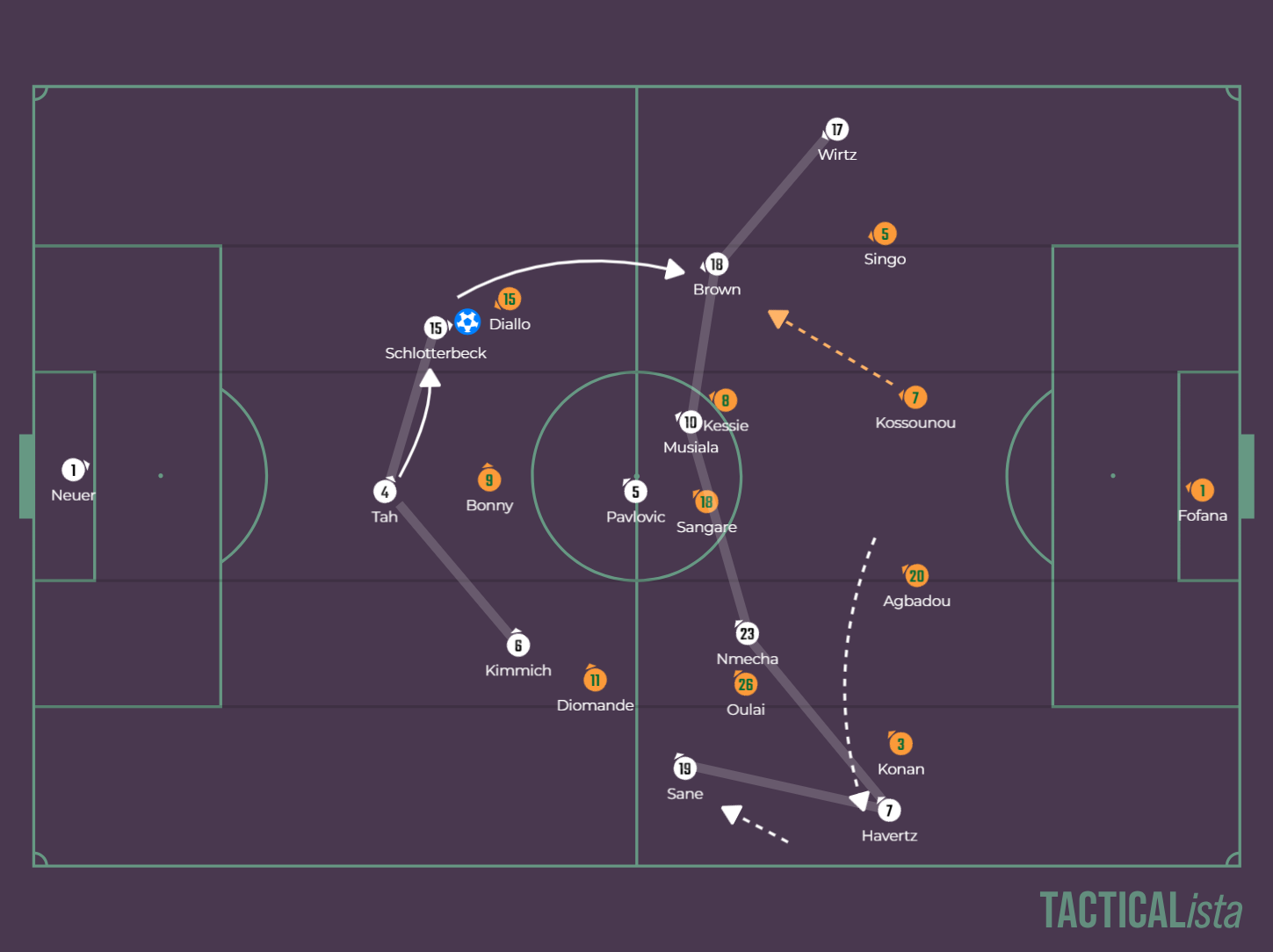
Image 3: Germany found central access directly or from wide when Côte d’Ivoire pressed high since they could not track every player man-to-man. The flexibility that Nagelsmann prefers is also evident in this situation, with Kai Havertz pulling wide and Leroy Sané dropping slightly deep.
The Diomande conundrum
Whenever a team has a clear, consistent, and reliable chance-creation outlet, the collective tendency will unsurprisingly be to find that player. Against Ecuador, that player was evidently Diomande, who proved to be electric with his 1v1 dribbling proficiency and entertaining by having the capacity to convert those carries into chances.
As everyone could tell, Diomande was Cote d'Ivoire's primary chance creation threat against Ecuador. He is an excellent carrier of the ball to help his team progress up the field and eventually get in the box to create. These dribbles are then converted into crosses/cutbacks and… https://t.co/xn0agLvIQW pic.twitter.com/1hKCKkbsIU
— Fahd (@fahdahmed987) June 15, 2026
It was no different against Germany, with Diomande’s teammates regularly trying to access him on the left. Against a relatively much older player in Joshua Kimmich, who is also a natural midfielder rather than a full-back, Côte d’Ivoire had an edge in these 1v1 situations. Consequently, Diomande often attracted other Germany players who attempted to offer Kimmich defensive support.
After the first water break, Côte d’Ivoire had possession, which they retained before trying to attack Germany’s 4-4-2 middle block. They funnelled the ball to the left flank to access Diomande whilst the left-back provided an underlapping run to drag his marker, Sané. This pitted Diomande 1v1 against Kimmich.
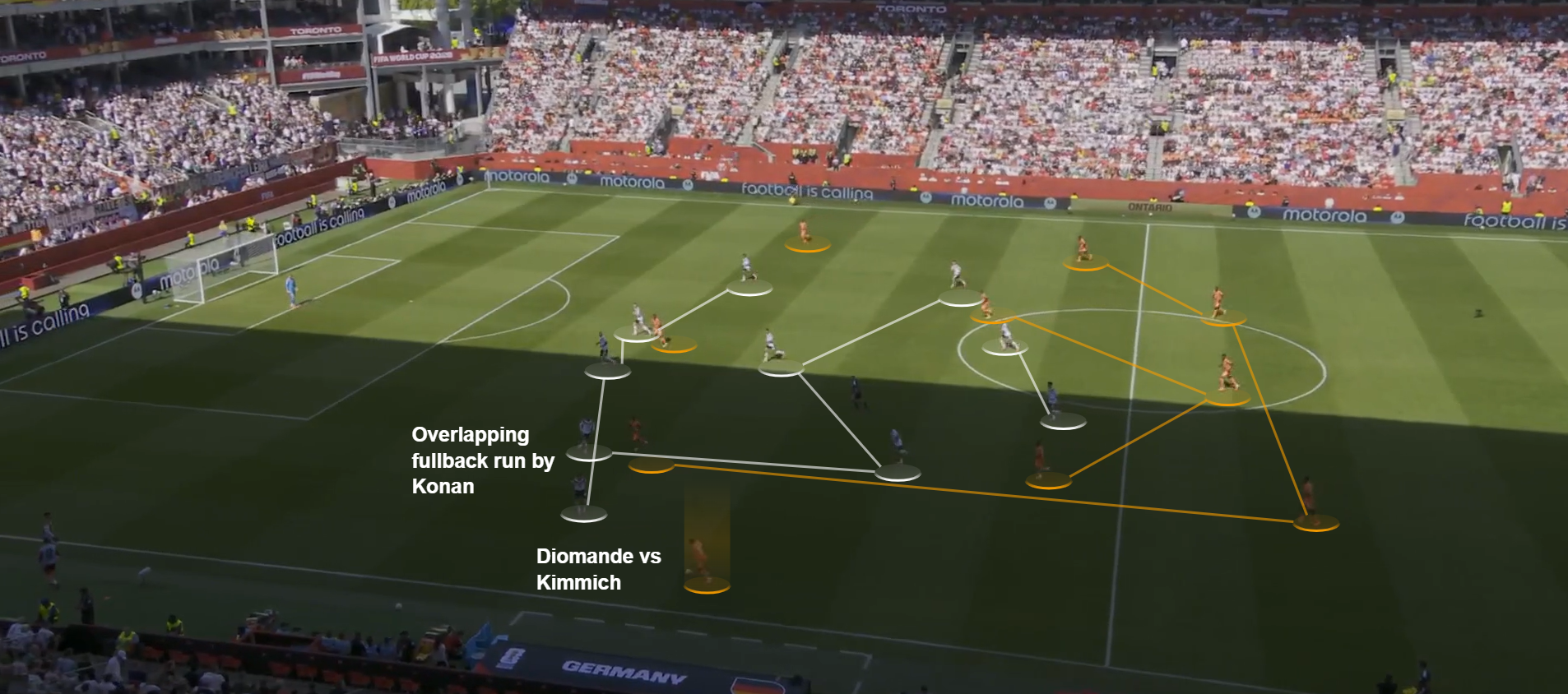
Image 4: Côte d’Ivoire’s attacking dynamics enabled Diomande to regularly receive in favourable 1v1 conditions.
Kimmich did well not to jump and to wait for support, which arrived with Felix Nmecha dropping to double up on Diomande. However, Diomande’s all-round dribbling ability allows him to proficiently cut inside and outside whilst being effective in both outcomes. He illustrated this by hitting the byline and delivering a pinpoint cutback to Amad Diallo.
Unfortunately for Diallo, the ball was slightly stuck under his feet, which delayed the close-range shot attempt that was blocked by Nathaniel Brown. However, Kessié was ready to pounce on the loose ball. There is not too much Germany could have done here, barring two details.
Firstly, the cutback should have been better dealt with at the near post. However, to Jonathan Tah’s credit, his sliding challenge to intercept was only marginally unsuccessful. Secondly, Florian Wirtz and Jamal Musiala could have tracked Kessié’s run better. A couple of caveats worth adding are that it would have been difficult to anticipate the ball falling to Kessié after Diallo’s shot. Furthermore, such minor defensive details will not be instinctively comprehended and executed by two forwards.
Diomande, yet again, showcasing his proficiency in converting 1v1 situations into chances. The accuracy of these cutbacks are top. His low cross leading to Cote d'Ivoire's opening goal is another example. He's causing Germany a lot of problems from the left. https://t.co/Tgf341M3vo pic.twitter.com/3ofAlweuQ6
— Fahd (@fahdahmed987) June 20, 2026
Defending passively after taking the lead and creating problems on the transition
After taking the lead, especially towards the end of the first half, Côte d’Ivoire were more willing to defend passively. As a result, they defended deeper, which can be risky, but the defenders and midfielders did quite well to cope. On the other hand, having attracted Germany higher, it opened opportunities against Germany on the counter. With Nagelsmann opting for a 3-1 rest defence, as was evident through glimpses in their pre-World Cup friendlies, it is an area where Germany can be susceptible.
These are the type of situations that I was previously referring to, which will be the most critical when defending for Germany. As seen below, Nagelsmann prefers a 3-1 rest defence, which leans to the riskier side during transitional moments since there's only a lone pivot… https://t.co/oVF7dXhQaf pic.twitter.com/1FF09lMCwO
— Fahd (@fahdahmed987) June 10, 2026
This proved to be the case against Côte d’Ivoire, with multiple dangerous transitional situations. Especially with the pace and dribbling ability of Diallo and Diomande, they had favourable conditions. Furthermore, the risk with the 3-1 rest defence was in situations where Aleksandar Pavlović was beaten. This would leave Germany’s backline exposed without a screener protecting the space in front of them.
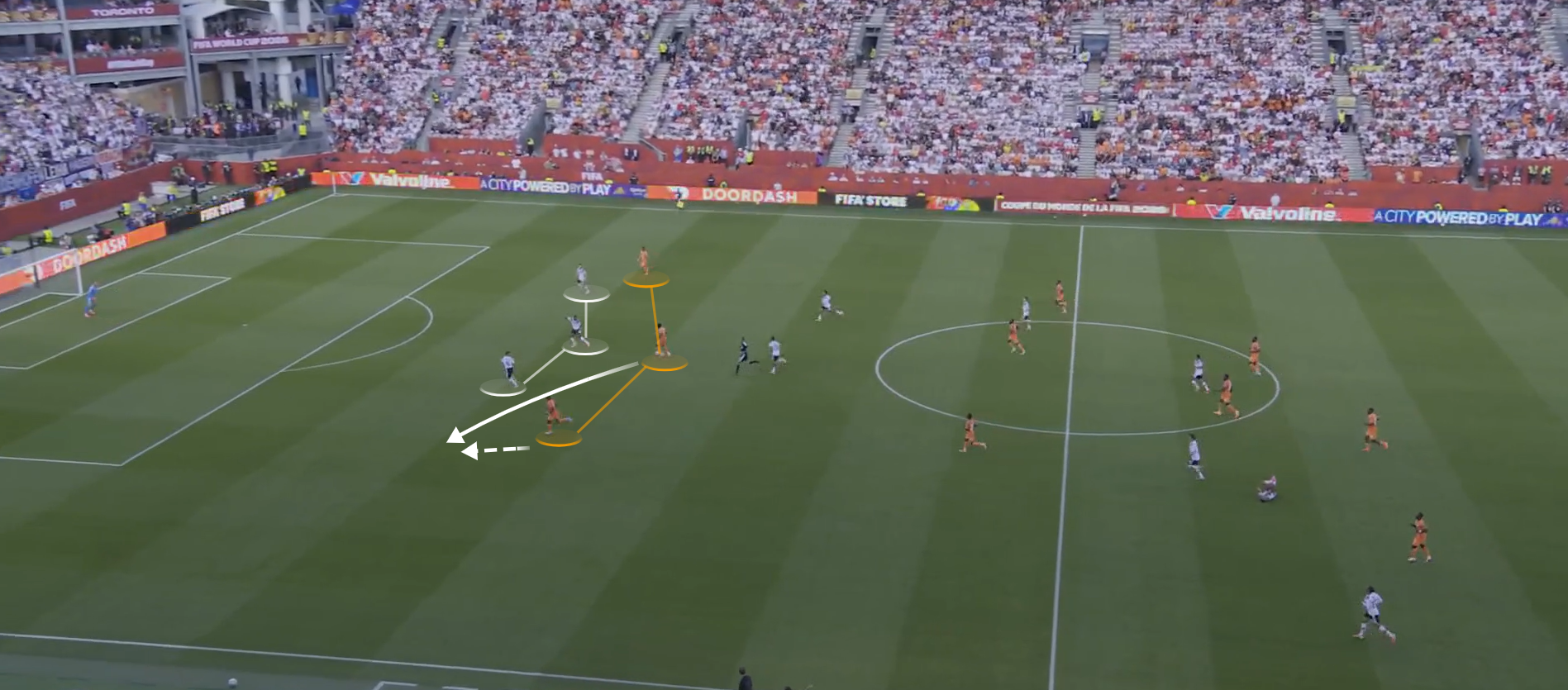
Image 5: Germany were susceptible to Côte d’Ivoire’s offensive transitions, especially when Pavlović was taken out of the picture.
Altering the tempo and making key substitutions to influence the scoreline
The game turned more transitional in the opening period of the second half due to Germany’s intent to play with a higher tempo. This resulted in both teams facing counterattacking situations from which they entered the final third and attacked the opposition penalty box. As the half progressed, Côte d’Ivoire began dropping deeper and defending in a 4-5-1 low block, which Germany tried to pierce.
In the 60th minute, Nagelsmann proactively made three substitutions, with Jamie Leweling, Deniz Undav, and Nadiem Amiri replacing Sané, Pavlović, and Musiala. This implied the usage of two strikers, with Havertz and Undav on the field, which was sensible considering that Côte d’Ivoire were defending in a low block more often rather than engaging in a high press.
When Côte d’Ivoire did actively press, they continued to leave the same vulnerabilities that were evident in the first half. Thus, it felt like a matter of time before they conceded from German incision through the middle. That ended up materialising in Germany’s equaliser, with Nmecha finding a pass into Undav through the middle whilst Côte d’Ivoire stepped out. As seen in Image 6, there is a disconnect between certain players in the backline unit, who are staying zonal, whilst the others press man-to-man, leaving Amiri unmarked.
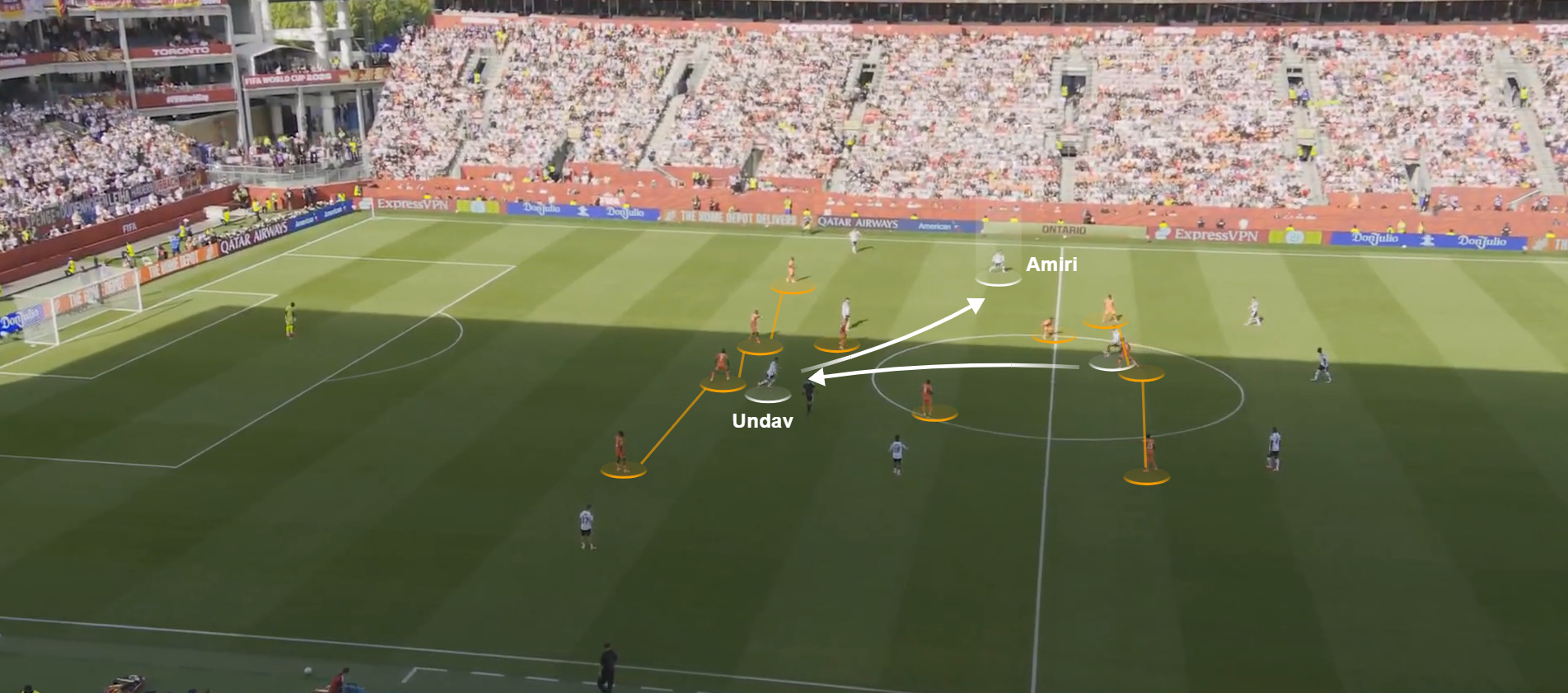
Image 6: Against Côte d’Ivoire’s disconnected press, they continued to leave opportunities for Germany to play through the middle. Nmecha found a central pass that unlocked the defence. Undav’s lay-off to Amiri soon ended up in a goal.
The following individual movements and actions from Amiri and especially Undav are top-class. The former receives the lay-off from the Stuttgart striker and drives forward whilst getting his head up to spot the run. Undav provides the needed run in behind as he accelerates quickly to attack the space between the Côte d’Ivoire right-back and centre-back. Kessié should arguably have done better to closely track Undav’s run whilst the defenders retreated. To Undav’s credit, he anticipated the cross well and timed his run to perfection in order to arrive at the right place at the right time.
For the remaining minutes, Germany continued to apply pressure whilst attacking with a high tempo, which sparked a game that went back and forth. Nagelsmann’s team kept creating and leaking chances, with Côte d’Ivoire seeming promising on the transition. Towards the end of the game, Simon Adingra almost delivered the winner following a swift counter. However, Adingra’s touch let him down as the ball went backwards rather than dropping in front of his stronger foot to then follow up with a shot.
Instead, it was Germany who found the winner through Undav yet again. Late in the game, Côte d’Ivoire were found defending deep whilst Germany tried probing them to find or generate a gap. Nmecha received the ball outside the 4-5-1 block and fired a pass to Undav, who was onside. Undav’s reception to kill the fast pass dead, turn quickly, and release an accurate shot past Yahia Fofana was evidence of world-class striker play.
Another goal from Germany after looking to play inside the opposition defensive block with a diagonal pass. The execution from Nmecha to drill that pass through is top but the touch, turn, and finish from Undav is even better. He's arrived to the World Cup after a superb season… https://t.co/JBGtmKEtgT pic.twitter.com/tpaVJk3EBX
— Fahd (@fahdahmed987) June 20, 2026
Conclusion
A late comeback victory is the kind of adrenaline-rush performance that can push a team like Germany far. Knowing that they can recover after a first-half setback and that they have quality off the bench to flip the result will only provide them with the needed confidence as the knockout stages approach, with only the penultimate group-stage fixture against Ecuador remaining. That being said, the evident defensive weaknesses are a major concern. Even the victory on Saturday was marginal. If Côte d’Ivoire were slightly more efficient in front of goal, we could be facing a different narrative for Germany. Nevertheless, the result is the most important factor, which Germany secured on the day.
Meanwhile, despite the defeat, there are more positives than negatives for Côte d’Ivoire. Against a top team like Germany, not only did Faé’s side display how their well-coached system can compete with the best, but they also showed that they can create significant problems. Finishing proficiency remains the main area where Faé may expect more from his players, especially considering the depth of attacking quality. Overall, Côte d’Ivoire still remain in a solid position to shock the world and go deep in the competition, as they can pose any opponent significant issues.
Use the arrows to scroll through all available match plots. Click to enlarge.
Check the match plots page for plots of other matches.


Comments