
England – DR Congo: Kane Averts English Crisis (2-1)
DR Congo stunned England with an early goal here, and looked confident with their possession play and wide attacks in their 4-3-3 formation. It took time for England’s own attacking 4-3-3 structure to kick into gear, but they eventually started to create from wide too. In the end, it was Harry Kane who helped England avoid disaster with two late goals.
Tactical analysis and match report by Josh Manley.
We decided to make this article free to read. If you want to support our work, consider taking a subscription.
England’s win over Panama last time out secured their first-placed finish in the group, which had been the minimum expectation for Thomas Tuchel’s men. The primary concerns in the group stage had been the defensive shakiness in certain moments, and the issues in playing against low blocks.
DR Congo meanwhile had perhaps outperformed expectations in the group stage. They were able to hold Portugal to a draw which ultimately helped them seal their knockout round place as one of the best third-placed teams.
Tuchel lined his side up in a 4-3-3 shape here, with Djed Spence, Ezri Konsa, Marc Guéhi, and Nico O’Reilly in the backline. Elliot Anderson, Jude Bellingham, and Declan Rice made up the midfield, while the forward line consisted of Noni Madueke, Harry Kane, and Marcus Rashford.
For DR Congo under coach Sébastien Desabre it was also a 4-3-3 formation, with a back four of Aaron Wan-Bissaka, Axel Tuanzebe, Chancel Mbemba, and Arthur Masuaku. In midfield there was a trio of Ngal’ayel Mukau, Samuel Moutoussamy, and Noah Sadiki. Up front, Nathanaël Mbuku and Brian Cipenga flanked in-form Yoane Wissa.
Courageous Congo
Those who expected this to be a game in which England would face a passive low block were given a surprise in the early stages of this game, as DR Congo showed plenty of attacking intent.
In their 4-3-3 shape, they looked confident in circulating the ball against England’s press. The Three Lions once again pressed in a man-oriented fashion, with Bellingham initially attaching himself to the DR Congo defensive midfielder Moutoussamy before running through to pressure an opposition center-back when appropriate.
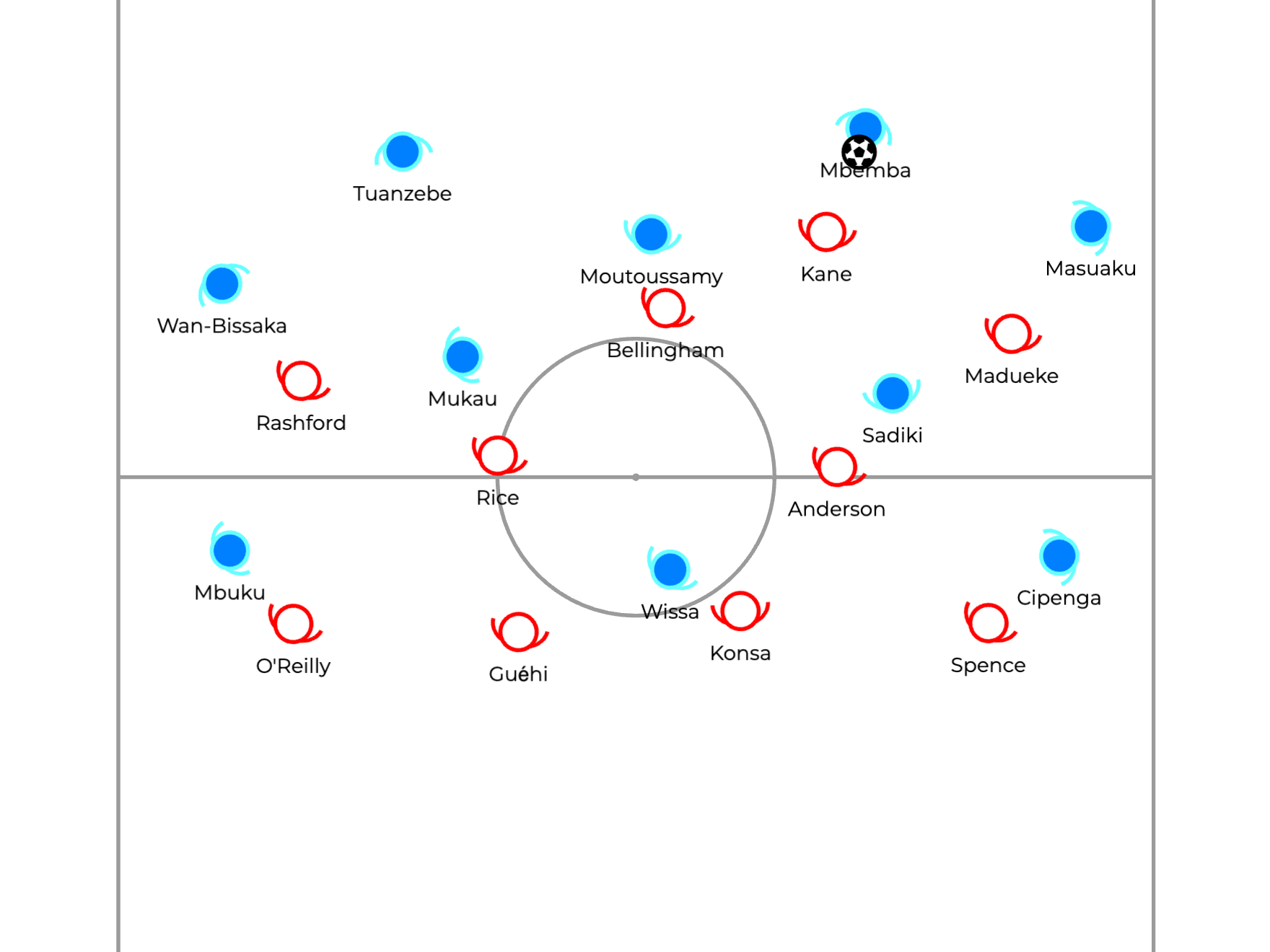
DR Congo’s possession phase.
Rice would then drop back alongside Anderson to pick up marking of the two DR Congo number eights. Mukau and Sadiki were not fazed by this though and were happy to show for the ball from their defenders, able to support the circulation with bounce passes under pressure to keep the ball moving.
There were also some rotations for DR Congo with the ball. For example on the right side, Mukau would drop into the right back area to allow Wan-Bissaka to make forward runs.
On the left, Sadiki was more likely to remain higher as the number eight. This played a role in DR Congo’s goal which stunned England after just seven minutes.
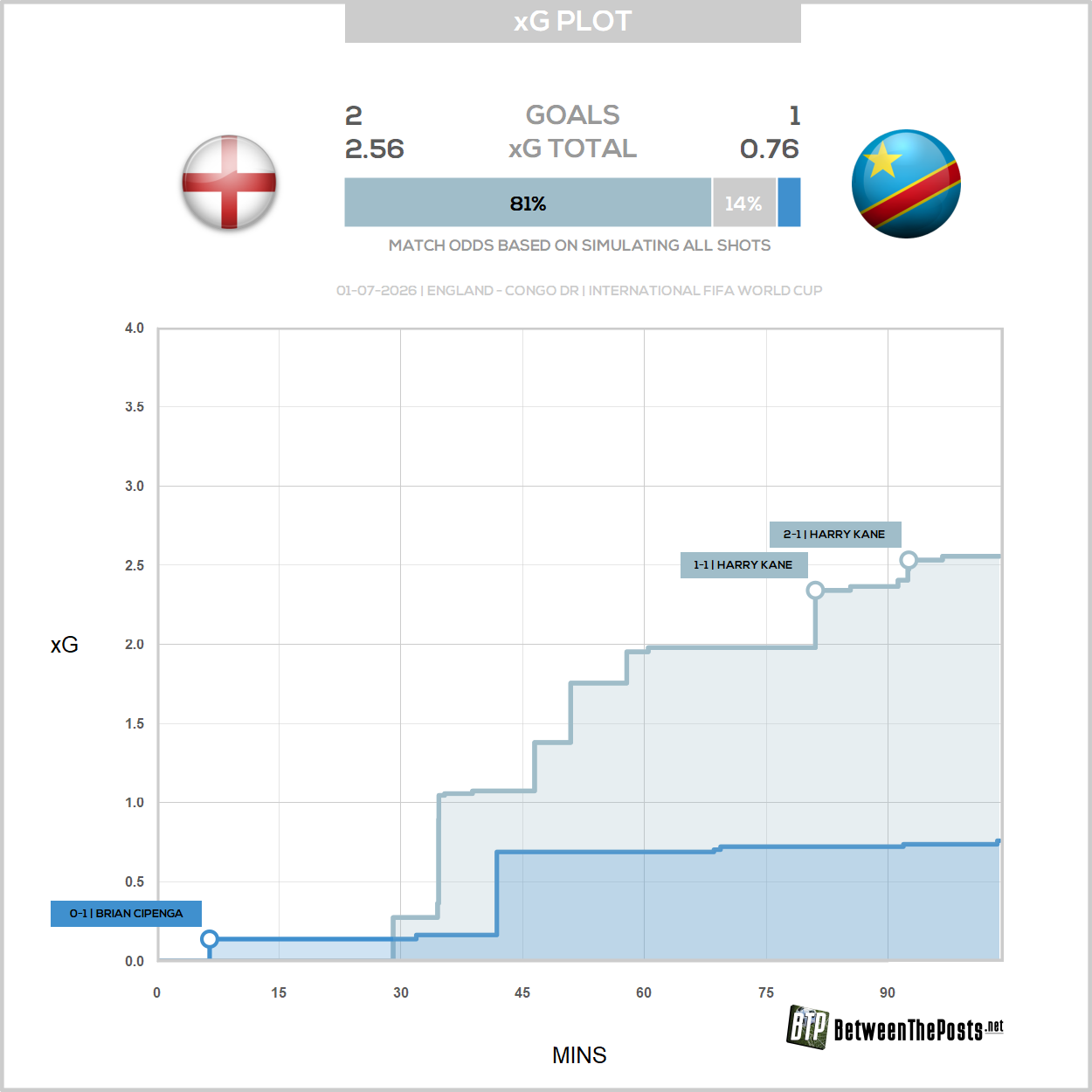
Sadiki made a diagonal run in behind England’s defense from outside to inside which attracted the attention of Spence, freeing up more space for Cipenga on the outside who eventually received the switch of play before firing in at Jordan Pickford’s near post.
The DR Congo attacks down the wings were a constant source of trouble for England. There seemed to be some confusion about the man-orientations and how handovers of marking duties should work in certain situations.
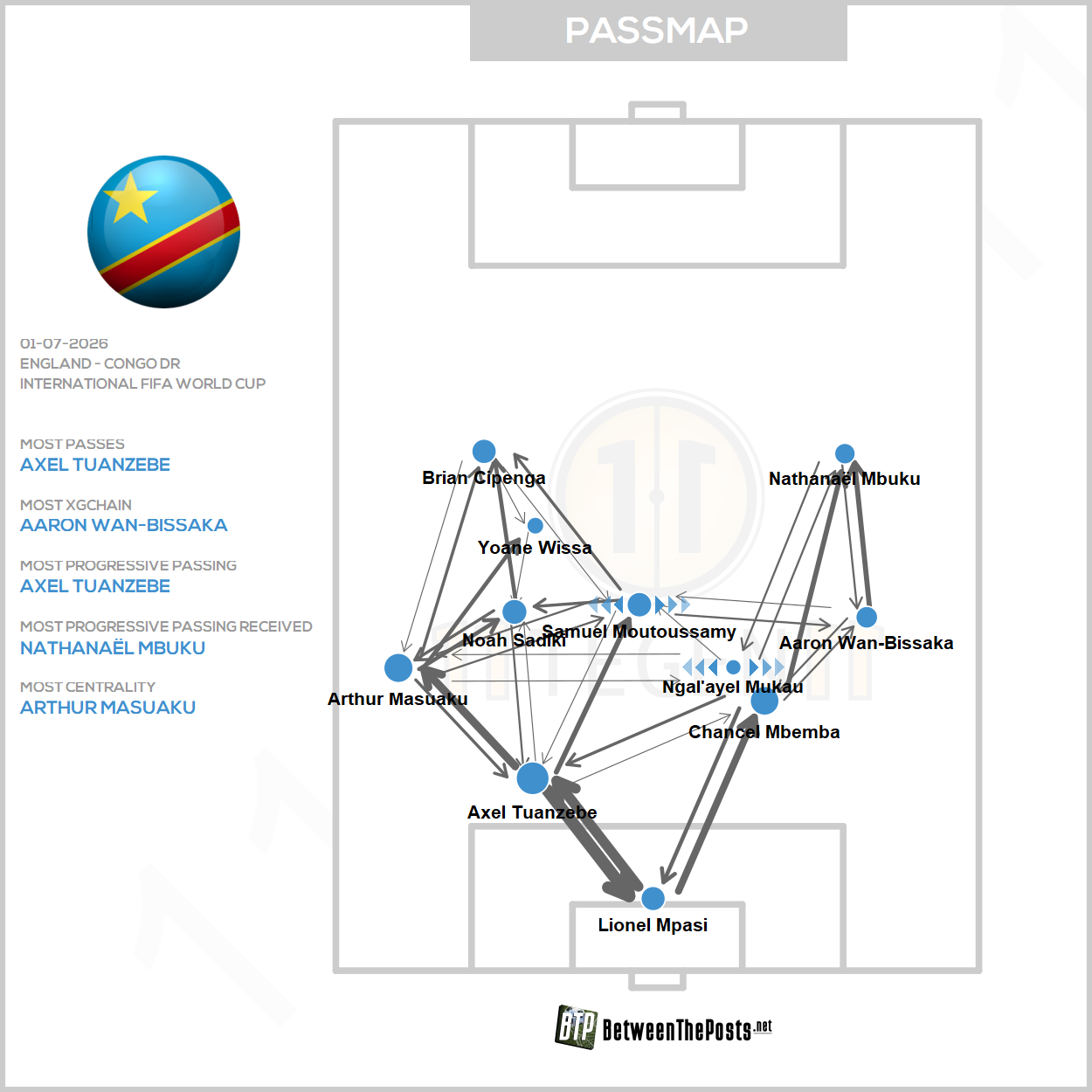
DR Congo were able to get plenty of service into their wingers.
Aside from that, Mbuku and Cipenga also proved themselves to be tricky customers to play against on an individual level thanks to their quick feet and sharp movements.
Patience needed for England
The early goal gave England an uphill task with DR Congo now having the luxury of being able to sit back with a lead to protect, daring England to commit themselves in attack and leave themselves open on the break.
England continued to take a measured approach in possession though, trying to maintain a solid rest defence. Tuchel’s 3-1-6 structure seen against Panama was not the weapon of choice here. For the most part, England used the 4-3-3 structure that has become their go-to shape in the past year.
Spence generally started in a deeper position on the right, allowing Bellingham to stay high in the right halfspace and Madueke to hold the width. The Spurs fullback would still join attacks on the outside though in the situations where Madueke indented slightly to pin Masuaku.
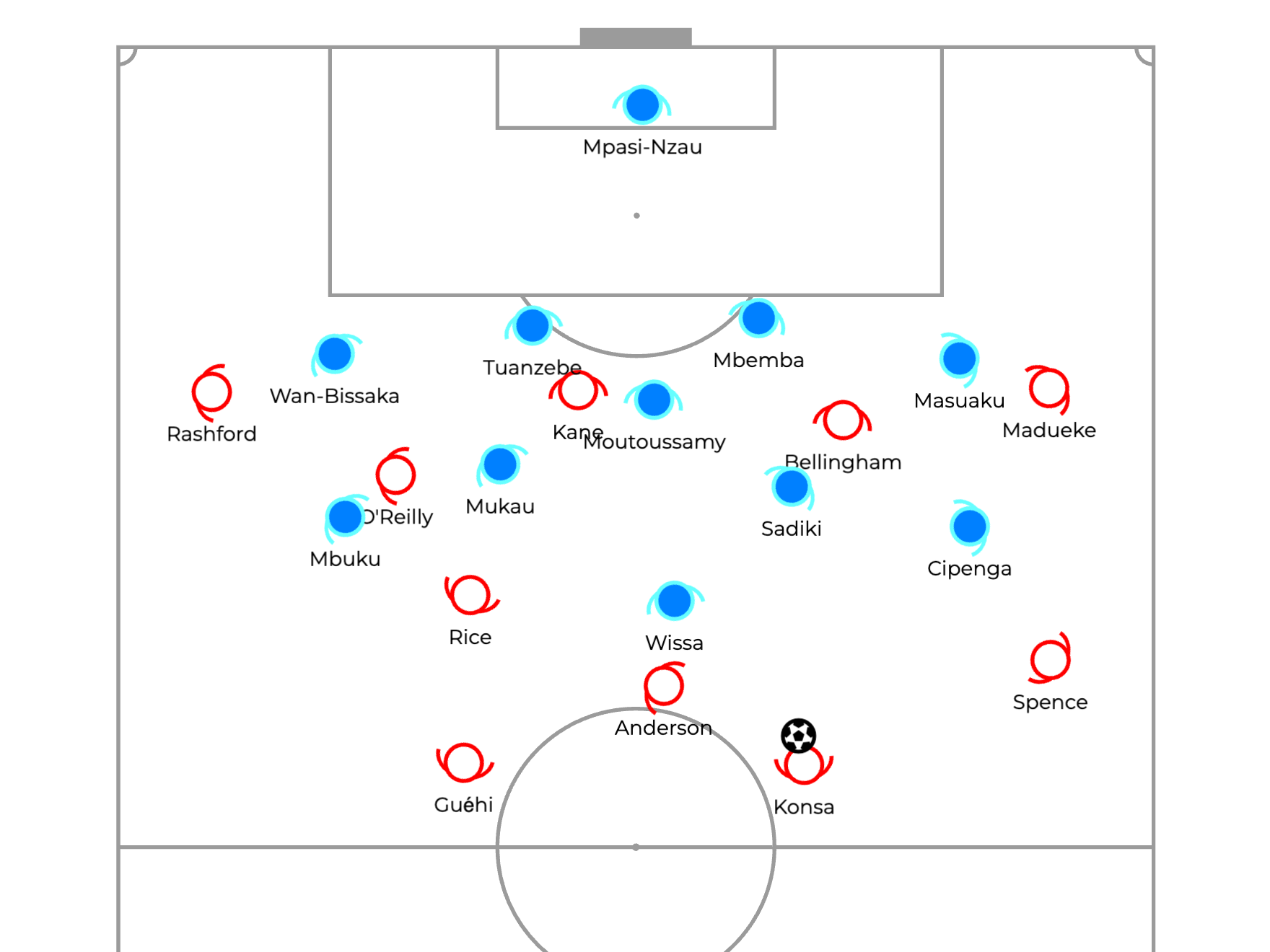
England in possession against the 4-5-1 shape of DR Congo.
On the left, Rashford held the width, while Rice and O’Reilly both had relative freedom to occupy the deep and advanced positions of the left halfspace, but also drift across into more central areas when the chance arose. They would sometimes form a temporary double pivot with Anderson, or drift into number ten positions.
DR Congo were defending against England with a 4-5-1 defensive block. The presence of just one player in the first line for DR Congo meant that England could sometimes leave as few as three players in the rest defense and commit more bodies forward.
However, England struggled to bring the ball into the DR Congo box in the early stages. It was only after the first hydration break where they really began to look dangerous in pressing for an equalizer.
Madueke was able to make headway in his one-versus-one duels against Masuaku on the right, and he followed this with dangerous crosses into the box. England were arguably unfortunate to still be behind at half time.
Kane averts the crisis
England continued to create opportunities on the other side of the break, with assistant coach Anthony Barry having stressed in a half time television interview that England would not make big changes to their approach in the second half, and that they had the belief that their goals would come.
On the hour mark though, the first personnel changes came. Both wingers were swapped out, with Bukayo Saka and Anthony Gordon replacing Madueke and Rashford to provide some fresh attacking impetus. England were utilising switches of play heavily to try to disorganize a packed DR Congo defense, so the wingers in the system had a big responsibility.
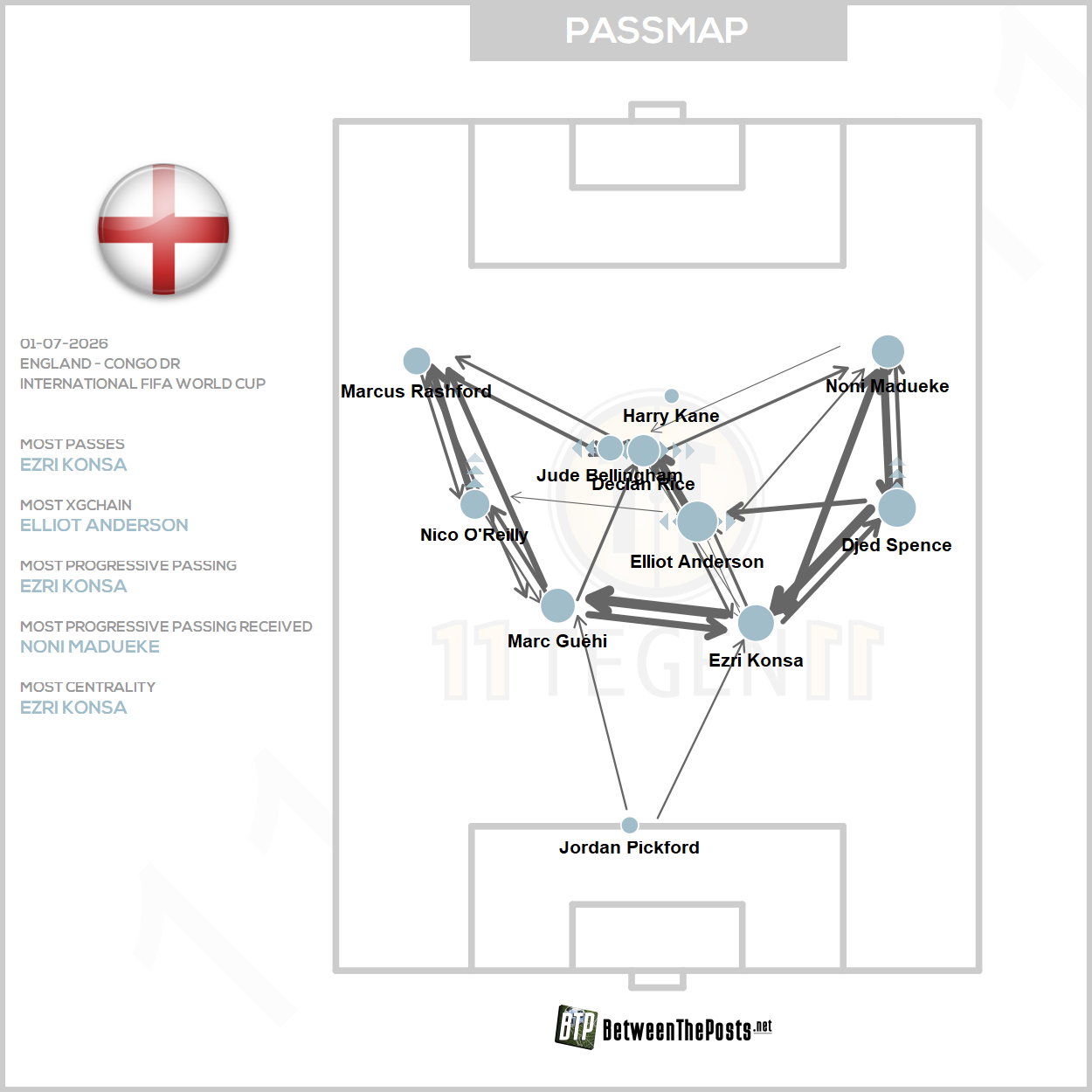
Much of England’s attacking play came through the wings, especially on the right.
There was another change for England shortly afterwards, as Eberechi Eze replaced Spence. This saw Rice being moved to a right back role, while Eze played alongside Bellingham as an advanced midfielder.
England’s first goal came as a relief with fifteen minutes of regular time left, as Gordon’s clipped cross from inside the box found the head of Kane. England’s captain was not finished there though – barely ten minutes later, he lashed a shot into the top corner from just inside the box, completing England’s comeback after a long and arduous battle.
Takeaways
The game started in a bad way for England, and they took time to get going. After the hydration break though, they did create chances and were not as flat as the scoreline had suggested they might have been until Kane’s goals. In the end, the Three Lions were good value for the win, even though it may not have been as emphatic as Tuchel would have liked.
DR Congo gave an excellent account of themselves here. Although they were eliminated in the end, there are many positives to take from their tournament performance. In this game, they showed not only a defensive, counter-attacking gameplan, but their ability to play a composed possession game too. They utilized their wing threats well, with Cipenga in particular being a constant menace to the England backline.
Use the arrows to scroll through all available match plots. Click to enlarge.
Check the match plots page for plots of other matches.


Comments