

Paris Saint-Germain – Atlético Madrid: The European champions keep the pedal down (4-0)
An auspicious debut for the European champions. A win that confirmed them as clear favorites, staying true to their philosophy: occupying space through constant movement. Position Play at its finest.
Tactical analysis and match report by Juan Lauz.
We decided to make this article free to read. If you want to support our work, consider taking a subscription.
It was the debut in the Club World Cup for the recently crowned European champions. Paris Saint-Germain made their appearance in Los Angeles for their tournament debut, having played their last official match back on May 31st, when they lifted their first UEFA Champions League trophy by thrashing Inter Milan 5-0.
After winning the treble (going nearly undefeated in Ligue 1 and also being crowned in the Coupe de France), the Parisians aimed for a historic four-title season.
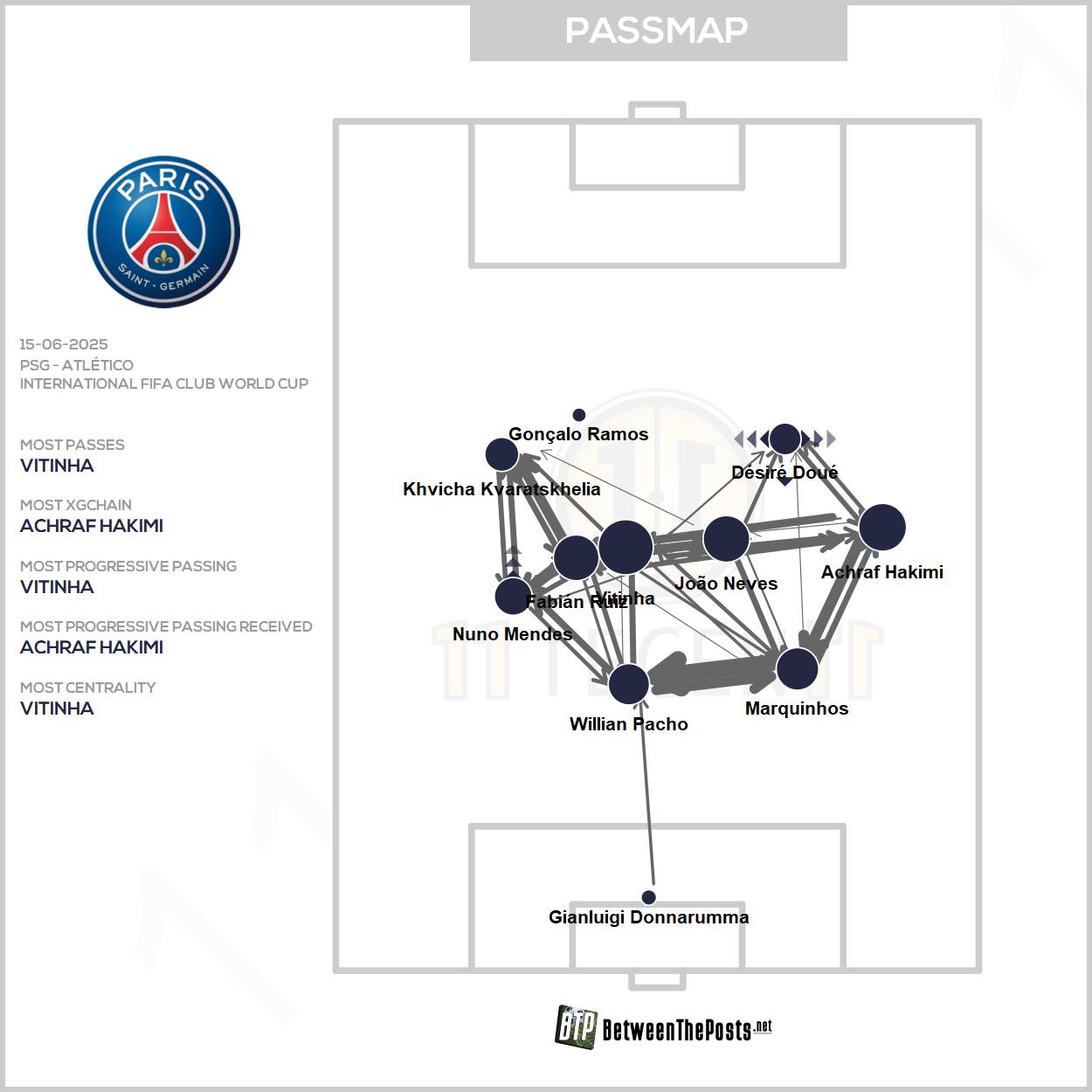
To do so, Luis Enrique trusted his regular team: in goal, Gianluigi Donnarumma; the defense formed by Marquinhos and William Pacho with fullbacks Achraf Hakimi and Nuno Mendes. Controlling the tempo from the base was Vitinha, accompanied by Fabián Ruíz and Joao Neves. As forwards, Kvicha Kvaratskhelia and Dessiré Doué played wide, with Gonçalo Ramos replacing Ousmane Dembélé.
A structure that, whilst seemingly starting in a 4-3-3 formation, often shifted into 3-2-5, 3-3-4 or 2-3-5 setups. We already knew how the Spanish manager’s teams were: chameleonic.
On their side, Atlético de Madrid looked to lift spirits after a season in which they faltered down the stretch, failing to seriously contend for any of the three major titles. Once again, with Diego Simeone on the bench and his usual 4-4-2 setup.
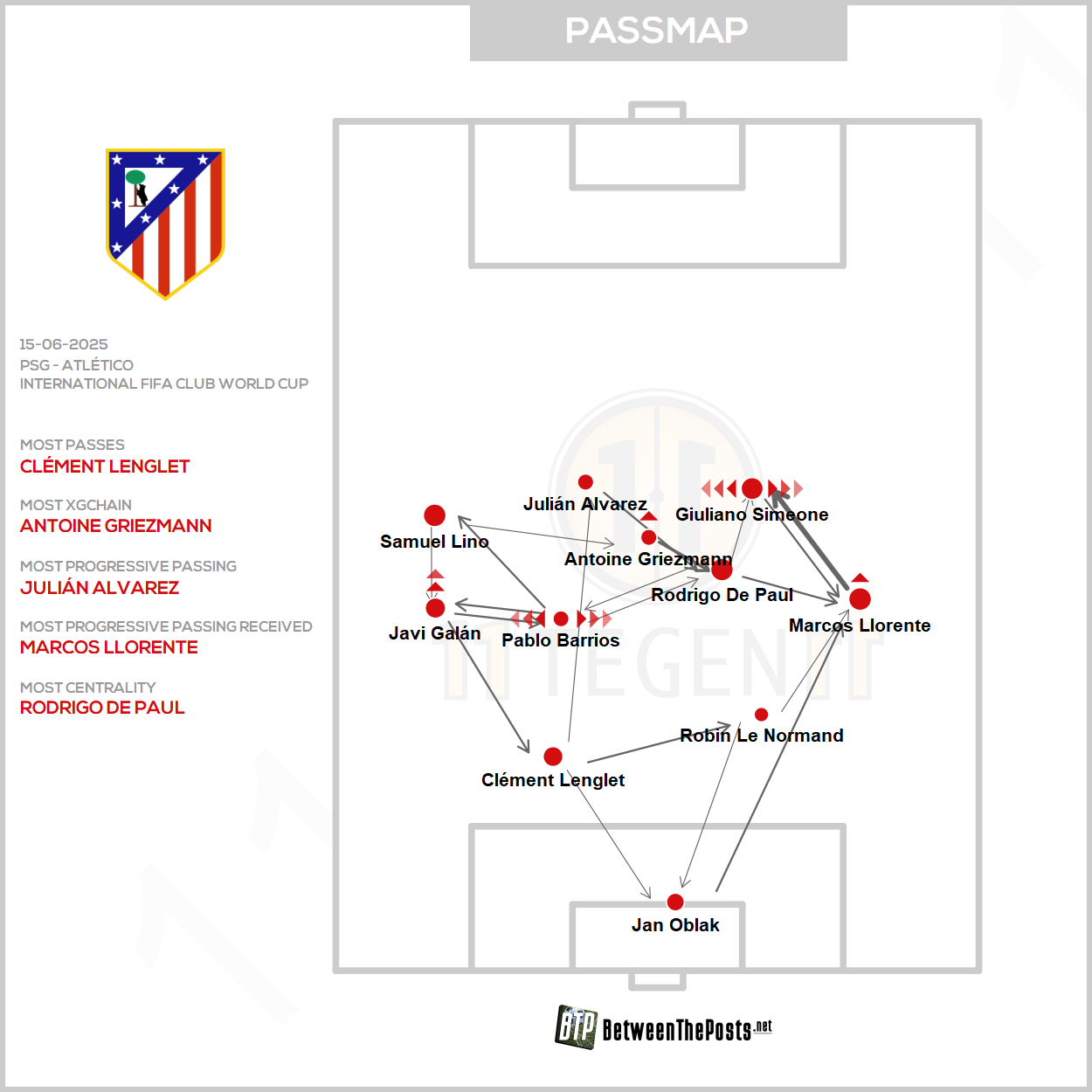
Perhaps their weakest point (which was ultimately confirmed) was their defensive line, far from the best moments of the Simeone Era; from left to right: Javi Galán, Clément Lenglet, Robin Le Normand, and Marcos Llorente. In midfield, academy product Pablo Barrios and Argentina’s World Cup champion Rodrigo De Paul shared the double pivot. On the flanks, Samuel Lino on the left and Giuliano Simeone — the manager’s son and now part of the national team setup — on the right. Up front, Antoine Griezmann sat a few meters behind the star forward, Julián Álvarez.
Being brave against this PSG…
The match began with Atlético de Madrid showing intentions to take the initiative, who in defensive phases and during PSG’s early build-up released their double pivot to press high. Or, when the ball reached the flanks during Luis Enrique’s team’s build-up phase, they created density zones through numerical accumulation (equality or superiority) in tight spaces, trying to induce mistakes or long clearances.
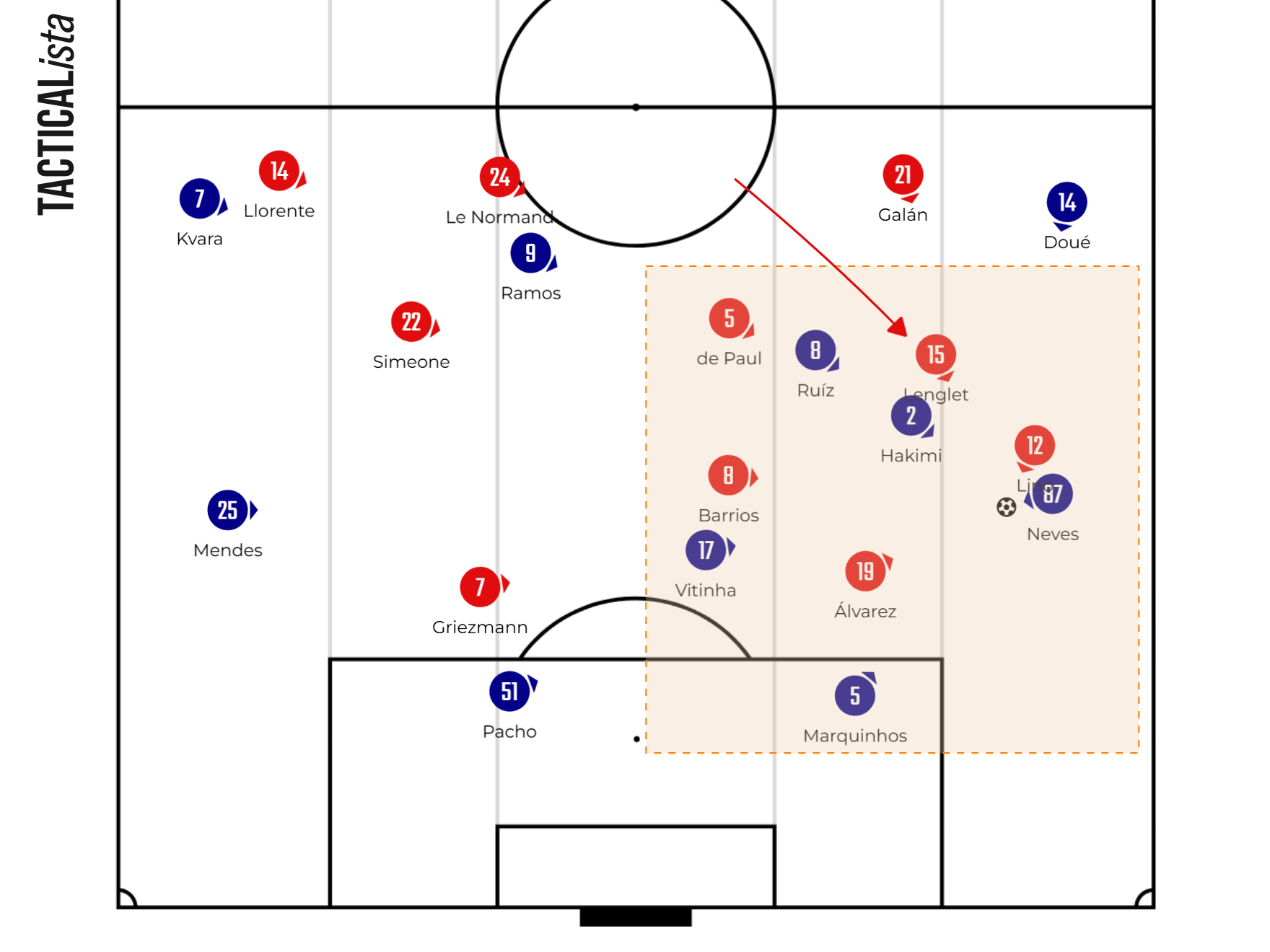
Minute 14′ Density in opponent’s build-up. As soon as the ball is played out to the right side toward Neves, Atlético de Madrid’s block shifts tightly toward the strong side of the ball. The clearest demonstration of this is Lenglet stepping out to press, leaving the defensive line in a 3v3 situation against PSG’s attackers.
A brave approach without the ball that only fueled the usual whirlwind that PSG’s midfield is known to be in terms of movement and positional rotations.
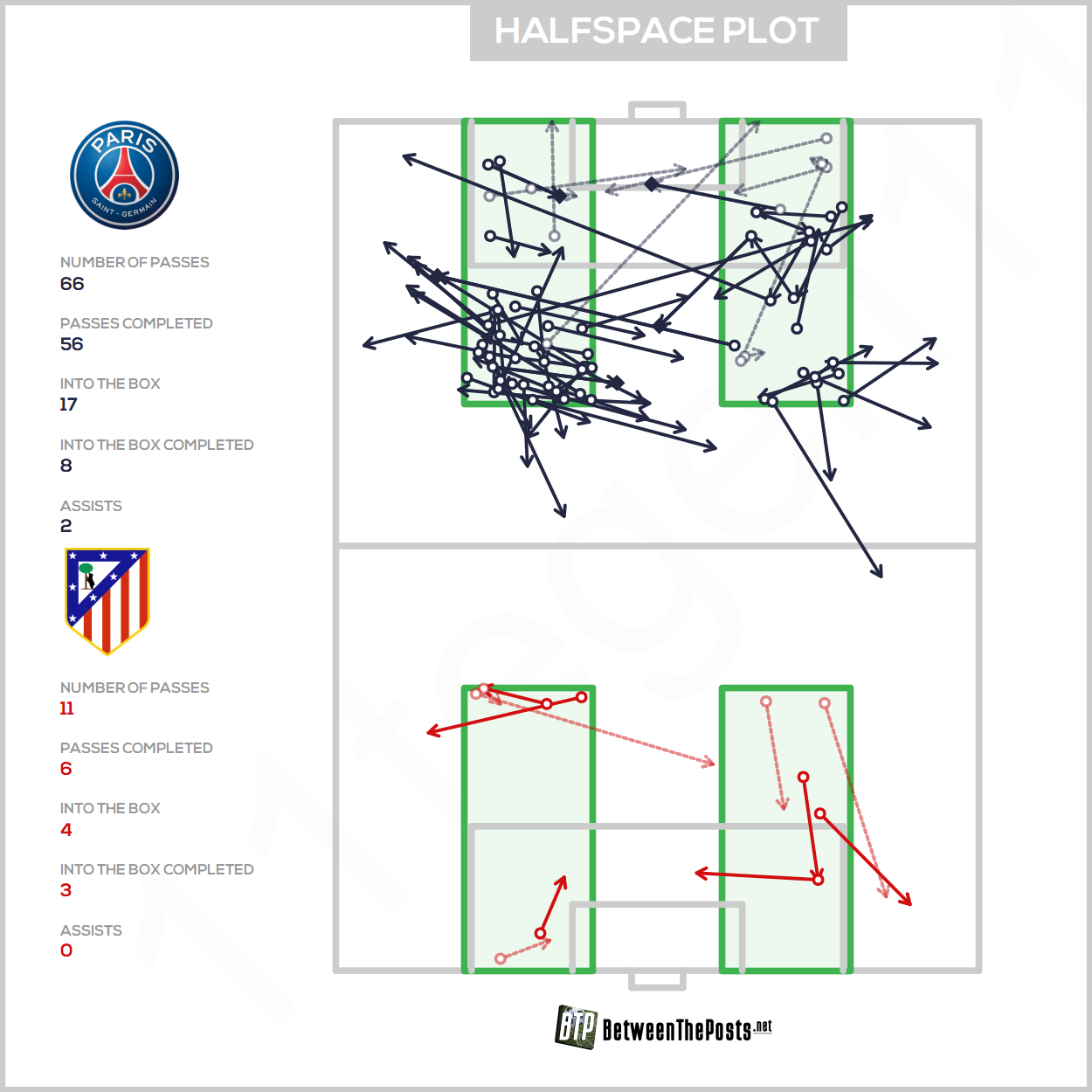
It was common to see classic combinations in the half-space or central channel of support + run to generate third-man situations or simply to create Dynamic Superiorities (superiority created through movement).
Taking advantage of the distances in the rival’s 4-4-2 formation
One recurring pattern, beyond the usual (and confusing) positional rotations between Vitinha, Kvara, and Mendes (remember Johan Cruyff’s concept: “the space always has to be occupied by someone”), was the zones occupied by Fabián Ruíz.
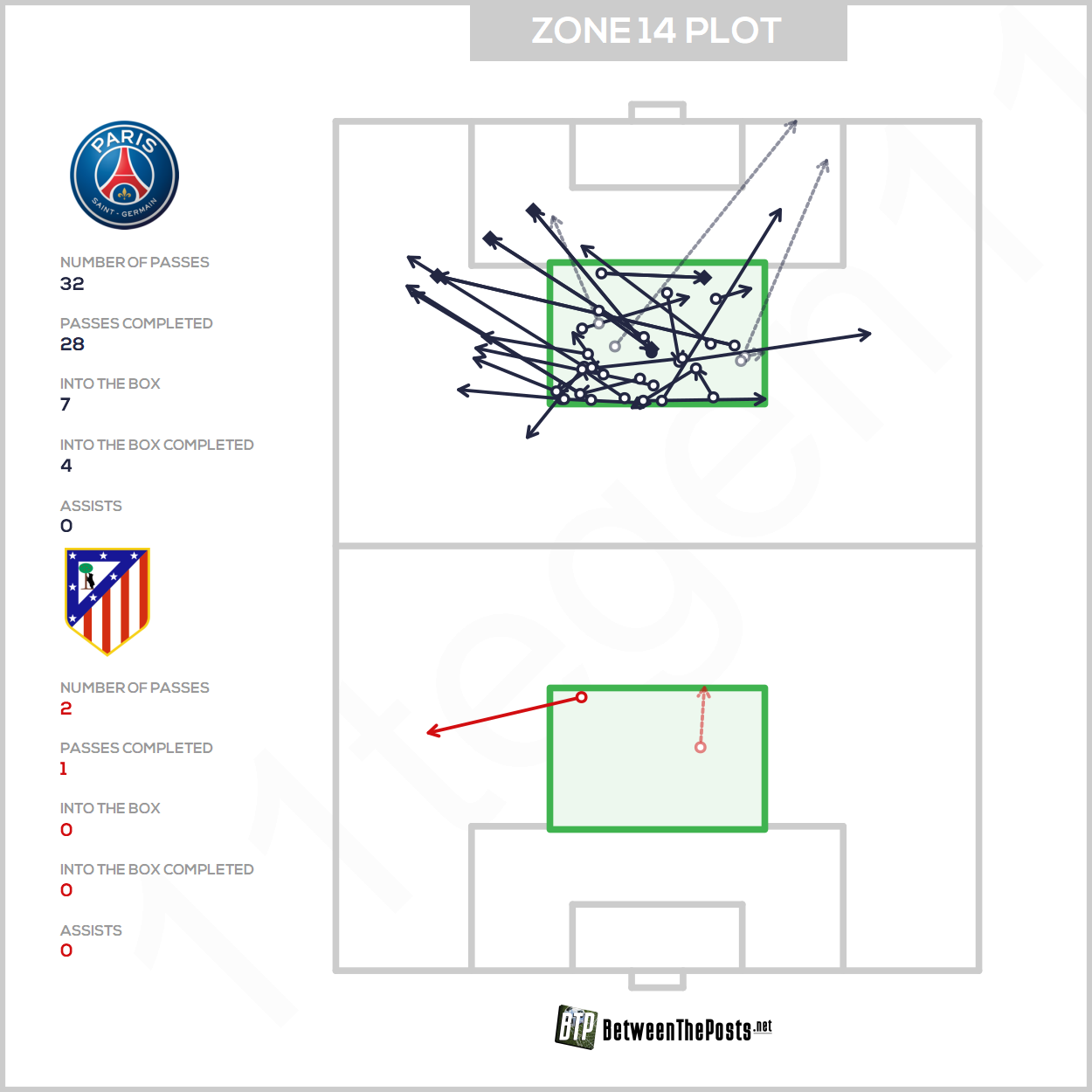
The Spanish midfielder was usually the highest interior for the team, seeking Positional Superiority by placing himself in between the lines and threatening the narrow stability of the opponent’s 4-4-2 medium block.
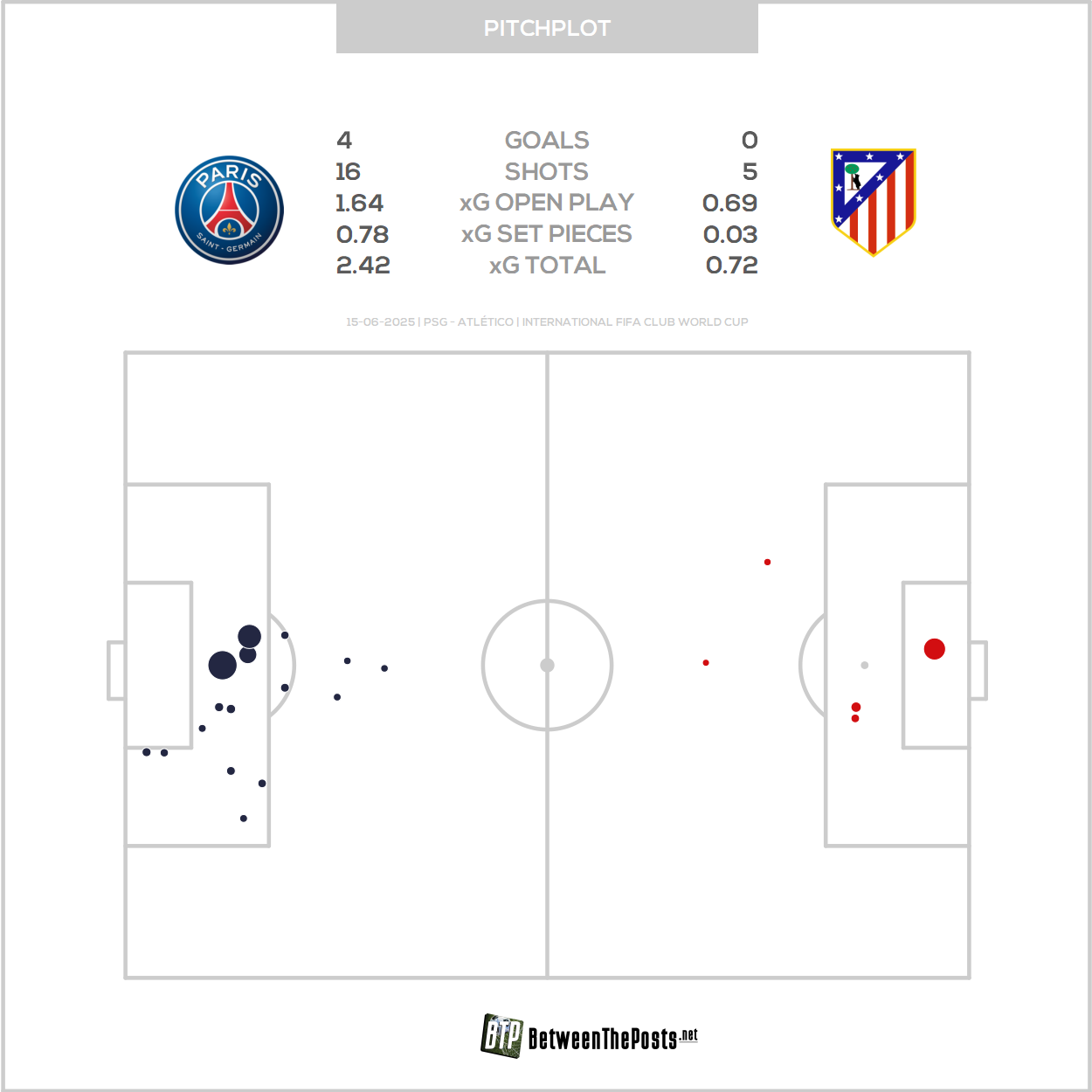
In an organized attack, the first goal of the match came precisely from Ruíz, who hovered around the edge of the box and scored with a well-placed strike from outside. A stunning goal and a justified dominance.
This combined with the profile of striker chosen by Luis Enrique. Unlike Ousmane Dembélé, who played as a false 9 throughout the season and even drifted out wide in many phases of the game, Gonçalo Ramos as a more traditional 9 focused on pinning the defensive line and trying to fix both center-backs, opening up space between the backline and midfield with his presence, rather than dropping into that zone.
Let someone occupy the space, no matter who
This, against an unusually aggressive block for a 4-4-2 setup, encouraged PSG to exploit these inter-line spaces with a hidden weapon: Vitinha dropping deep and a wide Kvara opened the door for Mendes to position himself in the upper left vertex of midfield.
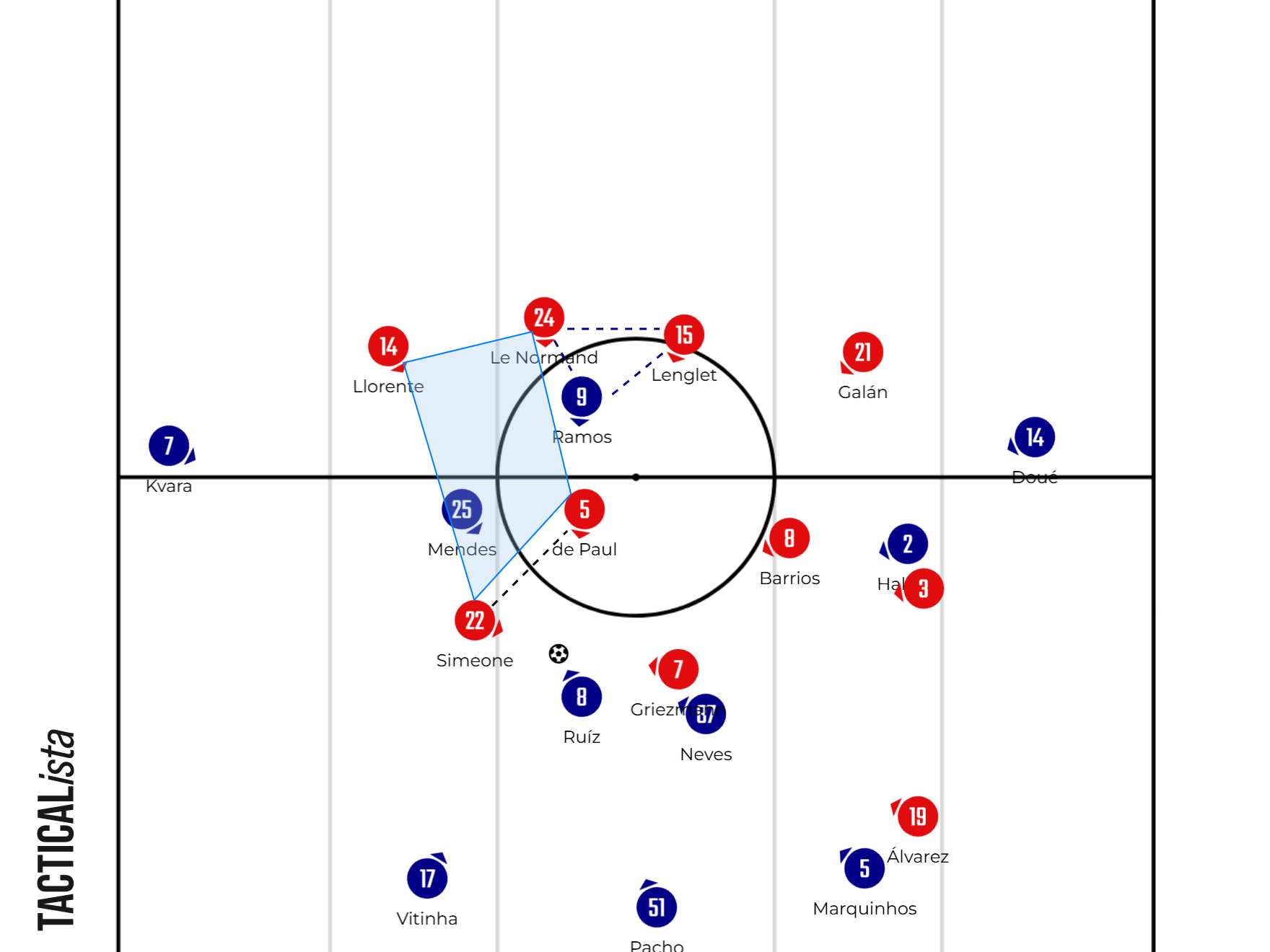
Minute 40′ Searching for Positional Superiorities. During the build-up phase, PSG adopt their classic 3-2-2-3 shape, forming a midfield square. In these situations, Vitinha drops alongside the center-backs whilst Mendes pushes higher, positioning himself inside the square and looking to receive between the lines — exploiting the spaces allowed by the 4-4-2 formation. Meanwhile, Ramos pins both center-backs.
His carries were razor-sharp, receiving behind the rival midfielders, causing real problems for Simeone’s team, who didn’t know whether to go after Vitinha or not. As mentioned earlier, constantly seeking Positional Superiorities through rational compensations: it doesn’t matter which player occupies the space, as long as someone does.
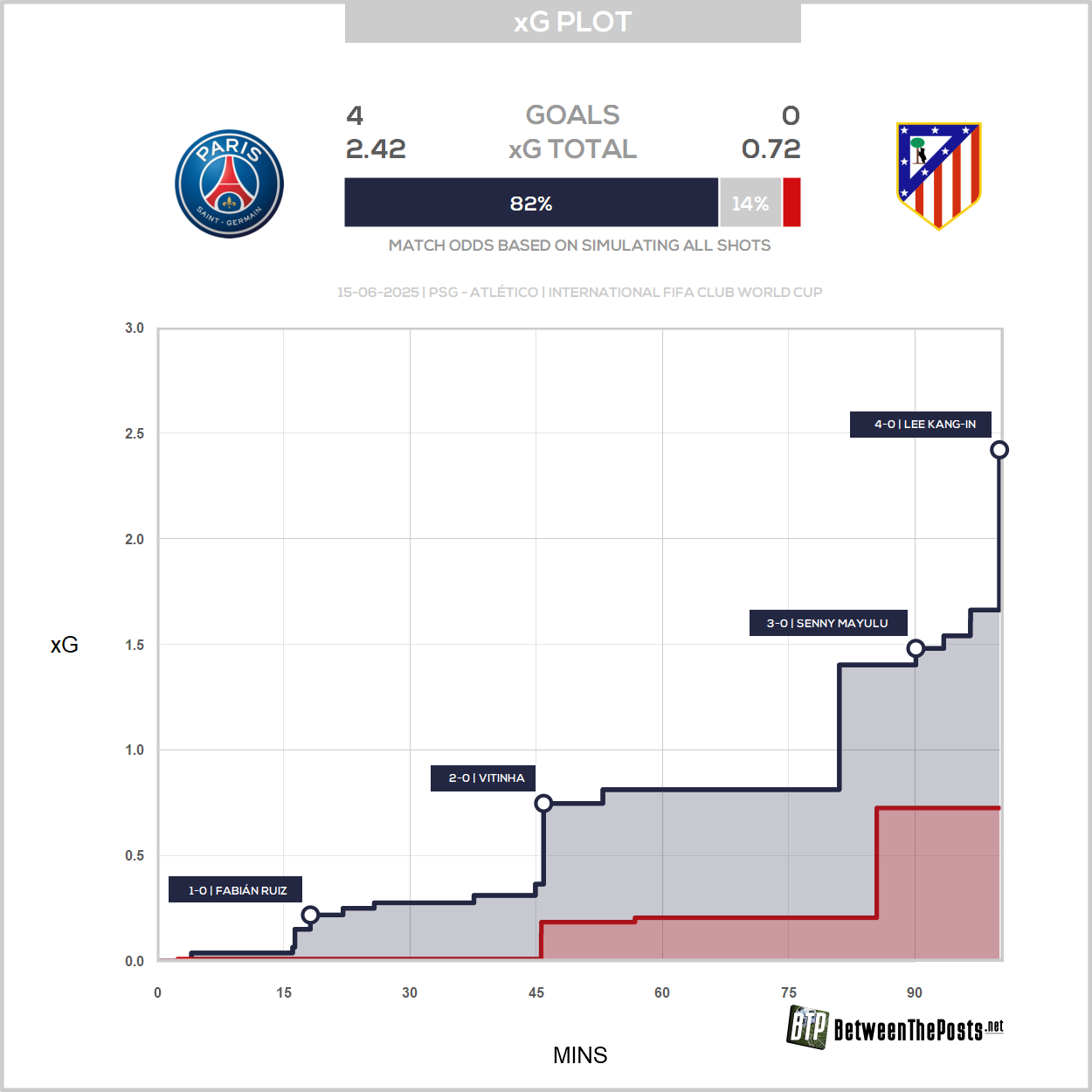
Following their rules, PSG went into half-time 2-0 up, in a lethal transition that rewarded one of the team’s key figures — Portuguese midfielder Vitinha.
Reiterating efforts, with and without the ball
In the half-hour break, Simeone addressed his players with a tough message: “If we don’t have personality and balls, we can’t progress.”
This might be viewed as a flaw in the Spanish team, but we must speak about the repetition of efforts by the recent European champions.
In a match played under extreme heat (32°C in midday Los Angeles, with humidity over 60%), the French team did not stop their already mentioned positional rotations.
Luis Enrique commented: “It’s not easy to play in these conditions with this heat. The match was clearly marked by the temperature. The time slot is great for viewers in Europe, but it wears the teams down. Mobility is important, it’s one of our characteristics. You have to know when to take advantage of it. We played well. Making those efforts was difficult”.
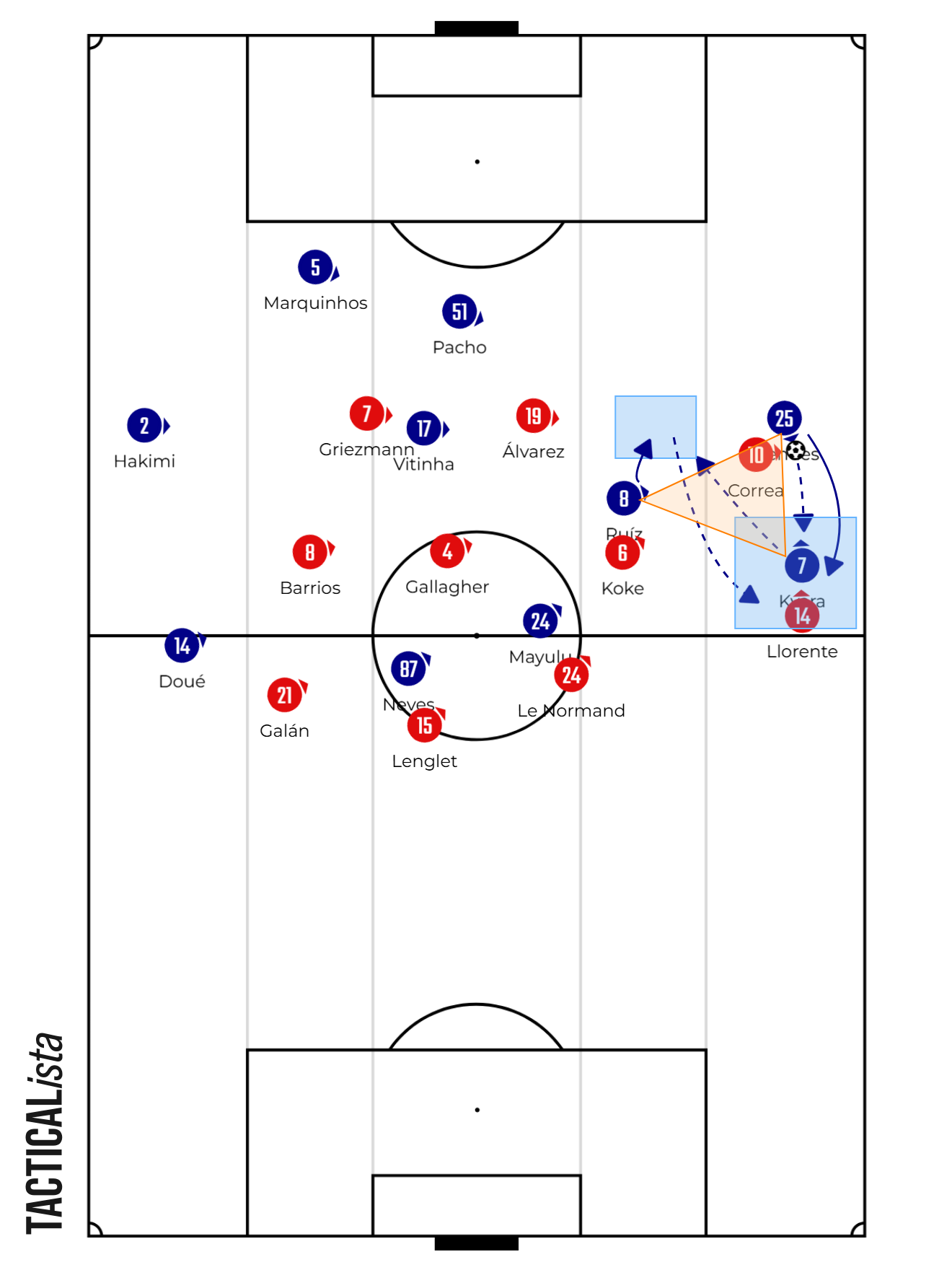
Minute 65′ Third and Fourth Man Dynamics. PSG generate Dynamic Superiority through a classic Third and Fourth Man pattern: Mendes plays into Kvaratskhelia, who had dropped back and receives with his back to goal (second man in support). Mendes then makes a forward run into the space Kvara just vacated and receives the return pass in behind from Fabián Ruíz — the third man, who had freed himself to deliver the ball facing forward.
“Making those efforts” has become a constant for his team, not just in possession. Their wingers (especially Kvara) constantly tracked back along the flanks to prevent a possible 2v1 numerical superiority against the fullback, or to avoid a switch to the weak side that would create a 1v1 qualitative superiority.
Basically, PSG pinned their wingers alongside the fullbacks when defending in a low block. Or even in a medium block, they didn’t shy away from the effort to drop back. A brutal sacrifice mentality. And it was something that helped avoid the situations Atlético looked for (and usually looks for) through their overlapping fullbacks.
Thus, the Spanish team’s brightest moments came through Julián Álvarez in central areas, dropping into midfield to connect with players facing forward (indirect progression) or acting as a launcher in the style of Harry Kane, trying to speed up possessions and prevent the recoveries mentioned earlier by the PSG wingers.
He even scored a goal around the 60th minute that might have brought Atlético back into the game, since it would’ve made it 2-1. However, the goal was eventually disallowed by VAR due to a previous foul by Koke.
After a clear chance missed by Alexander Sørloth at the goalmouth, PSG finished the match off with goals from second-half substitutes Senny Mayulu and, via penalty, Kang-in Lee.
Takeaways
What more can be said? A solid start for the European champions. Despite the extreme heat, they showed they can execute with solidity the best Positional Play the world has seen in years. Incredibly fluid interchanges, finding all kinds of superiorities in the first and second phases, and then leaving the final third up to the brilliance of their stars.
As mentioned in one section of the report, their work off the ball should not be overlooked. Their recent success in winning the treble hasn’t dulled their sacrifice, energy, or attitude. Mainly because they seem to run a lot… without doing so. Good pressing (and reorganizing) starts with order first.
As for Atlético de Madrid, they seemed light-years away from the team seen earlier in the season, which had shown it could contend for LaLiga against the Madrid and Barcelona giants. Julián Álvarez is doing everything he can to feed himself and his teammates — dropping, making runs, drifting wide — but the team is clearly suffering from a severe lack of individual talent.
In the end, we shouldn’t blow everything out of proportion at the micro level. Most of the Spanish team’s struggles simply came down to having worse players than their rival. Perhaps well-structured, yes. With roles aligned with the manager’s vision. But still, their only top-level player right now is the Argentine striker. And that is noticeable.
We decided to make this article free to read. If you want to support our work, consider taking a subscription.
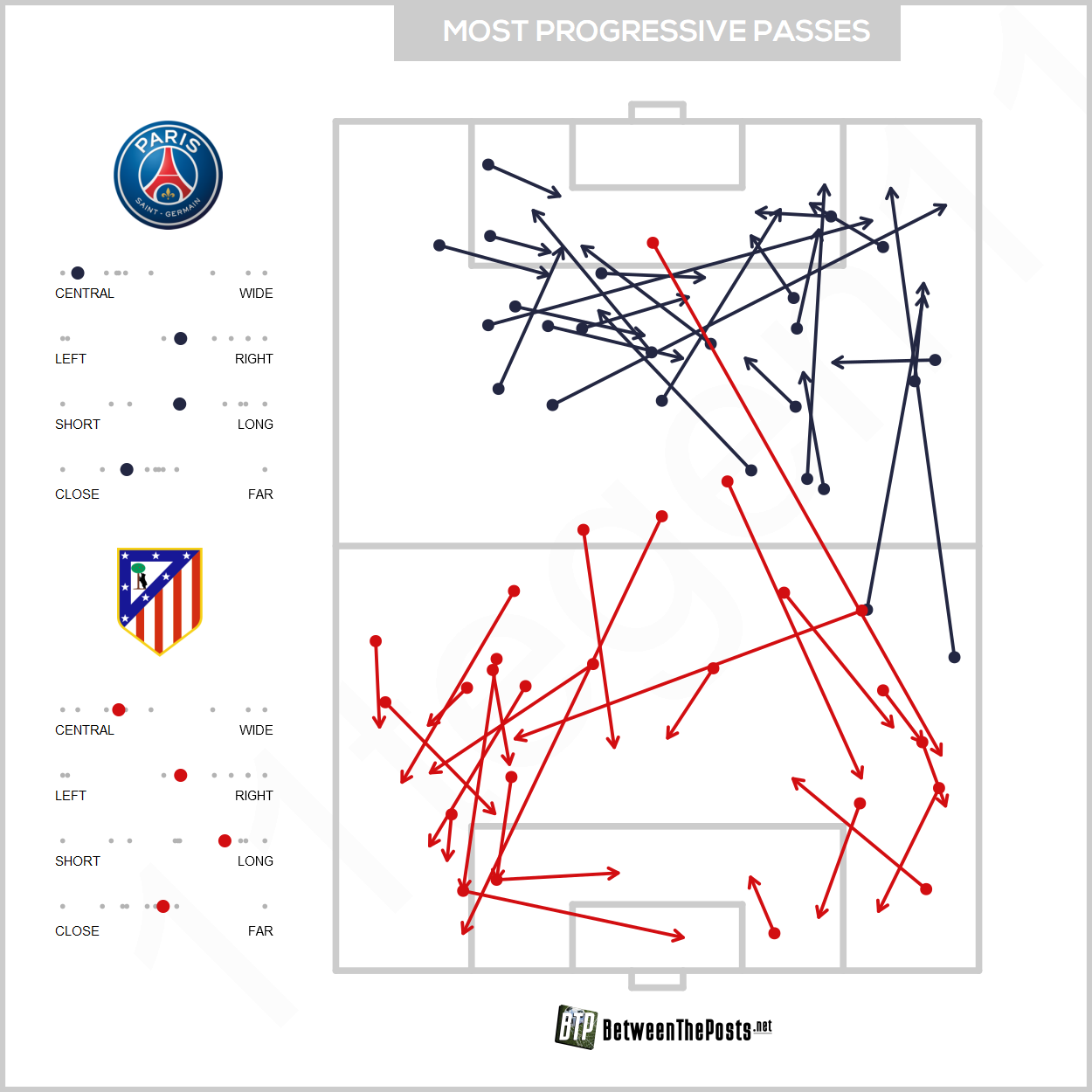
Use the arrows to scroll through all available match plots. Click to enlarge. Check the match plots page for plots of other matches.


Comments