
Boca Juniors – Vélez Sarsfield: Boca’s Brilliant Display Wasn’t Enough for the Three Points (1-1)
Boca caused Vélez problems through focusing on the zone where they wanted to attack. Using their tactical advantage in the pockets, Boca were able to generate chances when they had the ball. Their attacking setup gave room for Vélez create in transition. Both sides cancelled out each other in the second half, leading to a draw at the end.
Tactical analysis and match report by Ebuka Ogoegbunam.
Boca Juniors’ win over Estudiantes in their previous gave them confidence going into the game with another home game to make it two wins in a row. Vélez remain unbeaten, having won all their games in the Clausura. They’ve kept two clean sheets in their opening three games, sending a signal to the league about their fantastic start.
Álvaro Montero started in goal for Boca Juniors alongside a backline of Leandro Lozano, Lautaro Di Lollo, Ayrton Costa, and Lautaro Blanco. Leandro Paredes, Milton Delgado, and Santiago Ascacíbar made the midfield three. Leonel Flores, Tomás Aranda, and Miguel Merentiel led the line in attack.
For Vélez, Tomás Marchiori was in goal with a back four consisting of Joaquín García, Emanuel Mammana, Thiago Silvero, and Elías Gómez. Rodrigo Aliendro played with Lucas Robertone in midfield, with Diego Valdés behind the attacking front-line. Manuel Lanzini, Matías Pellegrini, and Dilan Godoy were the front three for Vélez.
Boca’s central wingers
Boca’s set up on the ball entailed a back four with the fullbacks higher up holding the width. The wingers moved inside overloading the central area of the pitch. These wingers, alongside the attacking midfielder, Ascacíbar, often moved into the last line of attack to hug the opposition defensive line dragging the center back’s attention away from the play between the lines.
Vélez defended in a 4-4-2 mid-block without the ball. Valdés and Godoy led the press. They didn’t attempt to put pressure on the center back on many occasions. They preferred to sit in their structure and remain compact. The wingers maintained their position and hesitated to follow the Boca fullbacks. This designated the role of the Boca fullbacks to the Vélez fullbacks when they were high up. This made it easier for Boca to access wide areas.
Boca’s build up wasn’t rigid. Rotations happened from the first line to the last line of attack existed. In the first line of buildup, Delgado or Paredes, dropped into the defensive line to help build up. Due to this rotation, the fullbacks were allowed to push high and attack the wide areas.
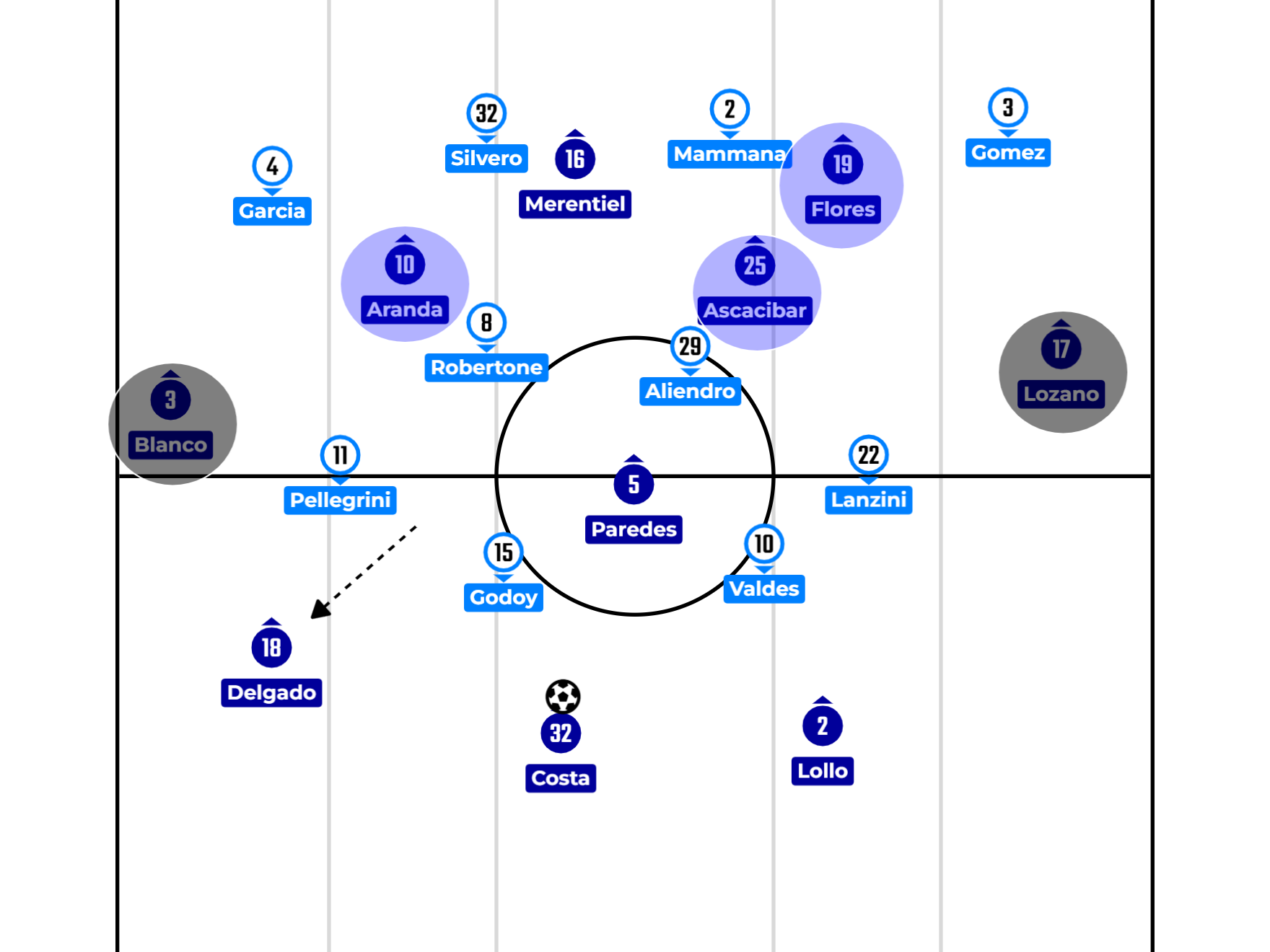
Boca’s rotations in build up. Delgado dropped into the first line, fullbacks push high and wingers move inside to overload the central pockets.
Boca always looked to play inside passes into the pockets in between the lines. Aranda, Ascacíbar and Flores were the targets in this zone and always looked to receive the ball during Boca’s attack. Their movements were random. Always aiming to disrupt the backline while creating space for themselves to receive a pass in the final third.
The approach to attack central areas had effects on both ends of the pitch. Players who received the ball in this area could spread the play into wide areas and utilize the fullbacks’ width to get crosses into the box. When players received the ball within this same area and get dispossessed, this created transition moments for Vélez.
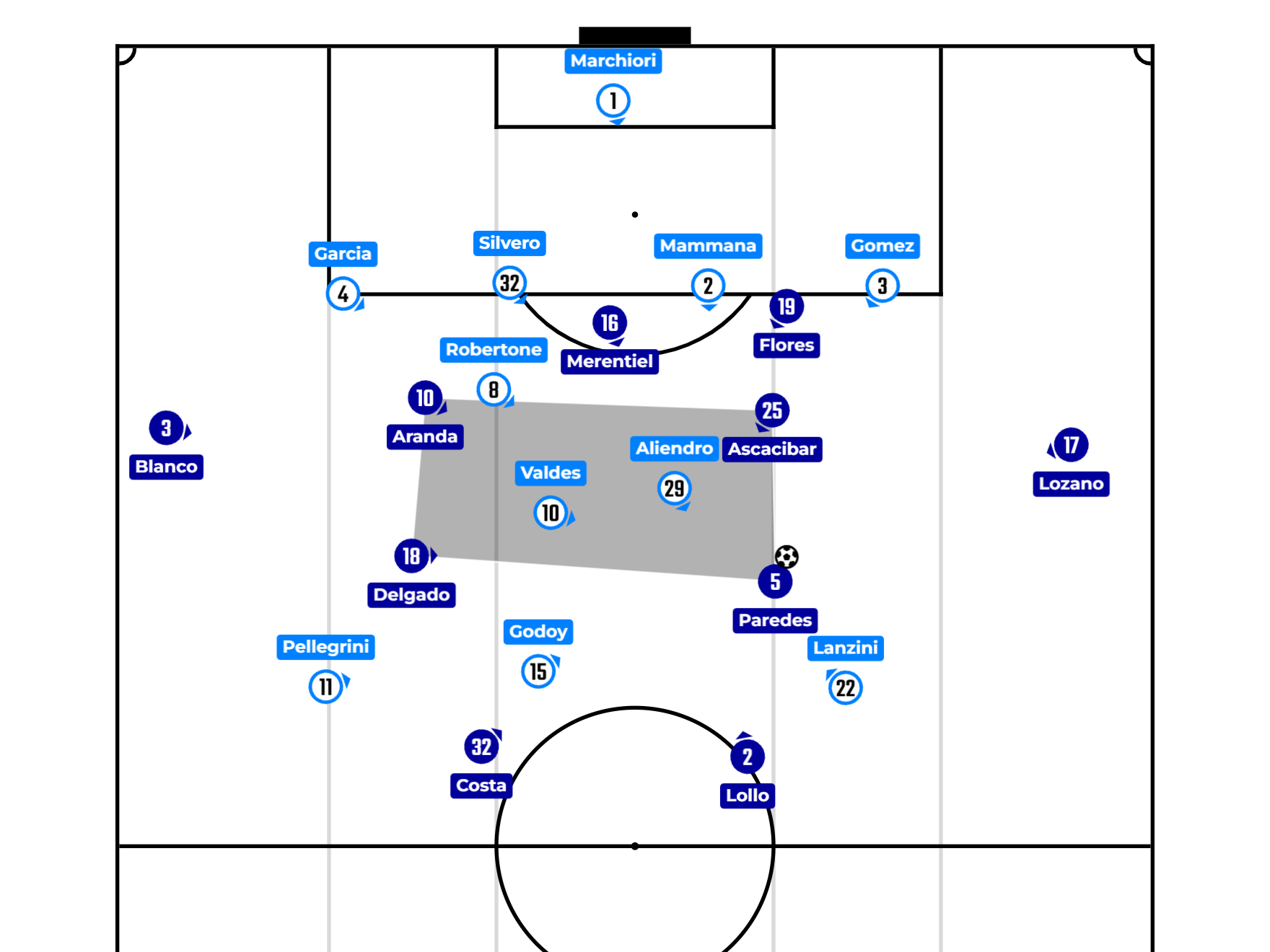
Boca’s central overloads leaving space for transitions in behind.
The effect of the opener
Vélez waited for their moment to attack as they knew there would be spaces to attack when they win the ball back. Lanzini, Valdés, Pellegrini and Godoy were the players involved in a lot of these transitions. Their freedom to make narrow random runs in these moments destabilized the Boca defence. Vélez weren’t able to take advantage of their chances early on but it was encouraging for them to see the spaces they can thrive on.
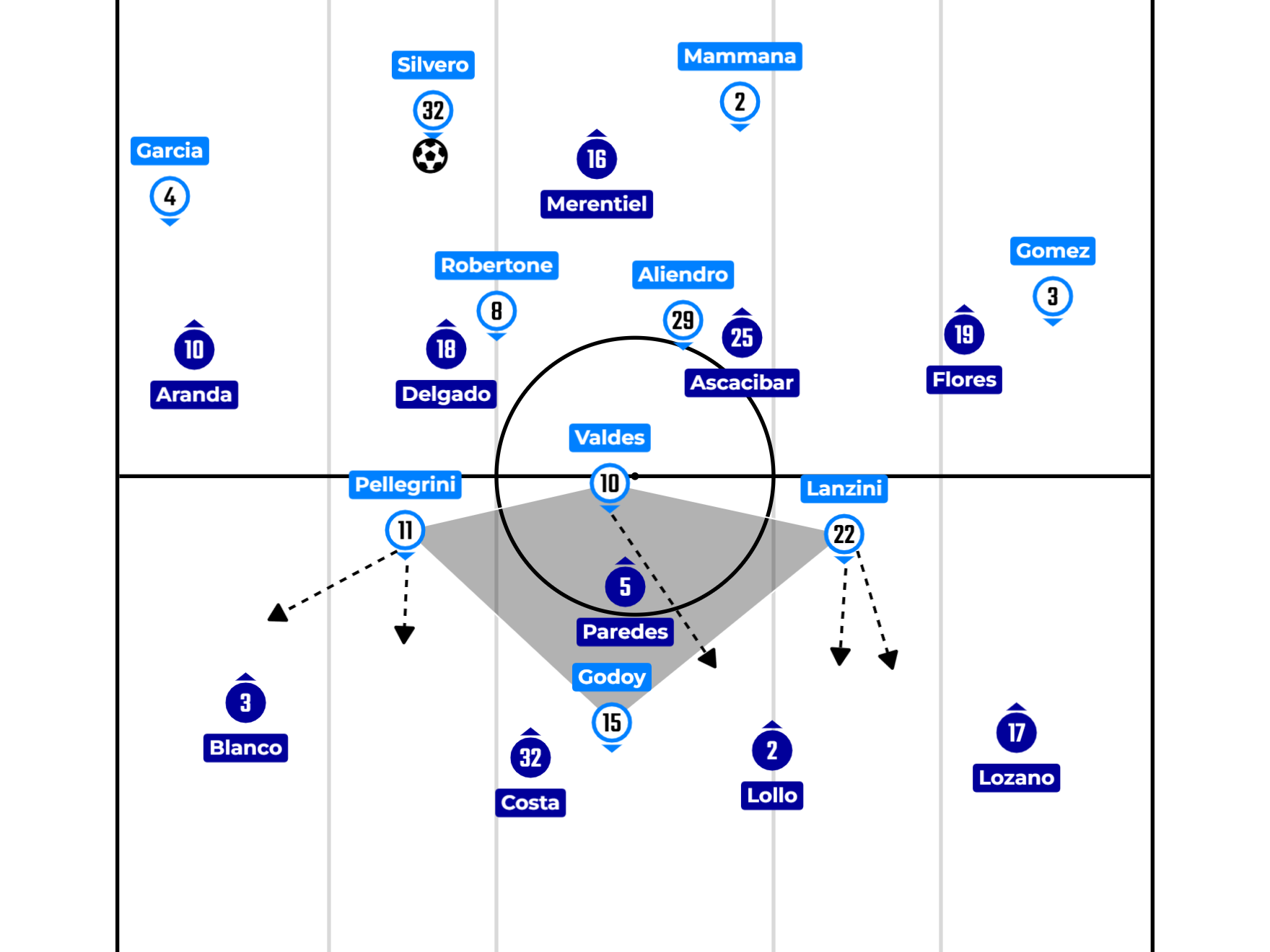
Vélez’s front line made narrow runs in transitions to create box entries and half chances.
Vélez took the lead from a well taken Valdés free-kick in the first half. Boca Juniors had to respond in front of their fans with more pressure after the restart. Boca imposed more pressure thereafter with their pressing structure giving them more momentum to win second balls and regain possession.
Boca pressed in a 4-1-4-1 shape with the striker acting as the trigger when to put pressure. Paredes was the sole pivot who sat in the defensive midfield to help cover any player between the lines. Boca forced Vélez long by using their striker to force the on-ball defender to one side of the pitch whenever the Vélez center backs turned to play to one side of the pitch.
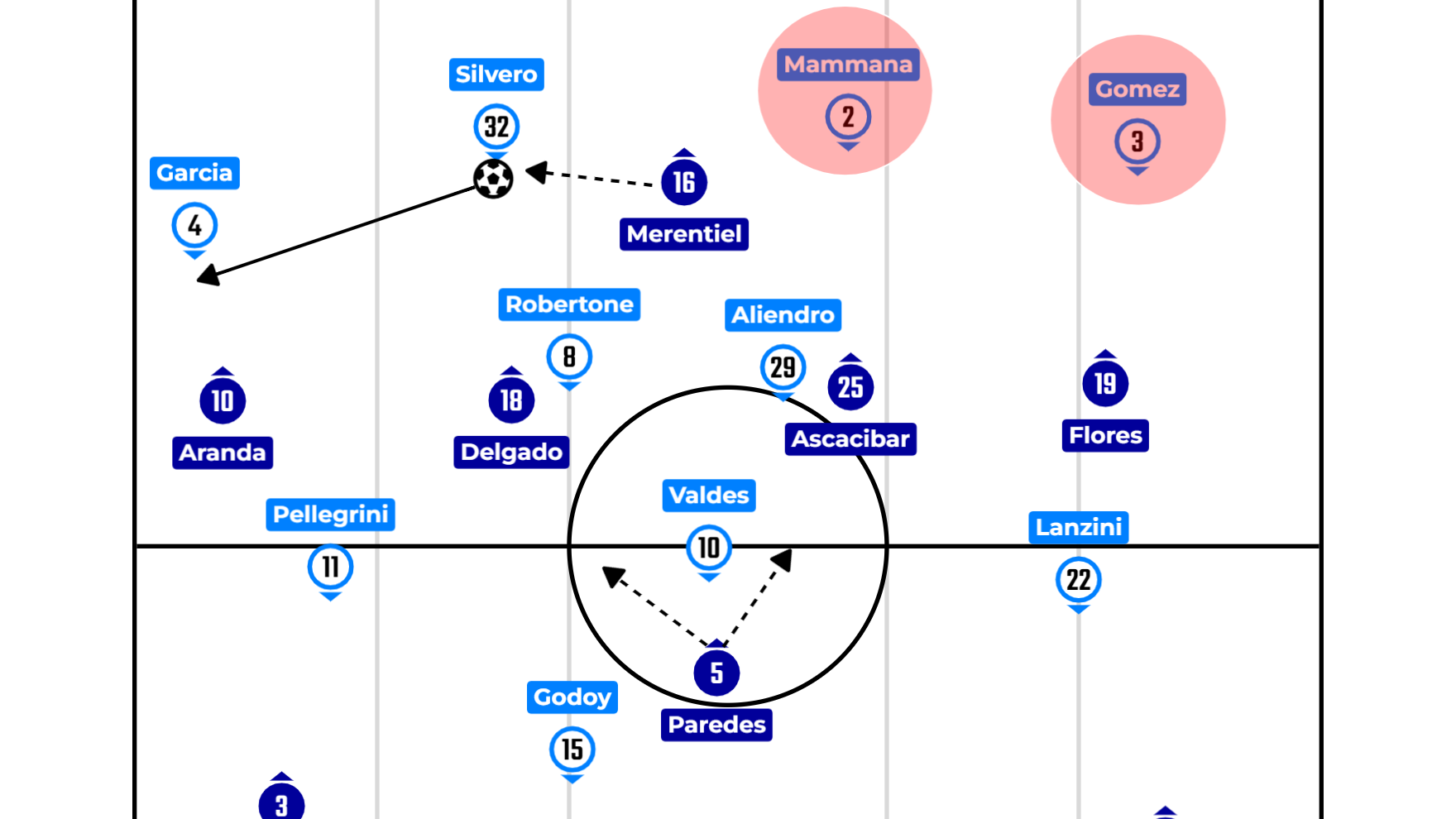
Boca’s pressure restricted Vélez from keeping possession for longer periods by forcing them long and winning back possession.
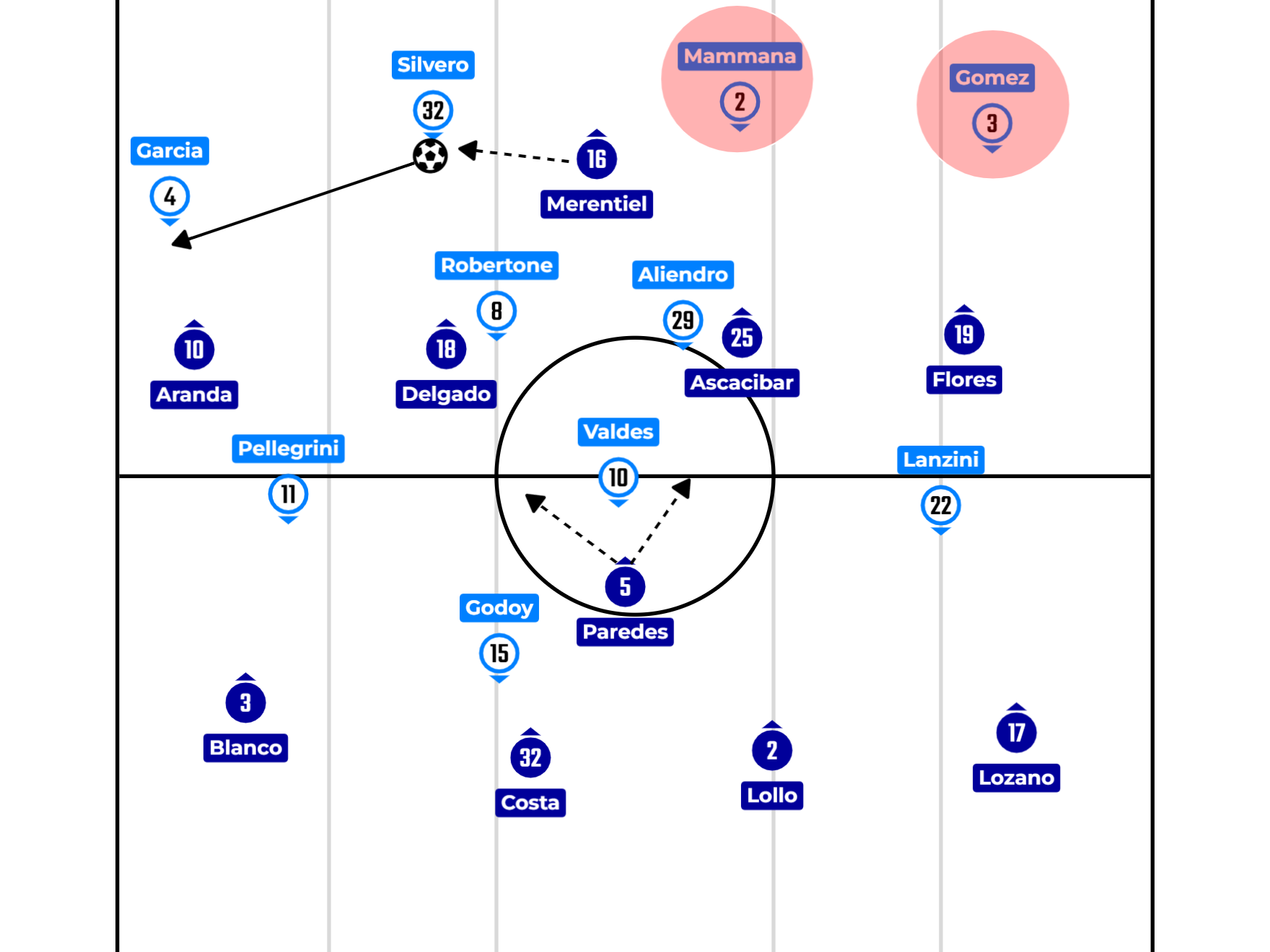
Boca’s press forced Vélez long and helped them gain momentum.
Boca became much more fluid in possession, especially the players between the players between the lines. Ascacíbar, Aranda and Delgado were allowed to drop deep. They rotated positions and looked to find spaces with the overloads they had in attack.
Boca kept the ball with the intent to keep attacking the central spaces between the defenders and midfielders. From wide areas, Vélez were susceptible to cut back chances from the edge of the box because of the numbers Boca had in that zone.
Multiple missed chances for Boca gave Vélez a lifeline but their setup against Boca’s attacking setup conceded momentum. Boca were rewarded for their consistent approach. They found their equalizer by attacking the central space. Ascacíbar’s positioning pins the center back which allows Flores to make a run in behind the Vélez backline. Flores’ shot gets saved by the goalkeeper before Ascacíbar fires the rebound into the back of the net.
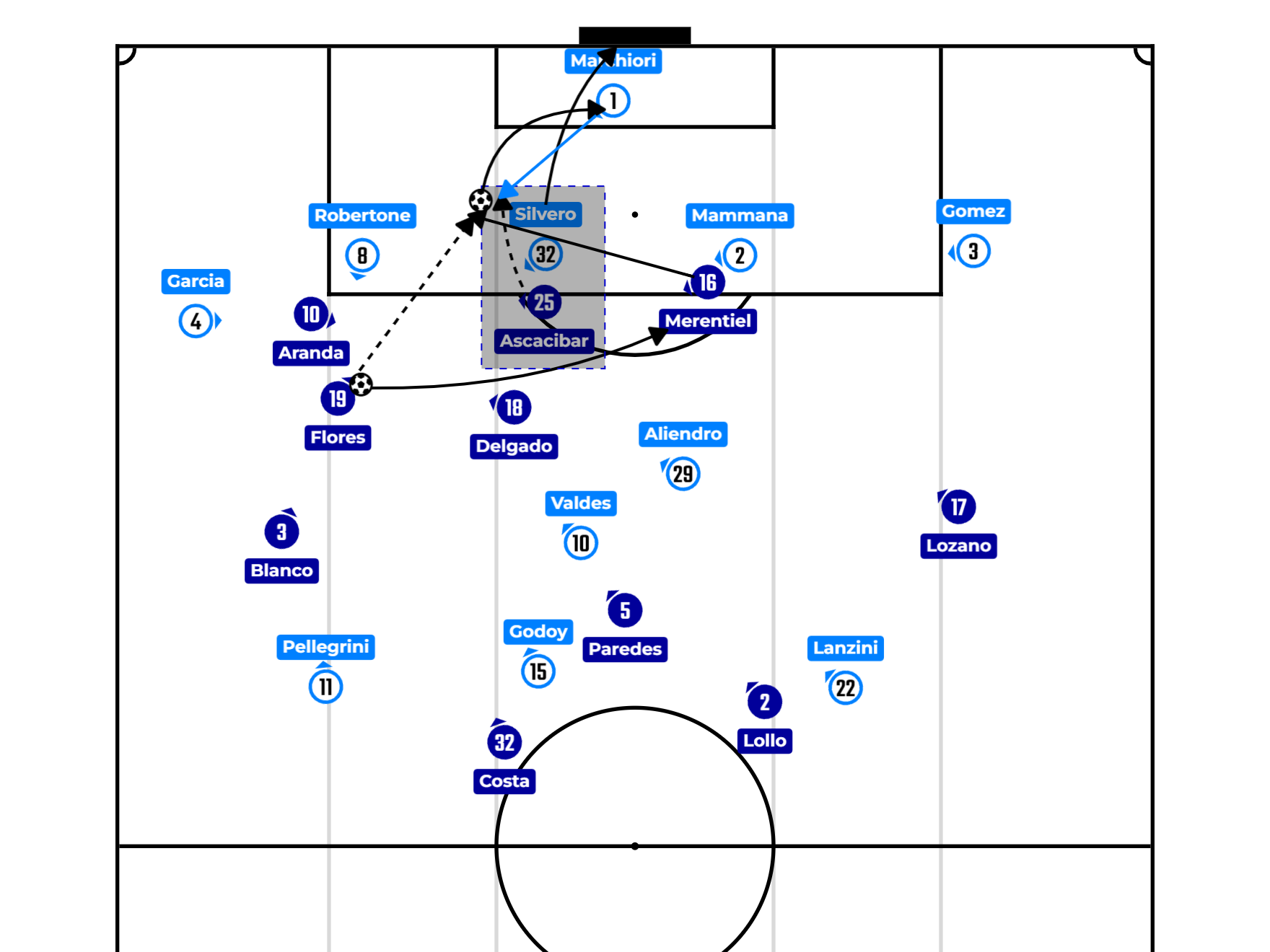
Boca’s equalizer. Pinning the opposition center back while exploiting the space in behind.
The second half gave way for more transitional opportunities as both teams attacked each other with more intent than the first half. More spaces in the game led to more open chances for both teams but neither team could capitalize on them.
In the end, Boca Juniors will feel they let two points slip away despite producing one of their strongest performances of the Clausura campaign. After falling behind to Diego Valdés’ well-struck free-kick, Boca responded with intensity, control, and a clear attacking plan that consistently troubled Vélez Sarsfield.
Their ability to overload the central spaces, rotate positions between the lines, and sustain pressure throughout the second half allowed them to dominate large periods of the game and eventually find a deserved equalizer through Santiago Ascacíbar. Boca’s tactical approach repeatedly created openings and placed Vélez under pressure, but their inability to convert several promising half chances/chances ultimately prevented them from completing the comeback.
For Vélez, this was a result that showcased both their resilience and their limitations. While they struggled to maintain possession and spent long periods defending against Boca’s pressure, they remained dangerous whenever transition opportunities emerged. Their disciplined defensive work and ability to survive Boca’s attacking waves ensured they left La Bombonera with a valuable point.
Takeaways
From Boca’s perspective, the draw offers encouragement despite the disappointment. The performance level, chance creation, and control of the game suggest they are building momentum and moving in the right direction. However, greater efficiency in front of goal will be required if they are to turn dominant displays into victories.
As for Vélez, extending their unbeaten start to the Clausura further strengthens their position near the top of the table and reinforces their reputation as one of the most difficult teams to beat. Boca gain a point that keeps their positive run alive, but Vélez will likely be the happier side after escaping with a draw from a match in which Boca were the superior team for long stretches.
Match plots will be added as soon as possible.


Comments