
Borussia Dortmund – Bayern Munich: Bayern Bank Another Trophy (1-2)
Tactical opportunities revealed for Bayern Munich, which they capitalized on to generate chances. However, it was Borussia Dortmund’s lapses of defensive concentration that allowed Vincent Kompany’s side to score twice in the first half. A valiant Dortmund second-half display translated into a goal, but they could not find the leveler, with Jonathan Tah’s last-minute tackle thwarting the opposition’s hopes.
Tactical analysis and match report by Fahd Ahmed.
Ahead of the 2026/27 Bundesliga season, German football supporters had an exciting match-up to look forward to as Borussia Dortmund and Bayern Munich faced each other in the Franz Beckenbauer Supercup. Following a dominant campaign from Vincent Kompany’s side, where they won the league title and the DFB-Pokal, the Bundesliga runner-up qualified for the Supercup. Nevertheless, Dortmund were also coming from a successful domestic campaign, having finished two positions higher and 16 points better compared to 2023/24.
From their penultimate friendly match against Roma, Niko Kovač only made one change to the team. In defense, Filippo Mané was replaced by the more experienced and established Waldemar Anton, who regularly featured for Dortmund last season.
Meanwhile, the side that Kompany lined up against Heidenheim, which was Bayern’s final pre-season match, was mostly comprised of young players, barring the defensive unit. Nevertheless, none of those players managed to make the team for the Supercup. Therefore, Bayern had an entirely different eleven against Dortmund, with all their key men back in the team. The only unfortunate absence was Jamal Musiala, who has been undergoing difficult medical conditions recently and will hopefully have a speedy recovery.
Decompressing Dortmund’s block and utilizing the overload
During settled possession phases in the middle third, Bayern frequently enticed the Dortmund press by showing signs of retreating. From a numerical point of view, this tactic of decompressing the Dortmund block had its advantage since Bayern often found themselves in 6v5 situations against the opposition attacking and midfield lines. They achieved this by having the fullbacks low and midfielders, Joshua Kimmich and Aleksandar Pavlović, dropping deep. Further, Bayern’s attackers were also willing to drop below and receive. Thus, the 6v5 was not strictly created by the Bayern fullbacks and midfielders. The usual fluidity still existed.
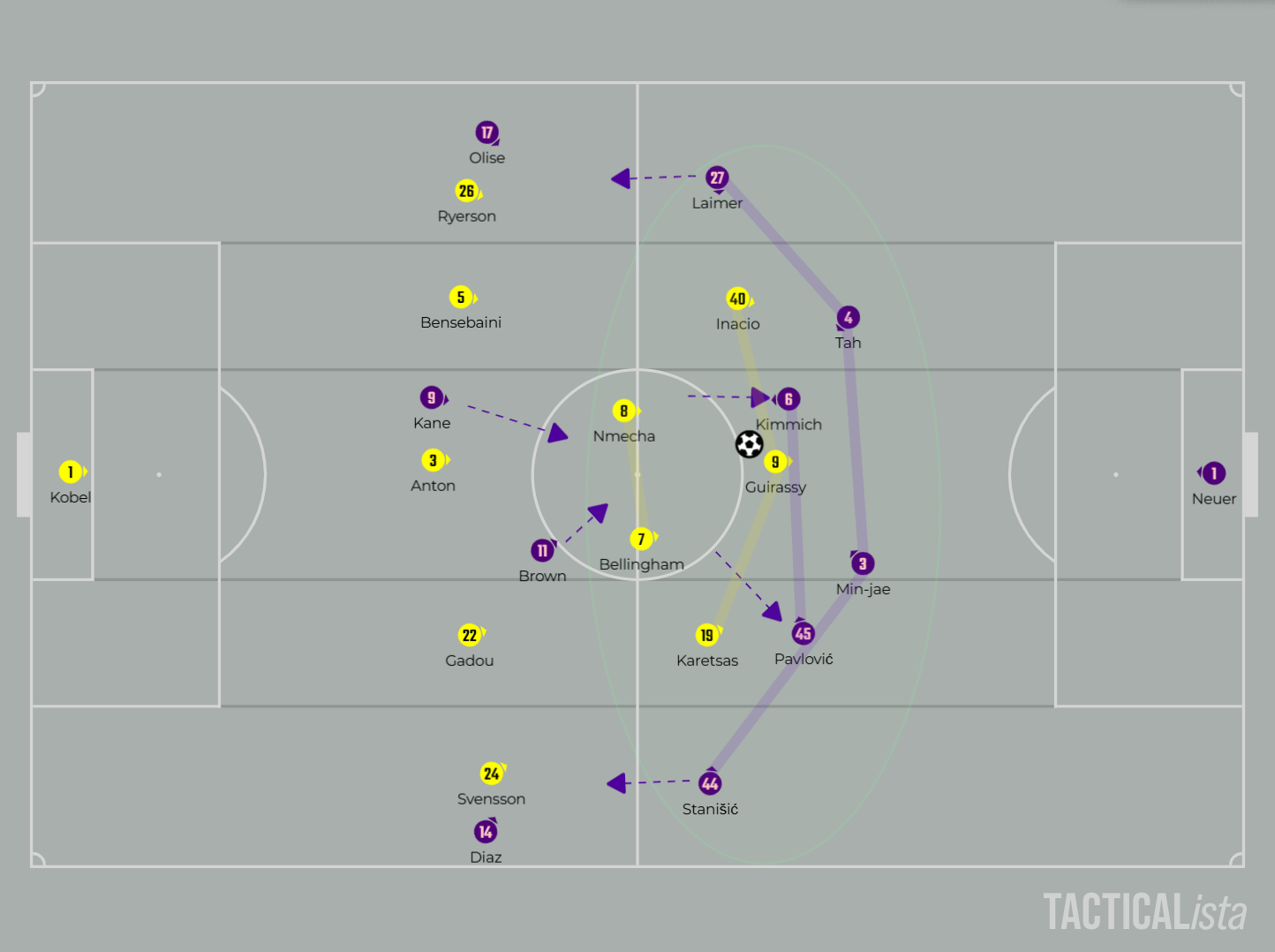
Image 1: Once Dortmund’s 5-2-3 block was decompressed, Bayern managed to play through the press by utilizing the 6v5 overload.
This was not entirely a voluntary decision from Dortmund to allow the overload. However, it was due to an inherent downside of using a five-back defensive block. Specifically, Dortmund’s backline found it difficult to jump out of the 5-2-3 structure and press the opponents quickly enough because of the distances they had to travel. By the time the wingback pushed up and the wide centre-back shifted across, Bayern would have already played through the press. To use a quote from Mufaddal Burhani, a reputable analyst on X: “Since you have 1 less player in the forward line compared to a 4-4-2, this usually makes the distances too large for the defenders in a back 5 to jump and transition into a press. This is generally true; there is no denying that. It is simply a trade-off you take for the advantages you get with a back 5.”
Although Bayern had these opportunities, to nit-pick a small detail, there were moments when the players did not proactively recognize and capitalize on them when they should have. Specifically, the fullbacks would sometimes push high too early and pin the Dortmund backline man-to-man when that was not necessary. Since the Dortmund defenders struggled due to the inherent issues of a five-back to transition man-to-man, in these situations, Bayern made it easy for the opposition to lock on as they wanted.
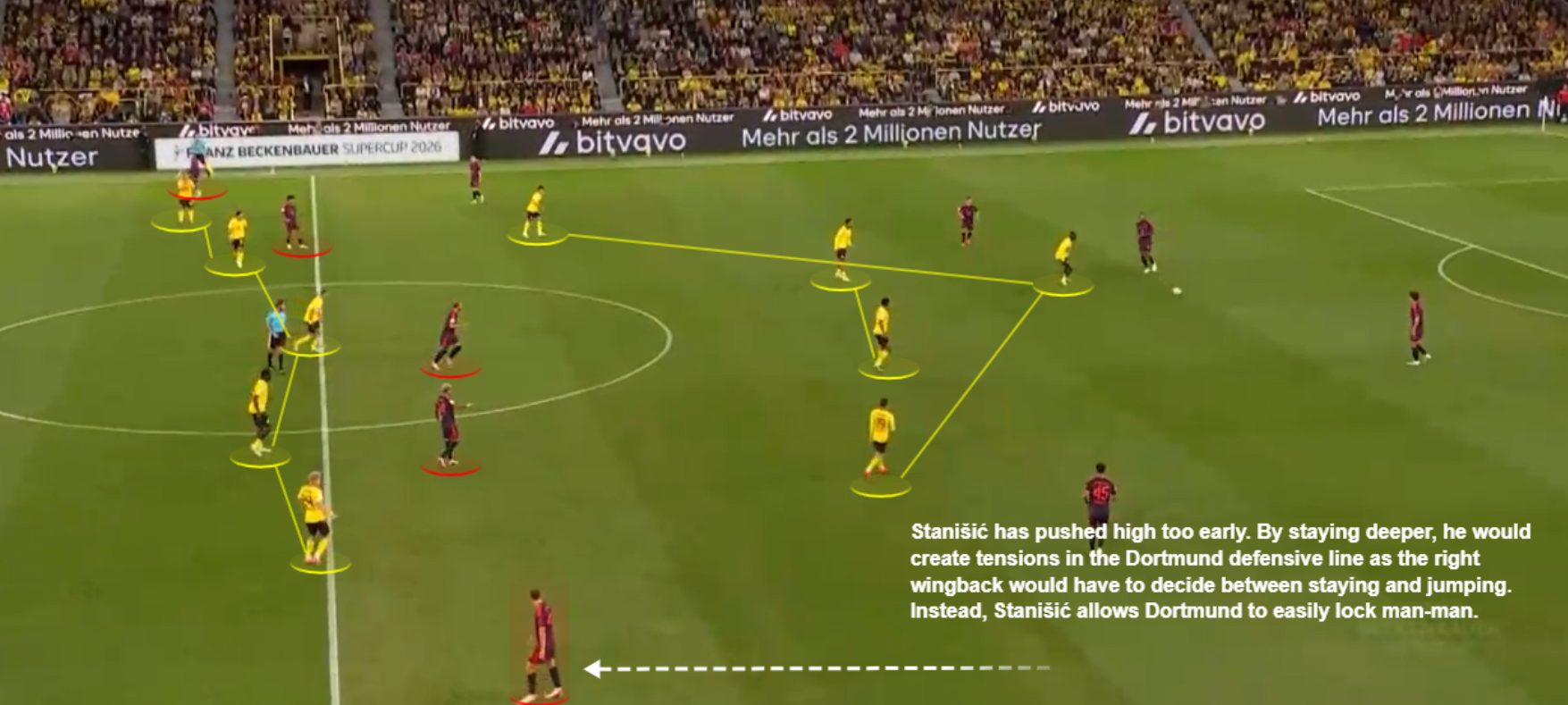
Image 2: At times, Bayern’s players afforded Dortmund the opportunity to easily transition into a man-oriented press.
Costly lapses of concentration
During his time as manager, Kompany has emphasized the importance of quick possession restarts to catch opposition defenses off-guard. This is useful in phases where the opponent intends to lock man-to-man since the markers will not have positioned tightly enough. Even against zonal off-ball units, it proves beneficial because the structure would not have the required organization.
Perhaps because it was the first competitive fixture of the season, Dortmund seemed to have been caught off-guard multiple times, especially in the first half, when Bayern made quick possession restarts. This underscores a minor area for Kovač to work on from a psychological perspective, as it can cost them in matches.
It certainly did against Bayern, who capitalized following a quick throw-in. In the 28th minute, the Bavarians had a throw-in close to the halfway line. Kimmich received it and immediately fired a long ball to find Michael Olise’s beyond run, which overtook the left wingback, Julian Ryerson, who was caught on his heels.
Further, when Kimmich played this pass, Brown was free between the lines and should have been immediately tracked by Felix Nmecha. However, his eyes were focused on the ball rather than Brown, whose untracked movement was found by Olise. The former Eintracht Frankfurt player followed it with a brilliant two-touch finish.
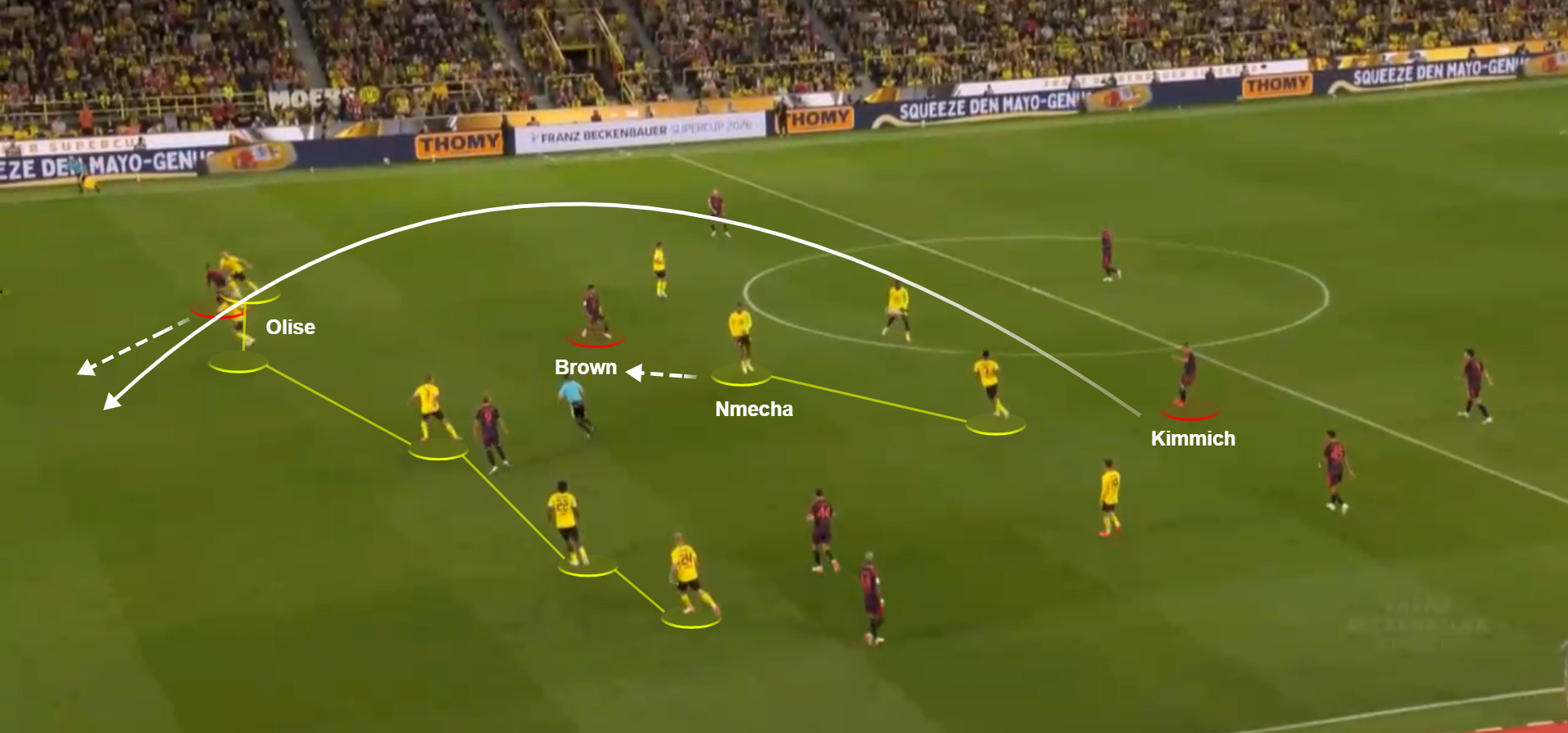
Image 3: Dortmund was caught with their guards down during a quick Bayern possession restart, leading to the opening goal.
Despite the wake-up call, Dortmund continued leaking such chances for Bayern in the first half. Within seven minutes of the opening goal, after a long-ball clearance that led to a turnover, Bayern swiftly moved from back to front. Brown received a pass between the lines and threaded a pass for Olise whilst Dortmund remained disorganized.
Exploiting untracked man-oriented references
Throughout the game, but especially in the first half, Dortmund had numerous opportunities in the middle third once they settled into the usual 3-2-5 shape. Bayern continued their man-oriented defensive approach, but it looked vulnerable in certain moments.
Through third-man combinations and late runs from midfielders, Jobe Bellingham or Nmecha could receive between the lines. Brown was specifically susceptible to not fulfilling his defensive responsibilities, as he could be caught ball-watching rather than tracking his player.
The same could be said about Kim Min-jae, who had a slightly slow start to the match. There were a few times when he was hesitant to tightly stay with his player when they made below runs to receive low.
This could lead to Konstantinos Karetsas receiving between the lines and having the space to deliver a cross to the back post. Karetsas deserves a spotlight for posing himself as the most dangerous creative threat for Dortmund – a side that can often look out of ideas during settled possession phases.
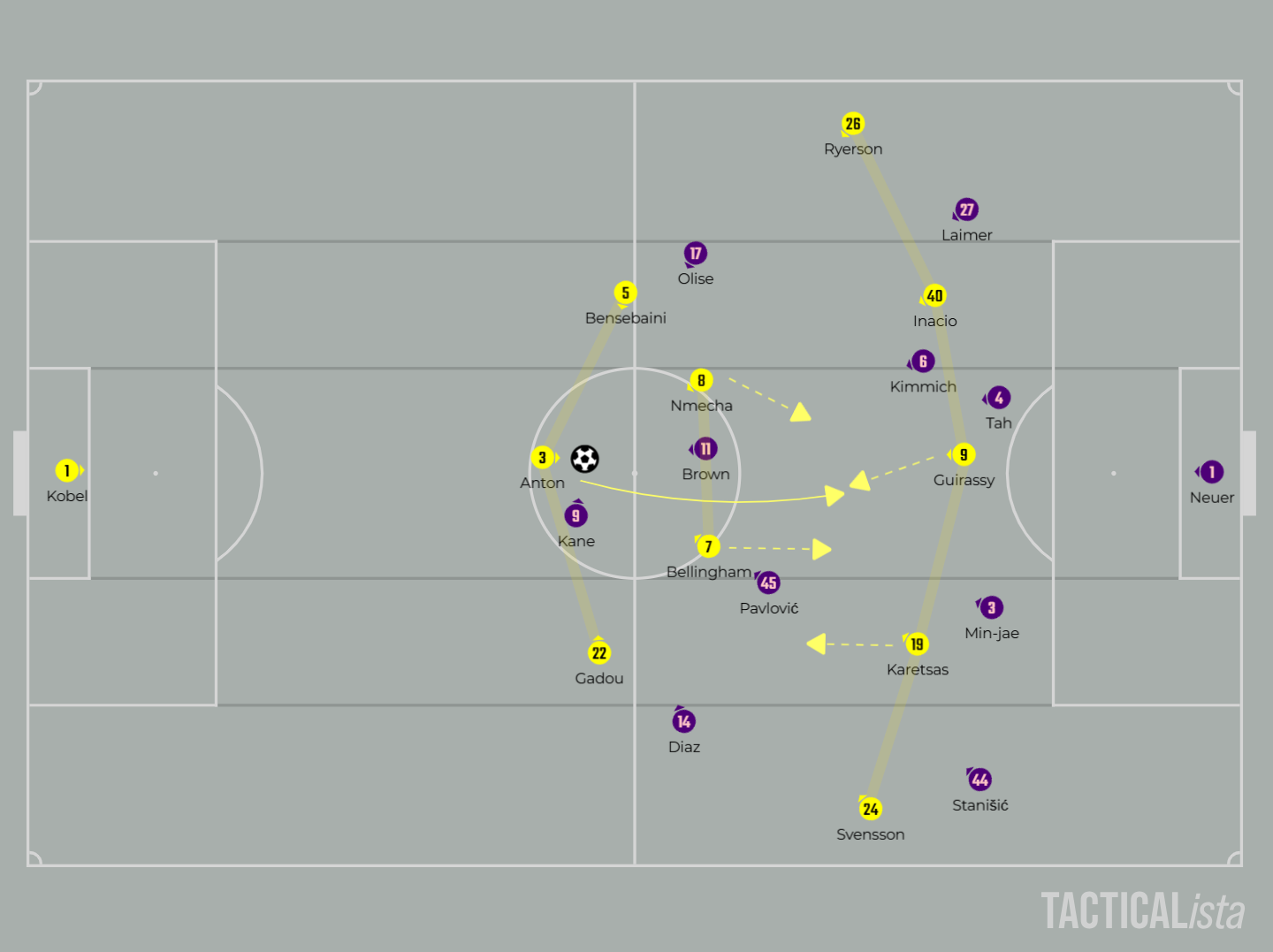
Image 4: Third-man combinations could have been used more by Dortmund in the middle third to bypass the Bayern pressure.
Dortmund’s inability to extract the most out of such situations and generally during open-play phases reveals a continuous problem from last season – offensive creativity and reliable patterns of play. They have seemingly attempted to solve a part of this issue in the transfer market by purchasing Karetsas, who can do more with the ball at his feet in tight spaces compared to Karim Adeyemi, for example. However, there needs to be more from a coaching perspective to equip this team with more tools to break the opposition down in open play.
Another costly lapse of concentration?
Towards the end of the first half, it is crucial not to take defensive risks as it may lead to unnecessary significant shifts in momentum. Dortmund attempted to do this by opting for long balls rather than the short passes which they tried earlier in the half. However, with just a minute left, Daniel Svensson made a very poor decision to take a long throw into the crowded midfield area despite having options to play short.
It unsurprisingly led to a turnover, with Kimmich pouncing on the careless attempt from Svensson. It quickly led to an offensive transition for Olise, who excellently dribbled outside Ramy Bensebaini before sliding it past Gregor Kobel to double the lead.
Stirring a comeback that eventually falls short
The only alteration from Kovač in the second half was switching the sides from which Svensson and Ryerson operated. This allowed both players to play on the side that favored their stronger foot. With Dortmund struggling to create much, they needed to rely more on Ryerson’s crossing ability, which was diminished since he was the left wingback. Now on the opposite flank, Ryerson could whip more right-footed crosses into the box.
This had a degree of impact from open play, but the more significant outcome had to do with these crosses leading to corner kicks. Dortmund were one of the most effective teams at dead-ball phases in the Bundesliga season. Thus, they were able to tap into it more after creating more set-piece scenarios from where they threatened Bayern.
Consequently, Dortmund had the upper hand for 15 to 20 minutes of the second half whilst Bayern were on the back foot. Soon enough, the momentum reversed for almost the entire period remaining as Bayern embodied the phrase, “attack is the best form of defence” by piling on numerous chances and almost finding the third. They still leaked a goal following an error by Jonathan Tah, which was capitalized on by Fábio Silva. Nevertheless, the German defender compensated in the last few minutes of the Supercup final with a vital challenge that prevented Maximillian Beier from scoring the leveler.
Takeaways
Bayern did not secure the trophy comfortably with a testing second-half valiant Dortmund display. They still walked away having created more chances than the opposition. However, it raises potential questions about whether Bayern can endure another season with a high-intensity playstyle considering that they have not significantly replenished the squad. Brown and Ismael Saibari will be helpful, but it will remain a potential concern.
Looking back at the Supercup final, it would be fair to say that there was not a huge gap between Dortmund and the reigning Bundesliga champions. However, the ceiling of this Dortmund side under Kovač seems capped due to the limited patterns of play and creativity in open play. The out-of-possession solidity has provided Dortmund with a strong foundation that propelled them to second place last season. However, the tactical system must evolve to accommodate more attacking dynamism, especially if they desire to fulfil high ambitions of reclaiming the league title. If there is an opportunity to overtake a potentially tired Bayern squad, this tactical limitation from Dortmund may cost them.
Match plots will be added as soon as they are available.